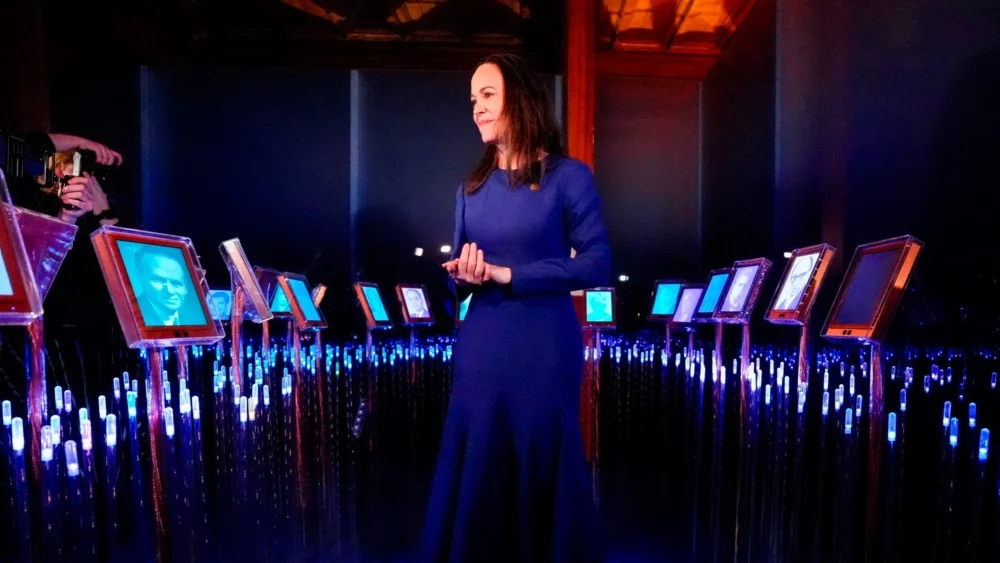
The political landscape of Venezuela has long been defined by a volatile mixture of ideological fervor, authoritarian entrenchment, and a catastrophic economic collapse that has few parallels in modern history. At the center of this maelstrom stands María Corina Machado, a figure who has evolved from a sidelined firebrand of the elite opposition into the undisputed face of a national movement. Her "long wait"—a period characterized by political bans, physical intimidation, and the strategic maneuvering of a government determined to maintain its grip on power—has become a proxy for the aspirations of a nation seeking a return to the global financial fold. As Venezuela grapples with the fallout of the disputed July 2024 presidential election, Machado’s role transcends mere partisanship; she represents the primary catalyst for a potential shift from a pariah state to a revitalized energy powerhouse.
Machado’s trajectory is inextricably linked to the broader economic decay of a country that sits atop the world’s largest proven oil reserves. An industrial engineer by training with a background in the private sector, her political philosophy is rooted in classical liberal economics—a stark departure from the "Twenty-First Century Socialism" inaugurated by Hugo Chávez and continued by Nicolás Maduro. For over two decades, the Venezuelan state has presided over an economic contraction exceeding 80%, a figure that eclipses the impact of the Great Depression in the United States. This collapse was fueled by the systemic dismantling of the private sector, rampant hyperinflation that peaked at over 1,000,000% in 2018, and the catastrophic mismanagement of the state oil giant, Petróleos de Venezuela, S.A. (PDVSA).
The strategy employed by Machado in the lead-up to the 2024 elections marked a sophisticated pivot in opposition tactics. Despite being barred from holding public office by the Maduro-controlled comptroller general—a move widely condemned by international human rights organizations—Machado did not retreat into the shadows. Instead, she leveraged her disqualification to build a grassroots "command" structure that bypassed traditional media censorship through a massive digital and ground-level presence. When she was prevented from appearing on the ballot, she threw her formidable political capital behind Edmundo González Urrutia, a retired diplomat. This alliance successfully unified a fractured opposition, presenting a single, credible threat to the ruling United Socialist Party of Venezuela (PSUV).
The economic stakes of this political standoff are monumental. Venezuela currently carries an estimated $150 billion in external debt, including defaulted sovereign bonds and PDVSA obligations. For international creditors and institutional investors, the "long wait" of Machado is also their own wait for a debt restructuring process that cannot legally or practically begin without a government recognized by the United States and the European Union. The Maduro administration remains under a heavy veil of sanctions, most notably those imposed by the U.S. Treasury’s Office of Foreign Assets Control (OFAC). While the Biden administration has experimented with calibrated sanctions relief—such as General License 41, which allows Chevron to extract and export Venezuelan crude—a full-scale reintegration into global capital markets remains contingent on a democratic transition.
Market analysts suggest that under a Machado-backed administration, Venezuela could see a rapid influx of foreign direct investment (FDI). Her platform emphasizes the privatization of the oil industry, the restoration of property rights, and the implementation of a rigorous macroeconomic stabilization program overseen by the International Monetary Fund (IMF). Proponents of this "shock therapy" argue it is the only way to arrest the country’s terminal decline. However, the transition remains stalled. The National Electoral Council (CNE) declared Maduro the winner of the July contest without providing precinct-level data, while the opposition published nearly 80% of the "actas" (tally sheets) suggesting a landslide victory for González. This discrepancy has plunged the country into a new era of diplomatic uncertainty, with the U.S. and several Latin American nations recognizing González as the legitimate winner.
The geopolitical dimensions of Machado’s struggle extend far beyond the borders of Caracas. Venezuela has become a critical theater for the rivalry between Western democracies and the burgeoning "axis of resistance" composed of Russia, China, and Iran. For Moscow and Beijing, the Maduro government serves as a strategic foothold in the Western Hemisphere and a partner in challenging U.S. hegemony. China, in particular, has a vested interest in the status quo, having provided tens of billions of dollars in loans-for-oil deals over the past decade. Conversely, for the United States, a transition in Venezuela would not only remove a regional security threat but also provide a more stable and ethical alternative to Russian energy in the global market.
The human cost of the protracted political stalemate is perhaps the most pressing issue for regional stability. The United Nations estimates that over 7.7 million Venezuelans have fled the country since 2014, creating a migration crisis that has strained the social services and economies of neighboring Colombia, Peru, and Brazil. This "brain drain" has seen a generation of doctors, engineers, and educators leave, further hollowing out the country’s productive capacity. Machado’s message of "bringing our children home" resonates deeply with a population weary of separation and poverty. From an economic perspective, the return of even a fraction of the diaspora would provide the human capital necessary to rebuild the country’s dilapidated infrastructure.
As the "long wait" continues, the Maduro administration has intensified its crackdown on dissent, targeting Machado’s inner circle and forcing many into exile or foreign embassies. The resilience of the opposition movement, however, appears different this time. Unlike previous cycles of protest in 2014, 2017, and 2019, the current movement is backed by a level of verifiable electoral data that has made it difficult for even traditional allies of the PSUV, such as Brazil’s Luiz Inácio Lula da Silva and Colombia’s Gustavo Petro, to fully endorse the official results. These regional leaders have found themselves in the delicate position of calling for transparency while attempting to mediate a solution that avoids a total collapse into civil unrest or a further exodus of refugees.
The future of the Venezuelan oil industry remains the ultimate prize and the primary lever of power. Production, which once exceeded 3 million barrels per day (bpd) in the late 1990s, languished below 400,000 bpd during the height of the pandemic and sanctions. While it has recently recovered to approximately 800,000 to 900,000 bpd due to limited foreign participation, reaching pre-Chávez levels would require an estimated $200 billion in investment over a decade. Machado’s supporters argue that only a government with domestic and international legitimacy can provide the legal certainty required for such long-term capital commitments. The "long wait" is therefore a period of high-stakes attrition: the government is betting that international attention will fade, while Machado is betting that the internal economic pressure and external diplomatic isolation will eventually force a crack in the military’s loyalty to Maduro.
For global commodity markets, a stabilized Venezuela could act as a significant deflationary force, providing a reliable stream of heavy crude to Gulf Coast refineries in the U.S. and easing the energy security concerns of the European Union. Yet, as long as the political impasse remains, the country’s vast wealth remains locked beneath the soil, guarded by a regime that has proven adept at survival through the illicit gold trade, drug trafficking, and the support of autocratic allies.
María Corina Machado remains in a precarious position, often forced into hiding or restricted in her movements, yet her influence has never been greater. She has successfully shifted the narrative from a simple power struggle between two political elites to a fundamental question of national sovereignty and economic survival. The world watches as Venezuela teeters between the possibility of a historic recovery and the grim reality of becoming a permanent failed state. The resolution of this "long wait" will not only determine the fate of 28 million Venezuelans but will also redefine the geopolitical and economic architecture of the Americas for the next generation. Whether the transition occurs through a negotiated exit or a slow, agonizing transformation, the shadow of Machado’s persistence will loom large over whatever version of Venezuela emerges from this crisis.