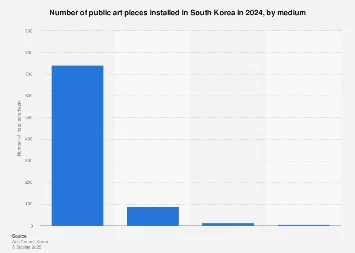
South Korea’s burgeoning public art scene is poised for continued expansion in 2024, with an increasing emphasis on diverse mediums shaping urban aesthetics and cultural narratives. While precise, granular data for the current year remains proprietary, a deeper examination of market trends, government initiatives, and artistic preferences offers a comprehensive outlook on the nation’s evolving public art ecosystem. The sector, intrinsically linked to urban development, cultural policy, and citizen engagement, is experiencing a dynamic period, driven by both established practices and innovative approaches.
The development of public art in South Korea is not merely an aesthetic pursuit but a strategic component of urban revitalization and national identity building. Government bodies, including the Ministry of Culture, Sports and Tourism, alongside local municipalities, play a significant role in commissioning and funding public art projects. These initiatives often align with broader urban planning goals, aiming to transform underutilized spaces into vibrant cultural hubs, enhance the quality of life for residents, and attract tourism. The legal framework governing public art, particularly the Public Art Promotion Act, mandates the inclusion of art in new construction projects exceeding a certain scale, thereby ensuring a consistent, albeit regulated, demand for artistic installations.
While specific figures for 2024 are not publicly available, historical data and ongoing project pipelines suggest a continued dominance of certain mediums, alongside a growing interest in more contemporary and interactive forms. Sculptures, traditionally a cornerstone of public art, are likely to maintain their prominence. Their durability, visibility, and capacity to create focal points within urban environments make them perennial favorites for civic spaces. These range from monumental abstract forms to figurative pieces that often reference local history, culture, or environmental themes. The materials employed in contemporary sculpture are increasingly diverse, incorporating not only traditional bronze and stone but also advanced composites, recycled materials, and even light-emitting elements that transform the artwork after dark.
The integration of digital and new media art is an area experiencing significant growth. Interactive installations, projection mapping, and augmented reality (AR) experiences are becoming increasingly popular, particularly in younger, more technologically advanced urban centers. These mediums offer dynamic engagement, allowing for ephemeral displays, user participation, and the fusion of the physical and digital realms. Cities are recognizing the potential of these technologies to create immersive experiences that resonate with a broader, often younger, audience. This trend is supported by South Korea’s world-leading digital infrastructure and a population with high digital literacy, making it fertile ground for such innovations.
Murals and large-scale wall paintings represent another enduring and adaptable medium. They offer a cost-effective way to introduce color, narrative, and artistic expression to vast urban canvases, from building facades to underpasses. The accessibility of murals often fosters a direct connection with the local community, with artists frequently engaging residents in the creation process. This collaborative aspect can significantly enhance community ownership and appreciation of the artwork. Furthermore, the evolving techniques in mural painting, including the use of advanced spray paints, stencils, and even eco-friendly pigments, are contributing to their longevity and aesthetic sophistication.
The inclusion of functional art, such as art integrated into public furniture, street lighting, or landscape design, is also gaining traction. This approach blurs the lines between art, utility, and urban infrastructure, making artistic expression a seamless part of daily life. Examples include uniquely designed benches, artist-conceived bus shelters, or aesthetically pleasing storm drains. This trend reflects a broader shift towards a more holistic approach to urban design, where art is not an add-on but an integral element of the built environment.
Performance art, though often ephemeral, also plays a role in the public art sphere, particularly during festivals and special events. These live artistic interventions can create temporary, high-impact cultural moments, fostering community gathering and dialogue. While not a permanent installation in the traditional sense, their inclusion in public programming contributes to the vibrancy and dynamic nature of the urban cultural landscape.
The economic implications of public art are multifaceted. Beyond the direct commissioning and creation costs, public art contributes to urban regeneration, often leading to increased property values and local economic activity. Vibrant public art can become a destination in itself, drawing visitors and supporting local businesses. Moreover, the public art sector fosters employment for artists, fabricators, installers, curators, and art administrators, contributing to the creative economy. The export potential of South Korean public art and its artists is also a consideration, as successful domestic projects can pave the way for international commissions.
Globally, South Korea’s approach to public art is often viewed as forward-thinking, particularly in its embrace of technology and its systematic integration into urban planning. Countries like Singapore and Canada have similar mandates for public art inclusion in development projects, but South Korea’s rapid adoption of digital mediums and its robust government support for the arts set it apart. The emphasis on community engagement and the creation of accessible, aesthetically pleasing urban environments aligns with international best practices in placemaking.
Challenges, however, remain. Ensuring equitable distribution of public art across different socioeconomic areas, the long-term maintenance and preservation of installations, and navigating the complexities of public consultation and artistic freedom are ongoing considerations. As South Korea continues to invest in its cultural infrastructure, the dialogue surrounding the purpose, impact, and evolution of public art will undoubtedly intensify, shaping the visual and cultural identity of its cities for years to come. The year 2024 is set to be a testament to this ongoing evolution, showcasing a diverse and dynamic public art scene.