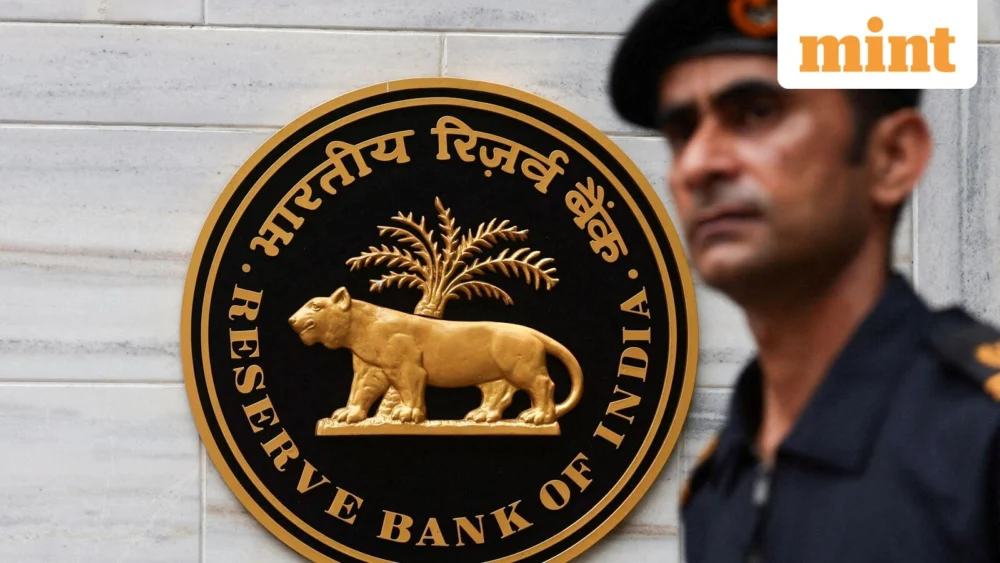
The Reserve Bank of India (RBI) has unveiled a revised framework for related party transactions (RPTs) involving banks and non-bank financial companies (NBFCs), marking a significant recalibration of its initial proposals from October. This latest pronouncement reflects a nuanced approach, integrating crucial industry feedback while steadfastly upholding the core objective of fortifying the integrity and stability of India’s rapidly expanding financial sector. The central bank’s updated guidelines demonstrate a pragmatic balancing act: acknowledging the operational complexities faced by financial institutions while reinforcing prudential norms designed to mitigate risks inherent in dealings between connected entities.
The regulatory scrutiny over related party transactions stems from deep-seated concerns regarding governance, potential conflicts of interest, and the fair allocation of credit. When financial institutions lend to entities with which they share common ownership, management, or significant influence, the risk of credit decisions being swayed by factors other than pure commercial merit escalates. Such arrangements can lead to moral hazard, where lending occurs on preferential terms, potentially masking underlying credit weaknesses or exposing the institution to undue concentration risk. Globally, supervisory bodies, including the Basel Committee on Banking Supervision (BCBS), emphasize the critical importance of robust RPT frameworks to prevent undue risk-taking, safeguard depositor interests, and maintain systemic financial stability. India, with its complex corporate landscape and the growing interconnectedness of its financial institutions, faces a particular imperative to ensure these transactions are conducted at arm’s length and with utmost transparency.
The RBI’s initial proposals in October sought to significantly broaden the scope of RPT regulations, aiming to capture a wider array of direct and indirect exposures that could prove detrimental to a bank’s or NBFC’s health and the interests of its stakeholders. This proactive stance was informed by a recognition that existing statutory and regulatory restrictions might not fully cover the multifaceted ways in which related parties could exert influence or extract value. The comprehensive nature of these proposed changes, however, elicited substantial feedback from the financial industry, highlighting potential operational challenges and calling for greater clarity and alignment with prevailing business practices.
A key area of contention in the initial proposals revolved around the treatment of existing related party transactions that would not comply with the new directives. The industry had voiced concerns about the practical difficulties and potential financial dislocation that an immediate unwinding or a short run-off period for such transactions could entail. Acknowledging these legitimate operational realities, the RBI has now introduced a critical concession: all existing related party transactions that do not conform to the revised prohibitions may continue until their natural contractual maturity. This allowance is, however, conditional, stipulating that such transactions cannot be enhanced, renewed, re-priced, or undergo any change in their terms and conditions without adhering to the new regulations. This "grandfathering" clause provides a much-needed transition period, preventing abrupt disruptions to ongoing credit arrangements and allowing financial institutions to gradually realign their portfolios without incurring significant costs associated with premature termination or forced restructuring. This pragmatic approach is expected to ease the compliance burden on banks and NBFCs, ensuring a smoother migration to the new regulatory regime.

Beyond the transitional arrangements, the RBI also demonstrated flexibility in refining the very definition of a "related party," a cornerstone of the entire regulatory framework. The initial nine-point definition had drawn criticism from stakeholders for its perceived breadth, particularly its inclusion of "relatives of related persons" within the scope of a "related party." Industry participants argued that this aspect was redundant, as "relatives of a related person" were already explicitly covered under the broader definition of "related persons" themselves, leading to unnecessary complexity and potential for double-counting or misinterpretation. The central bank accepted this logical suggestion, removing the explicit reference to relatives in the definition of "related party," thereby streamlining the framework and reducing ambiguity for compliance teams. Furthermore, the RBI also agreed to remove a specific ₹5 crore threshold from the definition, a move likely aimed at simplifying the criteria and focusing on the nature of the relationship and potential for influence rather than an arbitrary monetary limit, which might not adequately capture significant connections in all cases.
However, the central bank also drew a clear line in the sand regarding certain industry suggestions, notably the plea to align its definition of a related party with that prescribed by the Securities and Exchange Board of India (SEBI). This rejection underscores a fundamental distinction in the regulatory mandates and objectives of the two principal financial regulators in India. The RBI, as the prudential regulator for banks and NBFCs, is primarily concerned with safeguarding the stability of the financial system, protecting depositors, and ensuring the sound health of financial intermediaries. Its framework for RPTs focuses on mitigating credit risk, preventing capital erosion, and ensuring independent decision-making in lending. In contrast, SEBI, as the market regulator, focuses on investor protection, market integrity, and corporate governance for listed entities. Its Listing Obligations and Disclosure Requirements (LODR) framework for RPTs emphasizes transparency, disclosure, and the fairness of transactions for public shareholders. The RBI explicitly stated that the "regulatory objectives of the two frameworks are different," thus justifying the divergence in definitions. This stance, while potentially adding a layer of compliance complexity for entities regulated by both bodies, highlights the RBI’s unwavering commitment to its distinct prudential mandate, ensuring that its regulations are tailored precisely to the unique risks inherent in banking and credit operations.
The economic implications of these refined RPT rules are multifaceted. For financial institutions, the enhanced governance framework is expected to foster greater discipline in credit origination and risk management. While there might be an initial period of adjustment and potential restructuring of certain portfolios, the long-term benefits include improved asset quality, reduced incidence of non-performing assets (NPAs) linked to connected lending, and ultimately, greater resilience against economic shocks. The move towards more transparent and arm’s length transactions can also bolster investor confidence, potentially attracting greater capital flows into the Indian financial sector, especially from institutional investors who prioritize robust governance standards. On a broader economic level, by curbing the potential for misallocation of credit due to related party influence, the RBI’s measures can promote more efficient capital allocation towards productive sectors of the economy, fostering healthier competition and sustainable growth.
However, the implementation of these rules will require continuous vigilance from both the regulator and the regulated entities. Financial institutions will need to invest in robust internal control systems, comprehensive data management, and continuous training for their compliance and lending teams to navigate the intricacies of the revised framework. The diverse nature of India’s financial landscape, encompassing large public sector banks, agile private sector players, and a multitude of NBFCs varying in size and specialization, means that the impact and adaptation strategies will not be uniform. Smaller NBFCs, for instance, may face greater challenges in establishing sophisticated compliance infrastructures compared to their larger counterparts. The RBI, in turn, will need to ensure consistent interpretation and rigorous enforcement to prevent the emergence of new avenues for circumvention or regulatory arbitrage.
In conclusion, the RBI’s updated guidelines on related party transactions represent a thoughtful evolution of its regulatory stance. By judiciously accepting some industry suggestions while firmly rejecting others based on distinct regulatory objectives, the central bank has crafted a framework that seeks to strengthen financial sector governance without imposing undue immediate burden. This strategic compromise underscores the RBI’s commitment to fostering a robust, transparent, and stable financial ecosystem, capable of supporting India’s economic aspirations while effectively mitigating inherent risks in a dynamic and interconnected global financial environment. The continuous refinement of such prudential norms will remain critical as the Indian economy continues its growth trajectory and its financial sector expands in complexity and reach.