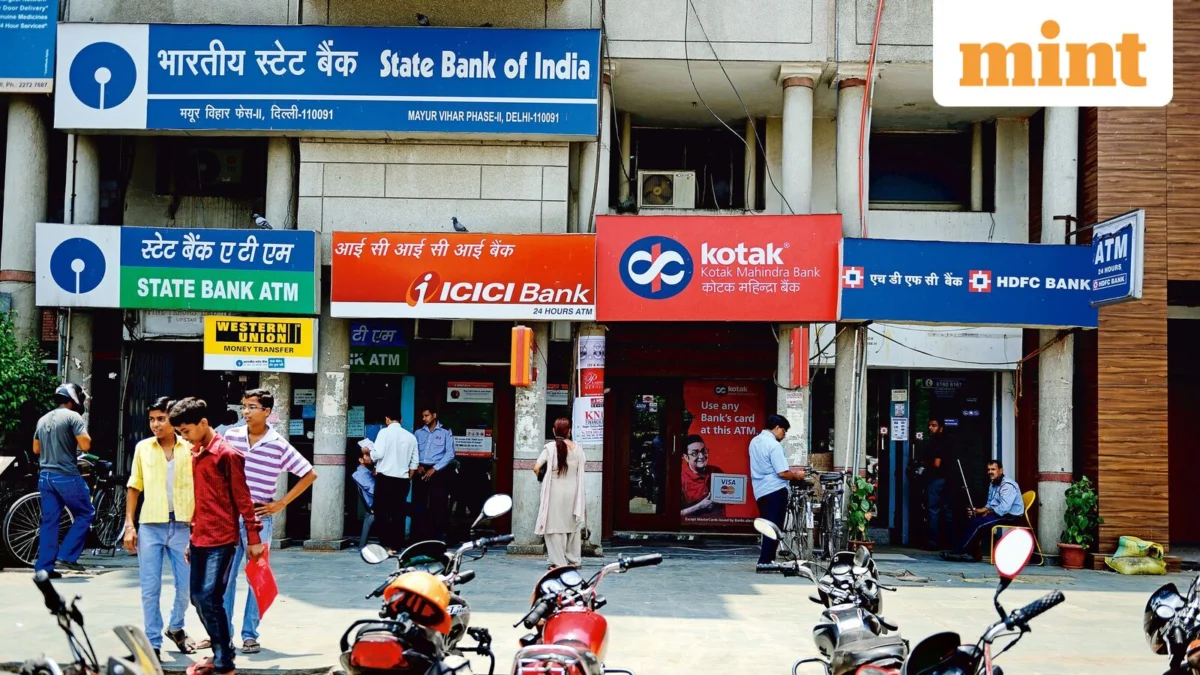
The financial pulse of India often slows its physical rhythm on specific days, a recurring phenomenon underscored by the closure of both public and private sector banks on the second and fourth Saturdays of every month. This practice, deeply embedded in the nation’s banking calendar, extends beyond a mere weekend break, reflecting a complex interplay of regulatory directives, employee welfare considerations, and the rapidly transforming landscape of digital finance. While a date like August 8th might bring a temporary halt to in-person transactions due to its alignment with a mandated Saturday closure, it simultaneously spotlights the growing resilience of India’s digital banking infrastructure, which ensures financial continuity even when physical doors are shut.
This bi-weekly closure, along with Sundays, is a nationwide mandate under the guidelines set by the Reserve Bank of India (RBI). It applies universally to all scheduled and non-scheduled commercial banks, cooperative banks, and regional rural banks. The policy, formally implemented following recommendations from the Indian Banks’ Association (IBA) in 2015, aimed to enhance work-life balance for banking professionals. Prior to this, banks operated on a six-day work week, with alternate Saturdays off. The shift to a fixed two-Saturday closure significantly reduced the working days for employees, aligning India’s banking sector closer to international norms where a five-day work week is common. However, it also presents a unique challenge in a country where a substantial portion of the population, particularly in semi-urban and rural areas, still relies heavily on branch-based services for a myriad of transactions, from cash deposits and withdrawals to loan inquiries and account opening formalities. The fifth Saturday of any month, however, remains a regular working day, preventing excessive consecutive non-banking days.
The regulatory framework governing bank holidays in India is multi-layered. Beyond the RBI-mandated weekend closures, the Negotiable Instruments Act of 1881 empowers state governments to declare public holidays, affecting banking operations within their respective jurisdictions. This leads to a distinct categorization of holidays: national holidays (like Independence Day, Republic Day, Gandhi Jayanti), central government holidays (observed nationwide for specific festivals), and state government holidays, which vary significantly based on regional festivals, cultural events, or historical commemorations. For instance, while August 15th will see banks closed nationwide for Independence Day, other dates like August 13th for Patriot’s Day in Manipur exemplify the localized nature of some closures. This fragmentation means that a bank might be operational in one state but closed in a neighbouring one, creating operational complexities for businesses with pan-Indian presence and for customers attempting inter-state transactions.
The economic implications of these periodic physical closures are noteworthy, though increasingly mitigated by technological advancements. For small and medium-sized enterprises (SMEs), particularly those heavily reliant on cash transactions or requiring immediate banking services for payroll, supplier payments, or deposit of daily collections, a Saturday closure can defer critical financial activities. While digital alternatives exist, not all SMEs, especially in Tier 2 and Tier 3 cities, have fully transitioned to cashless operations or possess the technological fluency to execute complex digital transactions reliably. Furthermore, sectors like real estate, wholesale trade, and certain agricultural markets often operate on cash-intensive models, where weekend closures can disrupt liquidity flows and transaction cycles. Financial analysts estimate that even a single day of nationwide bank closure can lead to a deferment of hundreds of billions of rupees in physical transactions, potentially impacting short-term economic velocity, especially for high-value clearing operations that traditionally relied on physical processing.

However, the transformative power of digital banking in India has profoundly reshaped how individuals and businesses interact with financial services during non-working days. The country has emerged as a global leader in digital payments, driven by innovations like the Unified Payments Interface (UPI). During any bank holiday, whether it’s a second Saturday or a national festival, core banking services remain accessible 24/7 through a robust suite of digital channels. Customers can initiate fund transfers via Immediate Payment Service (IMPS), National Electronic Funds Transfer (NEFT), or Real-Time Gross Settlement (RTGS) – though NEFT and RTGS operate on specific schedules even if the initiating channel is always available. UPI, with its instant peer-to-peer and merchant payment capabilities, ensures seamless transactions for daily needs. According to recent RBI data, digital payment transactions have surged year-on-year, with UPI alone recording over 10 billion transactions in some months, demonstrating a significant shift away from cash and physical branch dependency. Furthermore, mobile banking applications and internet banking portals provide comprehensive functionalities, including bill payments, account statement access, fixed deposit creation, and loan applications.
The ubiquity of Automated Teller Machines (ATMs) also serves as a critical lifeline during branch closures. Despite the surge in digital payments, cash remains a vital component of India’s economy, particularly for consumption in informal sectors and for populations with limited digital access. ATMs ensure continuous access to cash withdrawals, alleviating potential emergencies that might arise from physical branch closures. The sheer volume of ATM transactions on holidays often sees a noticeable spike, underlining their continued relevance. Additionally, card services, including credit and debit card transactions, operate uninterrupted, facilitating point-of-sale purchases and online transactions without hindrance. These digital and automated alternatives collectively prevent a complete standstill of financial activity, ensuring that the broader economy can continue functioning without severe bottlenecks. Services such as account maintenance forms, setting up standing instructions, and applying for a locker can often be initiated digitally or through specific online portals, even if final processing requires a working day.
The evolution of India’s banking access on holidays also reflects a broader global trend towards "always-on" banking. While most developed economies maintain a five-day work week for physical branches, the expectation for digital service availability is universal. Countries like Singapore, with its highly digitized financial infrastructure, or the UK, where most retail banks offer comprehensive online and mobile services, demonstrate models where physical closures have minimal impact on customer access. India, with its ambitious Digital India initiative, is rapidly catching up, with UPI alone processing billions of transactions monthly, far surpassing many global benchmarks. This rapid adoption suggests a future where the distinction between a working day and a holiday for many banking services will become increasingly blurred, particularly for urban, digitally-savvy populations.
Nonetheless, challenges persist. Financial inclusion for underserved segments remains a priority, and for these groups, the physical branch often represents the primary, if not sole, point of contact with formal banking. Older demographics, individuals in remote rural areas with limited internet connectivity, or those requiring complex financial advisory services might find themselves inconvenienced by prolonged branch closures. Banking correspondents (Bank Mitras) play a crucial role in bridging this gap, particularly in remote villages, by offering basic banking services at customers’ doorsteps. However, their operational hours may also be subject to local conditions or holiday schedules, necessitating careful planning for individuals needing specific assistance. Expert insights from banking sector leaders frequently emphasize the need for a hybrid model that integrates robust digital solutions with accessible physical touchpoints, especially in a diverse nation like India.
Looking ahead, the banking sector in India is likely to continue balancing the needs of its workforce with the demands of an increasingly digital and 24/7 economy. While the tradition of specific bank holidays, including the second and fourth Saturdays, is deeply entrenched, ongoing innovations in FinTech and further enhancements in digital infrastructure will progressively reduce the perceived inconvenience. The focus will shift even more towards ensuring robust cybersecurity for digital platforms, enhancing user experience for all demographics, and leveraging AI and machine learning to provide personalized, accessible financial services irrespective of the calendar. The story of bank holidays in India is thus not just about closures, but about a nation’s journey towards an inclusive, resilient, and digitally empowered financial future, where access is less about location and time, and more about connectivity and innovation.