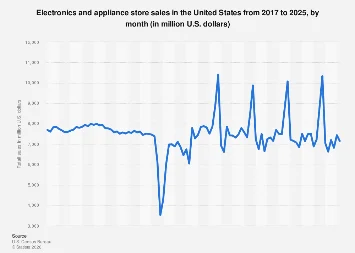
The landscape of consumer spending on electronics and home appliances in the United States is poised for a nuanced performance through the first half of 2025, reflecting a complex interplay of economic factors, evolving consumer preferences, and seasonal demand cycles. Analysis of retail sales data from 2017 through projected figures for mid-2025 reveals distinct patterns that offer valuable insights for retailers, manufacturers, and economic analysts. While specific figures for June 2025 are estimated to be in the billions of U.S. dollars, understanding the monthly fluctuations and underlying drivers is crucial for navigating this dynamic sector.
Historically, the electronics and appliance retail sector has exhibited a predictable seasonality, largely influenced by major retail holidays and economic conditions. Typically, the fourth quarter, encompassing Black Friday, Cyber Monday, and the Christmas holiday season, represents the zenith of sales. Consumers are often motivated by promotional pricing, gift-giving desires, and the release of new technology, driving significant revenue for the industry. Conversely, the early months of the year, particularly January and February, often witness a dip in sales as post-holiday spending fatigue sets in and consumers recalibrate their budgets.
However, the period leading up to and including mid-2025 presents a more intricate economic backdrop. Factors such as inflation rates, consumer confidence indices, and interest rate policies significantly shape purchasing power and willingness to spend on discretionary items like high-value electronics and appliances. Recent economic indicators suggest a cautious consumer environment, with households potentially prioritizing essential goods and services over larger durable purchases. This cautious sentiment can lead to a more tempered demand curve, even during traditionally strong sales periods.
Examining the monthly sales trajectory, the first quarter of 2025 is likely to continue the trend of subdued activity post-holiday season. Retailers may implement targeted promotions and discounts to stimulate demand, focusing on essential appliance replacements or upgrades. The consumer electronics segment, however, might see a more varied response, with early adopters and tech enthusiasts still driving sales of new gadgets and innovative products. The "early adopter" segment, while smaller, often sets trends and influences broader market sentiment.
As the year progresses into the second quarter, a gradual uptick in sales is anticipated. Spring often marks a period of home improvement and renovation, which directly correlates with increased demand for kitchen appliances, laundry machines, and home entertainment systems. Retailers often leverage this period with spring cleaning sales and promotions tied to home upgrades. Furthermore, the introduction of new product lines by major manufacturers, typically unveiled at industry trade shows earlier in the year, can inject renewed interest and drive sales in the electronics category.
The performance of specific product categories within the broader electronics and appliance sector will also play a critical role. The smart home technology market, for instance, continues to expand, with consumers increasingly integrating connected devices into their daily lives. This sustained interest could provide a consistent revenue stream, offsetting potential softness in more traditional appliance sales. Similarly, the demand for energy-efficient appliances, driven by both cost savings and environmental consciousness, remains a significant growth driver. Government incentives and utility rebates can further bolster sales in this sub-segment.
Geographically, sales trends can also vary across different regions of the United States, influenced by local economic conditions, demographic profiles, and housing market dynamics. Areas experiencing robust job growth and rising disposable incomes are likely to exhibit stronger retail sales in electronics and appliances compared to regions facing economic headwinds. Understanding these regional nuances is vital for effective inventory management and targeted marketing strategies.
Globally, the U.S. market for electronics and appliances is a significant component of the international industry. Its performance often serves as a bellwether for global trends. However, the U.S. consumer is known for its high propensity to adopt new technologies and its responsiveness to marketing and promotional activities, which can sometimes lead to divergent sales patterns compared to other developed markets. For example, the prevalence of large retail chains and the emphasis on seasonal sales events in the U.S. are distinct characteristics.
The role of e-commerce in driving sales cannot be overstated. The convenience of online shopping, coupled with the ability to compare prices and access a wider selection of products, has made online channels increasingly important for both electronics and appliance purchases. Retailers are investing heavily in their online platforms, offering features like click-and-collect, same-day delivery, and personalized recommendations to enhance the customer experience. The seamless integration of online and brick-and-mortar retail, often referred to as omnichannel retail, is becoming a critical strategy for success.
Looking ahead to mid-2025, the sector’s performance will be contingent on several macroeconomic variables. A sustained period of low unemployment and stable inflation would likely support robust consumer spending. Conversely, a significant economic downturn, characterized by rising unemployment or persistent inflation, could dampen demand for non-essential purchases. The Federal Reserve’s monetary policy decisions, particularly concerning interest rates, will also have a material impact on consumer borrowing costs for large purchases financed through credit.
In conclusion, while precise monthly sales figures for electronics and appliance stores in the U.S. through mid-2025 require access to proprietary data, the overarching trends indicate a sector navigating a complex economic environment. The interplay of seasonal demand, consumer confidence, technological innovation, and the growing influence of e-commerce will shape the retail landscape. Retailers that can effectively adapt to these dynamics, offering competitive pricing, innovative products, and a superior customer experience across all channels, are best positioned to capitalize on the opportunities within this essential segment of the U.S. economy. The industry’s resilience and its ability to meet evolving consumer needs will be key determinants of its success in the coming months.