The line between retail brokerage and sports entertainment blurred significantly this week as Robinhood Markets Inc. unveiled a major expansion of its prediction markets platform, introducing sophisticated parlay-style trading and real-time player performance contracts. This strategic move, announced at the company’s "YES/NO" keynote event at the Summit Skywalker Ranch in California, marks a definitive shift for the Menlo Park-based firm as it seeks to capture a larger share of the burgeoning "event contract" market. By integrating National Football League (NFL) outcomes into its trading ecosystem, Robinhood is no longer just competing with traditional discount brokerages like Charles Schwab; it is now positioning itself as a formidable rival to established sports betting giants such as DraftKings and FanDuel.
The new suite of features allows users to engage with NFL games through a lens of financial derivatives. Starting immediately, the platform enables the trading of preset combinations involving game outcomes, point totals, and spreads. However, the most significant technological leap is slated for early 2026, when Robinhood plans to introduce custom-built "combos" that allow users to bundle up to 10 different outcomes across various games. These structures, while functionally similar to the "parlays" found in traditional sportsbooks, are framed within the architecture of prediction market contracts. JB Mackenzie, Robinhood’s Vice President and General Manager of Futures and International, noted that these enhancements are designed to provide the "advanced order types" that a new generation of sophisticated retail traders increasingly demands.
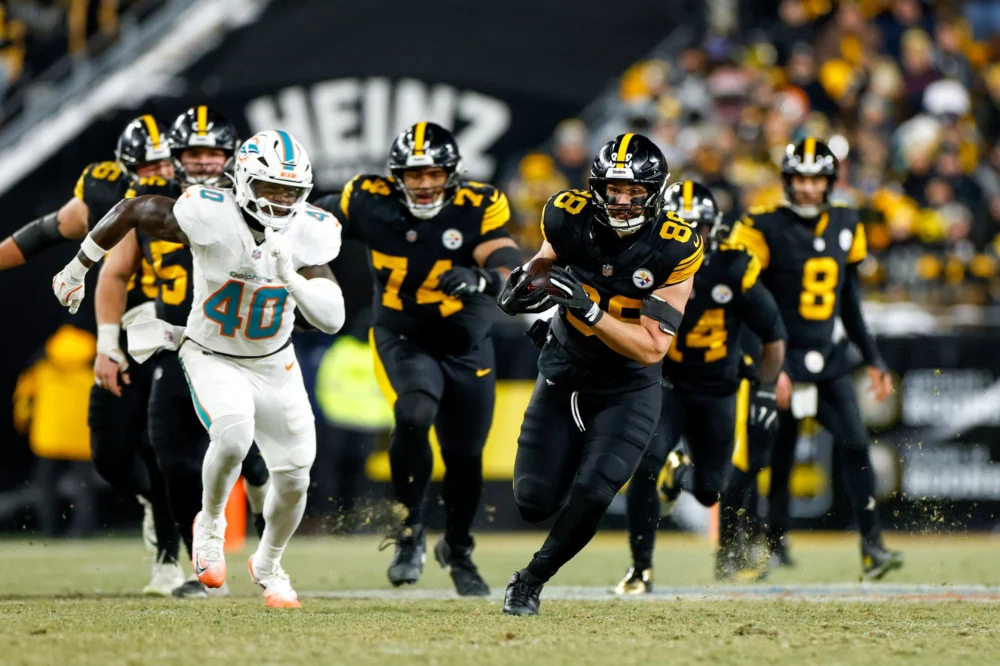
Beyond game-level outcomes, the platform is diving deep into "prop" style markets. Users can now wager on the real-time performance of individual athletes, such as whether a specific player will score a touchdown or surpass a certain threshold of passing, receiving, or rushing yards. This granular level of engagement mirrors the high-frequency nature of modern equity trading, where volatility and rapid data shifts drive volume. By treating a star quarterback’s yardage as a tradable asset, Robinhood is leveraging its existing user interface—famed for its gamified and intuitive design—to colonize the intersection of sports fandom and financial speculation.
The financial impetus behind this expansion is undeniable. Robinhood’s prediction markets division has rapidly emerged as its fastest-growing segment, already generating approximately $100 million in annualized revenue. The platform’s trajectory is even more aggressive when viewed through the lens of recent monthly performance. In October, the company saw 2.5 billion contracts traded, a figure that already eclipsed the entire third quarter’s performance of 2.3 billion. By November, that volume surged an additional 20% to over 3 billion contracts. Analysts now project that the prediction market business is on track to become a $300 million annual revenue stream in the near future, providing a high-margin diversifier to the company’s traditional commission-free stock and crypto trading.
This growth has been a primary catalyst for Robinhood’s explosive performance on Wall Street. Throughout 2025, the company’s stock has soared by a staggering 220%, outperforming the broader S&P 500 and many of its fintech peers. Market analysts, including Dan Dolev of Mizuho, suggest that the stock’s ascent is rooted in Robinhood’s unique ability to tap into a user base that is "predisposed" to prediction markets. According to Dolev’s research, users of platforms like Robinhood and Coinbase are nine times more likely to engage in event contracts than the general population. This demographic alignment suggests that Robinhood is not just adding a feature, but is effectively building a "hub" for a new asset class that blends entertainment with financial risk management.
The institutional framework supporting this expansion is equally robust. Robinhood’s journey into this space began in earnest during the 2024 U.S. presidential election, where it partnered with ForecastEx to offer contracts on political outcomes. Since then, the company has aggressively shored up its infrastructure through partnerships with Kalshi, a leading regulated prediction market operator, and a joint venture with Susquehanna International Group, one of the world’s largest quantitative trading firms. These alliances provide the liquidity and regulatory scaffolding necessary to scale a platform that handles billions of contracts per month.

Looking ahead, Robinhood’s ambitions extend far beyond the gridiron. The company is exploring the feasibility of "cross-asset" parlays—sophisticated trades that could allow a user to pair a sporting event outcome with an economic or environmental data point. Mackenzie highlighted the potential for users to hedge or speculate on combinations involving climate data, international policy shifts, or domestic economic indicators like the Consumer Price Index (CPI) and Federal Reserve interest rate decisions. The vision is to create a unified marketplace where any binary or measurable event—from a Super Bowl winner to a change in the capital gains tax—can be traded with the same ease as a share of Apple or Tesla.
This convergence of disparate data points into a single trading interface is central to the "Gen-Z Schwab" thesis championed by several industry observers. While the gap in scale remains vast—Robinhood holds roughly $193 billion in assets under custody compared to Charles Schwab’s $10.1 trillion—the momentum is shifting. Robinhood is systematically expanding its reach into every facet of its users’ financial lives, from retirement accounts and advisory services to its highly successful "Gold Card" credit product. By adding prediction markets to this portfolio, Robinhood is creating a "sticky" ecosystem that captures the attention and capital of younger investors who view the traditional barriers between "investing" and "gaming" as increasingly obsolete.
The rise of prediction markets also carries significant economic implications for how information is aggregated and valued. Proponents of these markets, including many economists, argue that they often provide more accurate forecasts than traditional polling or expert analysis because participants have "skin in the game." By incentivizing the discovery of truth through financial reward, Robinhood is essentially building a massive, real-time sentiment engine. For the NFL, this means a deeper level of fan engagement and data generation; for the broader economy, it could mean a new way to hedge against geopolitical or macroeconomic volatility.
However, the expansion into sports-related contracts does place Robinhood in a complex regulatory environment. While the company frames these as "event contracts" rather than "bets," the functional reality for the end-user is often indistinguishable from gambling. This has led to increased scrutiny from regulators like the Commodity Futures Trading Commission (CFTC), which has historically sought to limit the scope of event markets that could be perceived as contrary to the public interest. Robinhood’s reliance on regulated partners like Kalshi suggests a strategy of compliance-first expansion, but the rapid growth of the sector will likely invite further legislative debate regarding the classification of these financial products.
Despite these hurdles, the momentum behind Robinhood’s "YES/NO" platform shows no signs of waning. The company is successfully leveraging the high-octane energy of the NFL to drive user acquisition and platform activity during a period of broader market transformation. As the firm prepares for the 2026 rollout of custom multi-leg combos, it is clear that the objective is to become the primary interface for the modern retail investor—a place where one can manage a 401(k), trade Bitcoin, and speculate on a quarterback’s rushing yards all within the same five-minute window.
In the competitive landscape of fintech, Robinhood’s strategy represents a bold bet on the "financialization of everything." By treating cultural and sporting events as tradable commodities, the company is redefining the nature of the brokerage business for the 21st century. Whether this evolution leads to Robinhood eventually matching the institutional weight of a Charles Schwab remains to be seen, but for now, the company has successfully positioned itself at the vanguard of a new, highly profitable, and culturally resonant frontier in global finance.