The global energy landscape faced a sudden surge of uncertainty this week as international oil benchmarks exhibited significant volatility following a series of strategic strikes directed by the Trump administration against key infrastructure and political targets in Venezuela. As news of the escalation broke, Brent crude and West Texas Intermediate (WTI) initially spiked on fears of a total supply disruption from the Caribbean nation, before settling into a period of cautious wavering as traders weighed the potential for a prolonged conflict against the reality of Venezuela’s already diminished role in global exports. This latest development marks a dramatic intensification of the "maximum pressure" campaign, signaling a shift from economic statecraft to direct intervention, a move that has sent shockwaves through commodity trading floors from London to Singapore.
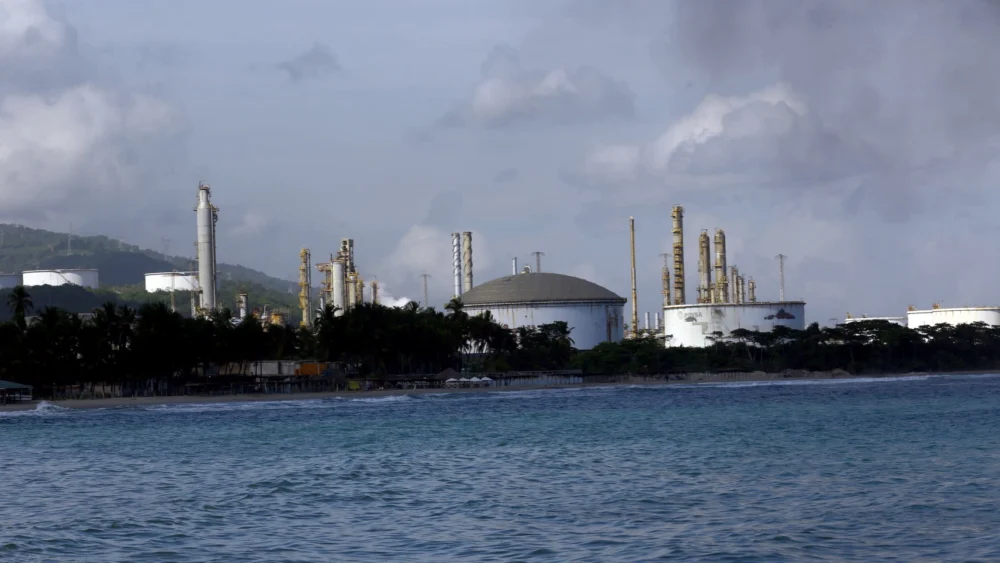
Market participants are currently grappling with the dual realities of a tightening supply narrative and the potential for a broader geopolitical realignment in the Western Hemisphere. Venezuela, which sits atop the world’s largest proven oil reserves—estimated at more than 300 billion barrels—has seen its production capacity crater over the last decade due to mismanagement, underinvestment, and previous rounds of U.S. sanctions. However, the country remains a critical variable in the global energy equation, particularly for Gulf Coast refineries in the United States that are specifically configured to process the heavy, sour crude that characterizes Venezuelan output. The immediate reaction in the futures market reflects a "risk premium" being baked back into prices, as the specter of a total cessation of Venezuelan exports looms large over an already fragile global supply chain.
Economic analysts suggest that the "wavering" nature of oil prices in the hours following the strikes is indicative of a market that is fundamentally conflicted. On one hand, the removal of any volume of crude from a market characterized by OPEC+ production cuts is inherently bullish for prices. On the other hand, there is a growing consensus among some analysts that the global economy’s slowing industrial demand—particularly in China and parts of the Eurozone—may act as a natural ceiling on how high prices can climb. Furthermore, the U.S. domestic production levels, which have hovered near record highs of 13 million barrels per day, provide a significant cushion that was not present during the energy crises of previous decades.
The strategic rationale behind the strikes appears to be a calculated attempt to sever the remaining financial lifelines of the Caracas administration. By targeting specific logistical nodes and administrative hubs, the U.S. is aiming to disrupt the "shadow fleet" of tankers that has allowed Venezuela to bypass existing sanctions and deliver crude to markets in Asia. These clandestine exports have been a vital source of hard currency for the Venezuelan government, often facilitated through complex ship-to-ship transfers and the use of shell companies. If the U.S. military or economic strikes successfully deter these third-party intermediaries, the effective supply of heavy crude to the global market could drop by several hundred thousand barrels per day almost overnight.
The impact on U.S. refineries cannot be overstated. For decades, the complex refining clusters in Texas and Louisiana have relied on heavy Venezuelan grades to blend with lighter, sweeter domestic shale oil. While refineries have pivoted toward Canadian heavy crude and Mexican Maya in recent years, a total loss of Venezuelan supply would force these facilities to seek even more expensive alternatives, potentially driving up the "crack spread"—the difference between the price of crude oil and the petroleum products extracted from it. This, in turn, could lead to higher prices at the pump for American consumers, a political risk that the administration is clearly willing to take in exchange for its foreign policy objectives in the region.
Internationally, the strikes have drawn a sharp rebuke from traditional Venezuelan allies, namely Russia and China. Both nations have significant vested interests in the country, having extended billions of dollars in loans-for-oil deals over the past twenty years. Moscow, in particular, has utilized its state-owned energy giants to maintain a presence in the Orinoco Petroleum Belt, seeing Venezuela as a strategic foothold in the Americas. Any action that threatens the viability of these investments is likely to meet with diplomatic or economic retaliation, further complicating the global geopolitical landscape. The potential for a coordinated response from these powers adds another layer of complexity for oil traders, who must now calculate the likelihood of a tit-for-tat escalation that could affect other energy transit points, such as the Strait of Hormuz.
Within the halls of OPEC+, the reaction has been one of quiet observation. The cartel, led by Saudi Arabia, has been working diligently to maintain price stability through a series of voluntary production cuts intended to offset the surge in non-OPEC supply. An involuntary disruption in Venezuela might actually assist OPEC+ in achieving its price targets without requiring further cuts from its members. However, the long-term instability caused by such strikes could also undermine the group’s efforts to project a sense of market order. If prices remain too volatile for too long, it could accelerate the global shift toward renewable energy alternatives, a trend that major oil exporters are keen to manage rather than accelerate.
From an economic perspective, the strikes also raise questions about the long-term recovery of the Venezuelan oil industry. Even before this latest escalation, experts estimated that it would take upwards of $100 billion in capital investment and a decade of technical labor to restore the country’s production to its 1990s peak of 3.5 million barrels per day. With each new round of conflict or infrastructure damage, the "time to recovery" expands. This effectively strands one of the world’s greatest natural resources, ensuring that the global market remains dependent on a narrower band of producers, thereby increasing the systemic importance of Middle Eastern and North American output.
The humanitarian and migration implications of these strikes also carry indirect economic weight. Venezuela’s economic collapse has already precipitated one of the largest displacement crises in the world, with millions of citizens fleeing to neighboring Colombia, Brazil, and eventually the United States. Further destabilization of the nation’s primary economic engine—oil—will almost certainly exacerbate this trend. For neighboring economies, the cost of absorbing these populations is significant, potentially impacting regional trade agreements and fiscal stability across Latin America.
As the situation evolves, the focus of the energy markets will likely shift from the initial shock of the strikes to the endurance of the Venezuelan response. If the Maduro administration manages to maintain a modicum of export capability through its back-channel partnerships, the initial price spike may prove to be a "flash in the pan." However, if the U.S. maintains a sustained campaign that effectively blockades Venezuelan waters or cripples its primary processing facilities, the market will have to price in a permanent loss of supply.
In the near term, investors are looking toward the next set of inventory data and the official statements from the International Energy Agency (IEA) for guidance. The IEA has historically played a role in coordinating the release of strategic reserves during times of extreme supply disruption. While current global commercial stocks are relatively healthy, the psychological impact of direct military or high-stakes economic strikes against a major oil producer cannot be mitigated by inventory levels alone. The "geopolitical floor" for oil prices has undoubtedly been raised, and the era of low-volatility energy trading appears to have been put on indefinite hold.
Ultimately, the wavering oil prices seen this week are a microcosm of a world in transition. The intersection of hard-line foreign policy and global commodity markets creates a high-stakes environment where a single executive decision in Washington can influence the heating bills of households in Europe and the manufacturing costs of factories in Asia. As the Trump administration doubles down on its strategy to force a change in Caracas, the global economy remains a hostage to the outcome, watching the ticker tapes for the next sign of either a diplomatic breakthrough or a further descent into regional chaos. For now, the only certainty in the oil market is that the "Venezuela discount" has vanished, replaced by a "conflict premium" that shows no signs of dissipating.