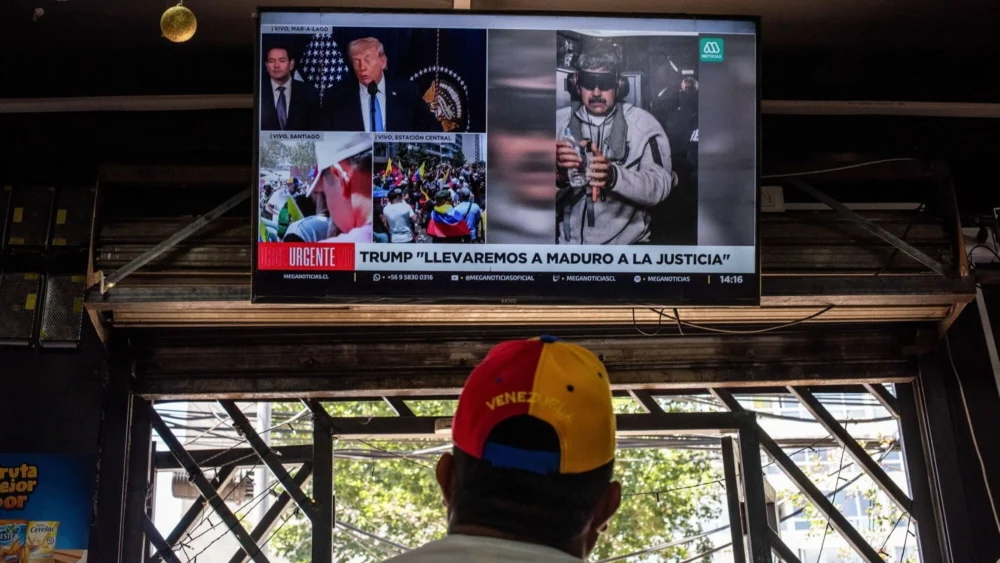
The political landscape of Latin America has long been a theater of ideological conflict, but few nations present as complex a challenge to global stability as Venezuela. As the United States recalibrates its foreign policy stance toward Caracas, the specter of "maximum pressure" has returned to the forefront of international discourse. This strategy, characterized by aggressive sanctions, diplomatic isolation, and the looming threat of military contingency, represents a high-stakes gamble with profound implications for global energy markets, regional migration patterns, and the delicate balance of power between Western democracies and the burgeoning influence of the BRICS nations. The resurgence of a hardline interventionist rhetoric signals a departure from the cautious diplomacy of recent years, raising critical questions about the efficacy of unilateral pressure in dislodging a deeply entrenched autocratic regime.
At the heart of the Venezuelan crisis lies a catastrophic economic collapse that has few parallels in modern history for a country not officially at war. Since Nicolás Maduro assumed power in 2013, the nation has seen its Gross Domestic Product (GDP) shrink by approximately 75 percent. What was once the wealthiest nation in South America, boasting the world’s largest proven oil reserves, has been reduced to a state of systemic dysfunction. The Venezuelan bolívar has been decimated by hyperinflation, which peaked at a staggering 65,000 percent in 2018 and remains among the highest in the world. In this context, any external intervention—whether economic or political—must be weighed against its potential to exacerbate an already dire humanitarian situation.
The previous iteration of U.S. interventionism, particularly during the first Trump administration, focused on the "recognition" strategy. By declaring the 2018 election fraudulent and recognizing opposition leader Juan Guaidó as the legitimate interim president, Washington attempted to trigger a military defection that never materialized. While the move was initially supported by over 50 nations, the lack of a "Plan B" led to a prolonged stalemate. Critics argue that this approach underestimated the resilience of the Maduro government, which maintained control over the military apparatus through a combination of patronage, surveillance, and the support of foreign allies. Today, as the U.S. once again disputes the legitimacy of the 2024 electoral results—where Edmundo González Urrutia is widely believed by international observers to have won—the risk of repeating past tactical errors looms large.
From an economic perspective, the primary lever of U.S. intervention has been the oil industry. Petróleos de Venezuela, S.A. (PDVSA), the state-run oil giant, was once a powerhouse producing over 3 million barrels per day (bpd). Following years of mismanagement, corruption, and targeted U.S. sanctions, production plummeted to fewer than 400,000 bpd at its nadir in 2020. While there has been a modest recovery to approximately 800,000 bpd—largely facilitated by specialized licenses granted to companies like Chevron—the sector remains a shadow of its former self. A return to "reckless" interventionism, such as a total embargo or the revocation of existing licenses, threatens to remove significant heavy crude from a global market already tightened by OPEC+ cuts and the ongoing conflict in Ukraine.
The global energy implications are twofold. First, a total collapse of Venezuelan exports would likely drive up prices for U.S. Gulf Coast refiners, which are specifically configured to process Venezuela’s heavy sour crude. Second, the vacuum left by Western firms is almost certain to be filled by state-backed enterprises from China and Russia. Over the last decade, Beijing and Moscow have provided billions of dollars in loans-for-oil deals, effectively buying geopolitical loyalty. By pushing for aggressive unilateral sanctions without a multilateral consensus, the U.S. risks inadvertently strengthening the "axis of resilience" that allows Maduro to bypass Western financial systems through shadow fleets and illicit gold trades.
Furthermore, the humanitarian dimension of the Venezuelan crisis has evolved into a significant domestic political issue for the United States and its regional neighbors. To date, more than 7.7 million Venezuelans have fled the country, creating the largest displacement crisis in the Western Hemisphere. Countries like Colombia, Peru, and Brazil have integrated millions of refugees, straining their public services and social fabrics. Analysts warn that renewed, heavy-handed interventionism that fails to produce a swift transition of power could trigger a fresh wave of migration. If the Venezuelan people lose hope in a negotiated democratic transition and see only further economic strangulation on the horizon, the incentive to migrate north toward the U.S. border will only intensify.
The diplomatic community remains sharply divided on the best path forward. Proponents of the "Big Stick" policy argue that only extreme pressure can force the Maduro elite to the negotiating table. They point to the failure of the Barbados Agreement—a deal intended to ensure free and fair elections in exchange for sanctions relief—as evidence that the regime has no intention of relinquishing power voluntarily. However, many European and Latin American diplomats advocate for a more nuanced "carrots and sticks" approach. This strategy emphasizes the need for a "soft landing" for regime insiders, offering legal guarantees and a gradual easing of sanctions in exchange for verifiable democratic reforms. The fear is that a cornered regime, facing the prospect of life imprisonment or extradition, will choose to cling to power at any cost, potentially turning Venezuela into a "tropical North Korea."
A critical factor often overlooked in the discourse on intervention is the role of the Venezuelan military. The Fuerza Armada Nacional Bolivariana (FANB) is not merely a security force but a massive economic conglomerate with interests in mining, banking, and food distribution. For any intervention to be successful, it must address the "exit costs" for the high command. A policy that relies solely on threats and sanctions may consolidate the military’s loyalty to Maduro, as they perceive their own survival to be tied to the survival of the current administration. Expert insights suggest that a more sophisticated policy would involve targeted sanctions against individuals while maintaining broad economic lifelines that prevent total societal collapse.
Comparing the Venezuelan situation to other sanctioned states, such as Iran or Cuba, reveals a sobering reality: sanctions alone rarely achieve regime change. In many cases, they allow the ruling elite to monopolize scarce resources, further weakening the middle class and the organized opposition. In Venezuela, the "Sambilization" of the economy—a term referring to the emergence of a dollarized, luxury-goods economy for the elite amidst widespread poverty—shows how the regime has adapted to financial restrictions. A reckless escalation of these measures without a clear, internationally backed diplomatic roadmap risks entrenching the status quo rather than disrupting it.
As the international community watches Washington’s next moves, the need for a coordinated, multilateral strategy has never been more urgent. The crisis in Venezuela is no longer a localized issue of governance; it is a pivotal point in the global struggle between democratic norms and authoritarian endurance. Any intervention must be measured not by the volume of its rhetoric but by its ability to foster a sustainable internal transition. The stakes include the stability of the global oil market, the security of the South American continent, and the lives of millions of Venezuelans caught in the crossfire of geopolitical maneuvering.
In conclusion, while the desire to see a democratic restoration in Caracas is a noble and necessary goal, the methods employed must be grounded in economic reality and strategic patience. Unilateral and impulsive actions, however well-intentioned, carry the risk of backfiring, further isolating the Venezuelan people and ceding regional influence to adversarial global powers. The path to a stable, prosperous, and democratic Venezuela requires a delicate balance of firm pressure and credible incentives—a task that demands statesmanship over brinkmanship in the corridors of power. The world cannot afford a reckless intervention that turns a long-standing crisis into a permanent regional catastrophe.