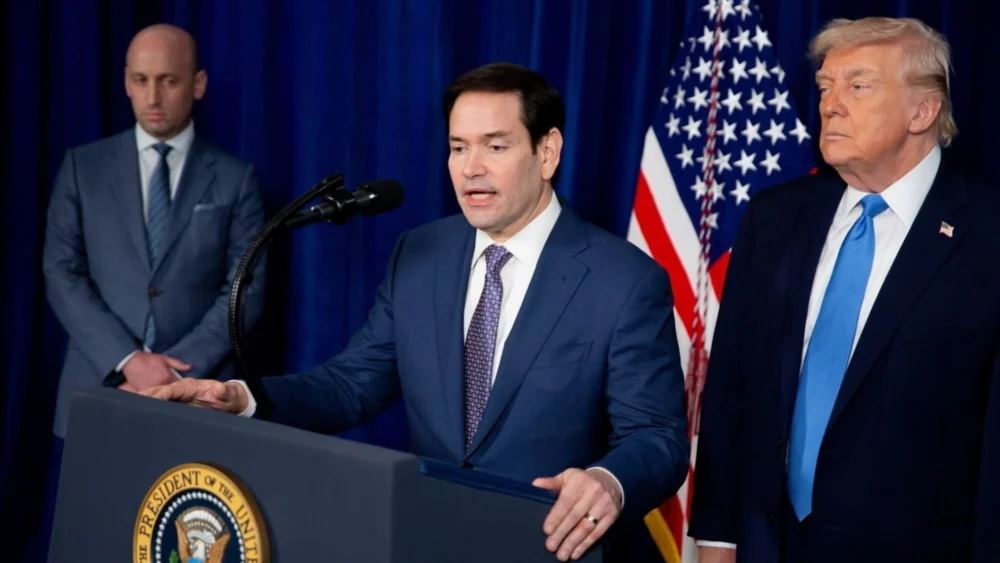
The appointment of Senator Marco Rubio as the prospective architect of American foreign policy signals a seismic shift in the geopolitical landscape of the Western Hemisphere, particularly concerning the long-standing stalemate in Caracas. Rubio, a veteran lawmaker with deep ancestral ties to the region and a career-long focus on Latin American authoritarianism, has begun outlining a rigorous framework of demands directed at the remaining leadership of the Nicolás Maduro regime. This emerging strategy marks a definitive departure from the cautious engagement of recent years, pivoting instead toward a "maximum pressure 2.0" model that seeks to leverage American economic might and diplomatic isolation to force a democratic transition.
At the heart of the new Washington mandate is an uncompromising demand for the recognition of the July 2024 presidential election results. While the Maduro-controlled National Electoral Council (CNE) declared the incumbent the winner, the United States, along with a significant portion of the international community and independent observers like the UN and the Carter Center, maintains that opposition candidate Edmundo González Urrutia secured a decisive victory. Rubio’s positioning suggests that any future dialogue between Washington and Caracas is contingent upon a verified roadmap for Maduro’s exit and the seating of the legitimate winner. This is not merely a request for reform, but a demand for a fundamental transfer of power, underpinned by the threat of expanded individual and sectoral sanctions.
The economic implications of this policy shift are profound, given Venezuela’s precarious position within the global energy market. Once a founding member of OPEC and a top-tier global producer, Venezuela’s oil industry has been hollowed out by years of mismanagement, corruption, and systemic underinvestment. Current production hovers between 800,000 and 900,000 barrels per day—a fraction of the 3.2 million barrels produced in the late 1990s. Rubio’s demands place a spotlight on the controversial General License 41, which currently allows Chevron to operate and export oil from its Venezuelan joint ventures to the United States. While some analysts argue that maintaining this link provides the U.S. with leverage and stabilizes regional energy prices, Rubio’s camp has historically viewed such licenses as lifelines that inadvertently sustain the regime’s grip on power.
The debate over energy policy is inseparable from the broader macroeconomic catastrophe that has defined Venezuela for a decade. Between 2014 and 2021, the nation’s GDP contracted by approximately 75%, an economic collapse unprecedented for a country not at war. Hyperinflation, which peaked at a staggering 65,000% in 2018, destroyed the purchasing power of the bolívar and forced a de facto dollarization of the economy. While the regime has seen a marginal stabilization in recent years through the liberalization of some price controls and the influx of illicit gold and mineral revenue, the fundamental structures of the economy remain broken. Rubio’s strategy seeks to tighten the noose on these alternative revenue streams, particularly the "shadow fleet" of tankers used to bypass existing oil sanctions and the clandestine mining operations in the Orinoco Mining Arc.
Beyond the bilateral relationship, the U.S. demands carry significant weight for regional stability and migration patterns. The Venezuelan exodus is now the largest displacement crisis in the world, with over 7.7 million people having fled the country since 2014. For Washington, this is no longer just a humanitarian issue but a domestic security priority. The "push factors" driving migration—state-sponsored repression, food insecurity, and the collapse of the healthcare system—are directly linked to the political impasse in Caracas. Rubio has frequently articulated that a stable, democratic Venezuela is the only permanent solution to the migrant pressures at the U.S. southern border. By demanding a transition, the incoming administration is signaling that it views the Maduro government as the primary engine of regional instability.
The geopolitical dimension of Rubio’s demands also addresses the growing influence of extra-regional actors in the Caribbean basin. Over the last two decades, Caracas has cultivated deep strategic partnerships with Russia, China, and Iran. Russia has provided military hardware and financial restructuring, China has exchanged infrastructure loans for oil, and Iran has assisted in the technical repair of Venezuela’s decaying refineries. Rubio views this "axis of influence" as a direct challenge to the Monroe Doctrine and American interests in the hemisphere. His demands for the removal of foreign intelligence operatives—particularly Cuban security personnel embedded within the Venezuelan military—represent a push to reclaim U.S. primacy in the region and sever the regime’s international support networks.
Expert analysis suggests that Rubio’s approach will rely heavily on the "stick" of secondary sanctions. Unlike primary sanctions, which prohibit U.S. persons and companies from doing business with the regime, secondary sanctions target third-country entities—such as banks in Europe or refineries in Asia—that facilitate transactions with the Venezuelan government. If implemented aggressively, these measures could effectively paralyze what remains of the Venezuelan state’s ability to conduct international trade. However, this strategy carries the risk of deepening the humanitarian crisis, a concern often raised by humanitarian NGOs and regional leaders like Brazil’s Luiz Inácio Lula da Silva and Colombia’s Gustavo Petro.
The response from Caracas has been one of characteristic defiance, with Maduro frequently labeling Rubio and his colleagues as "imperialist aggressors." Yet, the internal dynamics of the Venezuelan military, the Fuerza Armada Nacional Bolivariana (FANB), remain the ultimate wildcard. Rubio’s messaging is often calibrated to appeal to mid-level officers, suggesting that a post-Maduro era could offer them amnesty and a path back to institutional professionalism, rather than the pariah status they currently hold. The U.S. demands include a "safe exit" for those within the regime who facilitate a transition, a pragmatic acknowledgment that a total purge might lead to a bloody civil conflict.
From a market perspective, the potential for a Rubio-led foreign policy has already triggered volatility in Venezuelan sovereign bonds and PDVSA debt. For years, "recovery trades" have been a staple of emerging market speculation, with investors betting on a regime change that would lead to a massive debt restructuring. Venezuela currently owes an estimated $60 billion to $150 billion to external creditors, much of it in default. A credible path to a transition, sparked by U.S. demands, would likely trigger one of the most complex debt workouts in financial history, involving a blend of IMF support, private sector hair-cuts, and the revitalization of the oil sector as collateral.
As the new administration takes shape, the "Rubio Doctrine" for Venezuela appears to be one of clarity and consequence. The demands are specific: the release of all political prisoners, the cessation of judicial persecution against Maria Corina Machado and Edmundo González, and the establishment of an independent transitional council. The era of open-ended negotiations in neutral locations like Mexico City or Barbados appears to be giving way to a more transactional and high-stakes form of diplomacy. Whether this pressure will crack the regime’s foundation or lead to a further entrenchment of the status quo remains the central question for the future of the Americas. What is certain is that the window for "business as usual" between Washington and Caracas has closed, replaced by a rigorous set of expectations that leave little room for compromise.