The initial promise of cryptocurrency, born from the ashes of the 2008 global financial crisis, was revolutionary: a decentralized, inflation-proof, borderless monetary system designed to rival traditional fiat currencies and even the enduring appeal of gold. Bitcoin, launched in 2008, represented a radical departure, envisioning an economic paradigm free from governmental control. This vision, however, has largely failed to materialize in its original form. The dollar remains entrenched in global trade and finance, and gold continues its role as a benchmark for long-term value. Cryptocurrency has struggled to establish itself as a stable medium of exchange, hampered by inherent volatility, evolving regulatory landscapes, and limited widespread adoption for everyday transactions. China’s stringent ban on crypto-related activities, for instance, underscored the significant governmental resistance encountered.
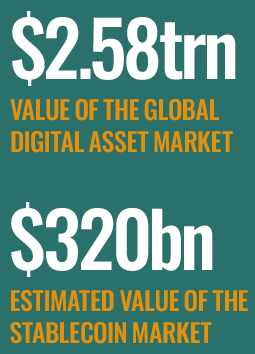
Despite these limitations in achieving its original monetary ambitions, dismissing cryptocurrency as a failed experiment would be a miscalculation. The digital asset market, now valued at approximately $2.58 trillion, has undergone a significant evolution. Rather than supplanting existing financial systems, it is increasingly functioning as a crucial layer of financial infrastructure, particularly at the peripheries of the global economy. This shift is most evident in its utility within geopolitically constrained environments, where its ability to bypass traditional financial channels offers pragmatic solutions.
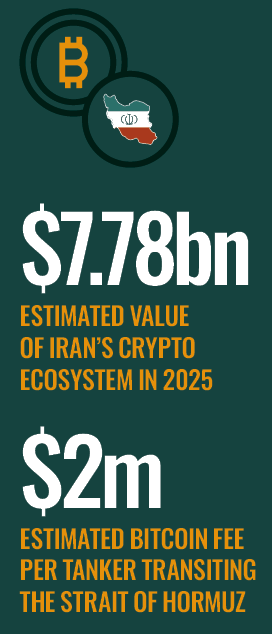
A striking example of this emergent infrastructure role is Iran’s proposed use of Bitcoin for collecting tariffs from tankers traversing the Strait of Hormuz. Amidst international sanctions, Iranian officials and industry representatives have discussed levying a $1 per barrel tariff payable in bitcoin. This strategy, as highlighted by Hamid Hosseini, a spokesperson for Iran’s Oil, Gas and Petrochemical Products Exporters’ Union, offers a method for tankers to make payments that are "difficult to trace or confiscate due to sanctions." The implication is a substantial fee, potentially amounting to $2 million per tanker, embedded directly into one of the world’s most critical trade arteries. This is not an endorsement of a new monetary doctrine, but rather a pragmatic adaptation to circumvent a dollar-centric system and establish an unmonitored payment channel.
The initial allure of cryptocurrency stemmed from a profound mistrust of the established financial system following the 2008 crisis. As Hyun Song Shin, economic adviser and head of research at the Bank for International Settlements (BIS), noted in a 2022 op-ed, cryptocurrencies emerged as a "backlash against the failings of the conventional financial system," promising a self-sustaining, peer-to-peer network that bypassed banks entirely. However, the practical evolution of the crypto space has revealed a reliance on intermediaries. Centralized exchanges like Binance, Coinbase, and Kraken have become essential for the industry’s growth, acting as the engines channeling funds into the sector. While traditional banks operate under robust regulatory frameworks, the governance of cryptocurrency protocols often rests with founders and a select group of venture capital backers.
The high-profile collapse of FTX and the subsequent jailing of its founder, Sam Bankman-Fried, serve as a stark illustration of the risks inherent in this less regulated environment. The revelation that Bankman-Fried had defrauded FTX customers of an estimated $8 billion, diverting their deposits to his trading firm, Alameda Research, underscores the critical need for robust governance and risk management. The scale of this fraud, paradoxically, also highlights the significant growth the cryptocurrency ecosystem has experienced, a growth that would have been impossible without these centralized intermediaries. While a return to the original vision of complete decentralization remains an ideal, its practical implementation is fraught with challenges.
On a fundamental level, the established financial system relies on money serving three core functions: a medium of exchange, a store of value, and a unit of account. Cryptocurrency has demonstrably struggled to consistently fulfill these roles. As a medium of exchange, transactions can be inefficient. Technical bottlenecks, such as slow confirmation times for Bitcoin transactions and potential failures during contract execution, coupled with economic factors like significant price volatility, impede real-time payments. Furthermore, the substantial energy consumption associated with some cryptocurrencies, notably Bitcoin, is a growing concern. Digiconomist reported in 2025 that Bitcoin’s annual energy consumption placed it among the top energy-consuming nations globally.
As a store of value, cryptocurrency’s extreme volatility makes it an unreliable asset. Bitcoin’s price is subject to dramatic fluctuations, often following four-year boom-and-bust cycles. Research by Baur and Dimpfl in Empirical Economics indicated that Bitcoin’s price volatility is nearly ten times higher than that of major exchange rates. Consequently, it struggles to maintain a stable value over time. Its aspiration to be a unit of account has also been largely unsuccessful, with markets predominantly priced in US dollars and very limited real-world pricing occurring in cryptocurrency.
If cryptocurrency has faltered in its role as a direct currency substitute, its true utility has emerged at the fringes of the financial system. Its ability to circumvent sanctions is a primary driver of its adoption in specific contexts. Iran’s proposed bitcoin toll exemplifies this. The country’s crypto ecosystem has seen rapid growth, with its value exceeding $7.78 billion in the past year, according to Virginia Pietromarchi writing for Al Jazeera. This growth is attributed, in part, to high inflation and a depreciating currency, but also to the utility for entities like the Islamic Revolutionary Guard Corps (IRGC). As Pietromarchi notes, cryptocurrencies offer a less traceable and more easily transferable method for conducting transactions, including oil sales, weapons procurement, and acquiring commodities, thereby bypassing sanctions.
However, this circumvention of sanctions is not without its challenges. The US Department of the Treasury has been actively disrupting Iran’s illicit oil revenue, freezing nearly $500 million in regime-linked cryptocurrency and cracking down on Tehran’s shadow banking networks.
Following Russia’s invasion of Ukraine in early 2022, extensive sanctions led to the country’s exclusion from mainstream correspondent banking and the SWIFT system, severely limiting its international payment capabilities. In response, Russia is moving to legalize crypto payments in foreign trade, with reports indicating this will take effect on July 1, 2026. This legal pathway for exporters to accept Bitcoin and stablecoins from buyers cut off from Western banking signifies a strategic adaptation. Crypto-facilitated international trade has allowed Russian exporters to continue transactions, particularly with major partners like China and India for oil exports. In 2025, these transactions were estimated to be worth approximately 1 trillion rubles ($11 billion). Russia’s approach demonstrates how crypto has evolved from a retail phenomenon into a state-enabled settlement layer, supplementing sanctioned economies rather than replacing existing banking infrastructure outright. Gonzalo Saiz Erausquin, a Research Fellow at the Royal United Services Institute (RUSI), observes that crypto-enabled settlement is now integral to Russia’s procurement model, linking supply chains with alternative payment mechanisms designed to mitigate the impact of sanctions. Cryptocurrency, in this context, has transitioned from the realm of illicit activities to a "systemic, state-tolerated and in some cases state-enabled payment rail for military procurement."
The implications of these parallel financial systems are complex. The same networks that enable citizens to protect savings from inflation and capital controls can also facilitate sanctions evasion and opaque cross-border transfers. A key challenge with decentralized financial systems, even with transparent blockchain ledgers, is the lack of accountability. However, for individuals in unstable economies seeking to safeguard assets from local authorities, cryptocurrency offers a viable alternative to traditional banking restrictions. As a 1989 Bank of England note observed, capital flight is often a symptom of weak domestic policy rather than a cause of economic deterioration itself, suggesting that restrictive policies can drive capital away.

Perhaps Bitcoin’s most enduring role has been as a speculative asset, valued more for conviction than for direct utility. This investment philosophy, focused on potential future value rather than current use, runs counter to its self-proclaimed status as a currency. In this sense, it has not become money but has instead evolved into a form of infrastructure. Traditional financial infrastructure, provided by entities like SWIFT and regulated banks, offers security but can be slow, with transfers taking several days. Blockchain technology, conversely, facilitates direct peer-to-peer transfers that can be completed in seconds or minutes.
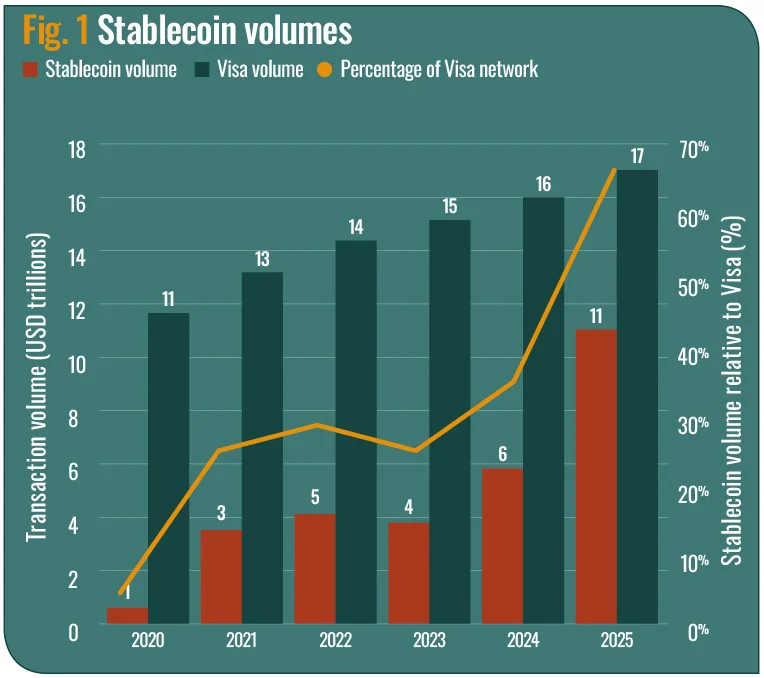
Stablecoins, with a market capitalization of approximately $320 billion, representing about 11.5% of the total crypto market, occupy a crucial intersection between conventional finance and decentralized settlement. Offering greater price stability than assets like Bitcoin, stablecoins function as a bridge between these two worlds. According to an IMF article by Adrian, Miccoli, and Sugimoto in 2025, the primary distinction lies in their centralized nature, being operated by specific companies and predominantly backed by liquid financial assets such as cash or government securities. Most stablecoins are denominated in US dollars and are often collateralized by US Treasury bonds.
By being backed by the dollar, these digital assets effectively support, rather than compete with, the existing dollar-based system. This mitigates a primary concern for governments and financial institutions: the loss of control over capital flows. While a fully decentralized financial system bypasses these entities entirely, stablecoins offer a degree of managed integration. Their usage has seen a steady increase, with the IMF reporting that the market capitalization of the two largest stablecoins tripled since 2023, reaching a combined $260 billion, and trading volume surged by 90% to $23 trillion in 2024.
The increasing adoption of stablecoins promotes the concept of cryptocurrency as a routing layer, where fiat currency is converted into crypto, transferred across borders, and then reconverted. This is particularly evident in remittance markets and economies facing dollar shortages. In countries with limited access to hard currency or unreliable banking systems, stablecoins increasingly serve as digital dollar substitutes. Businesses and households in Argentina, for example, have utilized USDT to protect their savings from peso devaluation. Similarly, in parts of Africa and Southeast Asia, freelancers and exporters are receiving payments in stablecoins to circumvent correspondent banking delays and local currency volatility. Rather than replacing the dollar system, crypto often extends its reach, providing access to dollar liquidity without direct engagement with the formal banking sector. This development stands in contrast to the original Bitcoin whitepaper’s vision of eliminating trusted third parties.

The governmental response to cryptocurrency has been multifaceted. Initially dismissed by central banks as disruptive to capital controls, many have since acknowledged the technology’s potential benefits and have begun exploring its adoption. This has led to a surge in experimentation with Central Bank Digital Currencies (CBDCs). As of July 2022, nearly 100 CBDCs were in research or development stages, with Nigeria’s eNaira and the Bahamian Sand Dollar already launched, followed by Jamaica’s JAM-DEX. Currently, 41 CBDC projects are being piloted globally, including Russia’s digital ruble, Brazil’s Drex, China’s e-CNY, India’s Digital Rupee, and Europe’s Digital Euro. The primary driver for these initiatives appears to be financial inclusion, particularly in regions with unbanked or underbanked populations, as seen with the Sand Dollar’s aim to serve the scattered islands of The Bahamas.
Central banks have, in essence, been compelled to adapt. The advent of cryptocurrency has spurred them to modernize their systems, leading to the development of sovereign digital alternatives that mirror the decentralized rails of crypto. Stablecoins are also gaining institutional traction, with their rapid growth reshaping monetary dynamics and expanding the reach of the dollar. While stablecoins can reinforce dollar hegemony, their increased activity in countries outside the US carries the potential to diminish those nations’ central banks’ control over domestic liquidity. It is a notable irony that crypto’s greatest success may lie in extending the dollar’s influence rather than challenging it.
Global and central banks are also progressing with tokenization projects, moving from sandbox environments to pilot phases. The Bank of England is collaborating with private banks to explore digital ledger technology (DLT) for faster, cheaper transactions with fewer intermediaries, shorter settlement windows, and automated processes via smart contracts. In the United States, five banks are transitioning to an Ethereum-based tokenized deposit system, signaling a move toward a more modernized payments industry. In Asia, Hong Kong’s Monetary Authority (HKMA) is piloting real-value, cross-bank transfers of tokenized deposits with major banks, while Standard Chartered in Singapore is processing global treasury operations on its blockchain.
The recent years have been marked by a series of global shocks – health crises, geopolitical conflicts, and natural disasters – that have disrupted supply chains, inflated commodity prices, and fueled inflation. In such an environment, cryptocurrencies have increasingly served as a hedge against inflation and a tool for financial freedom, shedding their purely speculative asset status. This has been particularly evident in hyperinflationary economies like Venezuela, where citizens have turned to Bitcoin to protect their wealth, purchase essentials, and receive remittances from abroad. Between August 2014 and November 2016, the number of Bitcoin users in Venezuela surged dramatically from 450 to 85,000. Similar patterns are observed in countries such as Argentina, Turkey, and Nigeria, which exhibit high crypto adoption rates and have embraced dollar-backed digital tokens for everyday transactions.
The future trajectory of cryptocurrency appears to be more focused and specialized than its initial broad promises suggested. As acknowledged by the IMF, tokenization and stablecoins are here to stay, though their future adoption and the broader outlook for this technology remain uncertain. The ongoing fragmentation of the global financial order into distinct geopolitical blocs, coupled with volatile trade policies and an increasing number of global sanctions, further shapes this landscape.
Cryptocurrency seems well-suited to this fragmenting world, finding its niche within these blocs. The underlying blockchain technology, by creating siloed networks and fostering divergent regulatory approaches, can act as a force for fragmentation in both the financial and technological spheres. The global financial order is becoming less universal and more regionalized, with sanctions, export controls, tariffs, and technological decoupling incentivizing the development of parallel systems for trade and settlement. While unlikely to form the bedrock of a new monetary order, cryptocurrency is proving increasingly useful within these fractured systems. In this capacity, digital assets function as adaptation tools: not powerful enough to replace sovereign currencies, but sufficiently flexible to operate around the political constraints imposed upon them.
To be clear, cryptocurrency is not poised to displace the dollar, dominate global trade, or become universal money. However, it has carved out a significant role within the financial system. The revolution originally envisioned by Bitcoin has not fully materialized, but in the areas where traditional finance is weakest, slowest, or politically constrained, crypto has quietly integrated itself into the machinery of global commerce, providing essential infrastructure where it is most needed.