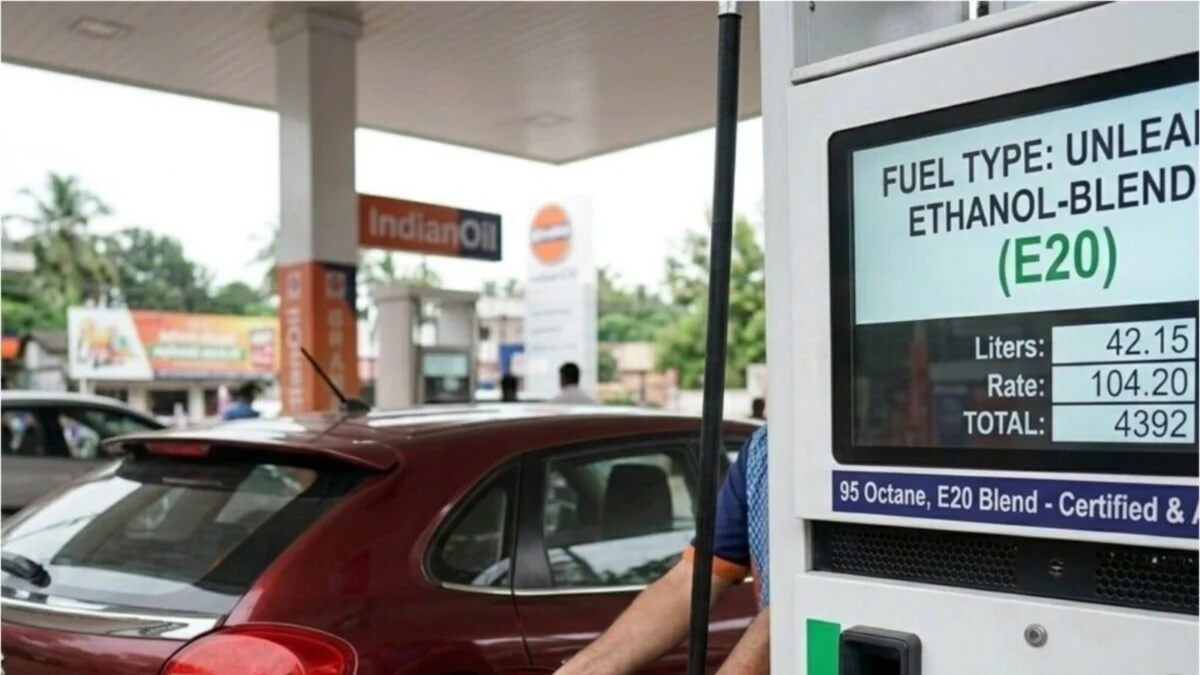
India’s ambitious push towards E20 fuel, a blend of 20% ethanol with gasoline, stands as a cornerstone of its energy security and environmental strategy, yet a critical debate has intensified regarding its direct impact on consumer petrol prices. While proponents highlight reduced crude oil import bills and lower emissions, seasoned industry veterans express skepticism about the program’s ability to translate into immediate price relief at the pump for the average Indian motorist. This divergence underscores the complex interplay of policy objectives, production economics, and market dynamics inherent in such a transformative energy transition.
The E20 mandate, slated for nationwide implementation by 2025, represents a significant acceleration of India’s National Biofuel Policy. Originating from the goal to achieve E10 (10% ethanol blend) by 2022, the program rapidly surpassed its target, reaching E12 (12% blend) in certain regions ahead of schedule. The primary drivers behind this aggressive blending target are multi-fold. Firstly, energy security is paramount for India, which imports over 85% of its crude oil requirements, making its economy highly vulnerable to volatile global oil prices and geopolitical shifts. The government projects that achieving E20 could save the nation a substantial portion of its annual crude import bill, potentially upwards of $4 billion, thereby strengthening the country’s foreign exchange reserves and macroeconomic stability. Secondly, environmental considerations play a significant role. Ethanol is promoted as a cleaner-burning fuel, capable of reducing particulate matter and carbon monoxide emissions from vehicles, contributing to improved air quality, especially in urban centers. Lastly, the program aims to bolster the agricultural sector by providing a reliable and remunerative off-take for surplus sugarcane and food grains, thereby supporting farmer incomes and creating value chains in rural economies.
However, the assertion that E20 will inherently lead to lower petrol prices for consumers faces considerable scrutiny, particularly from experts with deep insights into the fuel industry’s economics. A former chief of Hindustan Petroleum Corporation Limited (HPCL), for instance, has publicly stated that ethanol blending, while beneficial for import reduction and the environment, is unlikely to translate into cheaper petrol. This perspective is rooted in several critical factors. The cost structure of ethanol production in India, primarily derived from sugarcane and increasingly from damaged food grains like rice and maize, involves significant inputs for cultivation, processing, and transportation. While the government provides procurement price incentives to distilleries, ensuring a viable margin for producers, this support ultimately factors into the overall cost of the blended fuel. The retail price of petrol is a composite of the crude oil price, refining costs, central excise duties, state-specific value-added taxes (VAT), and dealer commissions. Even if the ethanol component is cheaper than the equivalent volume of gasoline, the existing taxation framework and the various fixed costs involved often overshadow any potential marginal savings.
Furthermore, a crucial technical aspect often overlooked in the public discourse is the calorific value of ethanol. Ethanol possesses a lower energy density compared to gasoline, meaning a liter of E20 fuel will yield less energy than a liter of pure gasoline. Consequently, vehicles running on E20 might experience a slight reduction in fuel efficiency, requiring consumers to purchase more fuel to cover the same distance. This effectively negates any perceived per-liter price advantage. While modern vehicles are designed to accommodate E20 with minimal performance impact, older models may experience issues, and the subtle decrease in mileage across the fleet can accumulate into a significant cost for consumers over time, eroding any theoretical savings. Brazil, a pioneer in ethanol blending with a long history of flexible-fuel vehicles, offers a case study where the price of ethanol-blended fuel is carefully monitored against gasoline to ensure consumer benefit, often requiring explicit policy interventions to maintain competitiveness.
The economic implications extend beyond mere pump prices. The substantial investment required to scale up ethanol production and distribution infrastructure is immense. India aims to increase its ethanol production capacity from around 6.84 billion liters in 2020-21 to 17 billion liters by 2025. This necessitates significant capital expenditure in new distilleries, storage facilities, and logistics networks capable of handling the corrosive nature of ethanol. These costs, directly or indirectly, feed into the overall supply chain expenses. Moreover, the "food versus fuel" debate remains a pertinent concern. While India currently utilizes surplus grains for ethanol production, a sustained increase in demand for feedstock could potentially divert essential food crops, especially rice and maize, from the public distribution system or export markets, potentially impacting food security and domestic food inflation, particularly during periods of adverse weather or agricultural stress. The government has taken steps to mitigate this by encouraging production from alternative feedstocks like cellulosic biomass, but second-generation ethanol technologies are still nascent and more expensive to scale.
Globally, countries like the United States and Brazil have long-standing ethanol blending programs, primarily driven by agricultural subsidies and environmental mandates. In the U.S., corn-based ethanol (E10, E15) benefits from tax credits and renewable fuel standards, making it a competitive additive. Brazil, on the other hand, relies heavily on sugarcane ethanol, which is often more energy-efficient to produce than corn-based ethanol, and its extensive flex-fuel vehicle fleet allows consumers to choose between pure ethanol or gasoline blends based on prevailing prices. However, even in these mature markets, the relationship between ethanol blending and retail fuel prices is complex, often influenced by commodity prices, subsidies, and energy policies rather than a direct, simplistic correlation. India’s challenge is to find a sustainable economic model that balances producer incentives, environmental goals, and consumer affordability within its unique socio-economic context.
Looking ahead, the success of India’s E20 program will hinge on a nuanced approach that addresses these multifaceted challenges. Transparency in ethanol pricing and its integration into the retail fuel price mechanism is crucial for consumer trust. Continuous investment in research and development for more efficient and sustainable ethanol production technologies, particularly those utilizing non-food feedstocks, will be vital to de-risk the program from food security concerns. Furthermore, the automotive industry needs continued support and incentives to transition to E20-compatible vehicles and develop flex-fuel options. The E20 initiative, while unequivocally a strategic imperative for India’s energy independence and environmental stewardship, represents a sophisticated policy instrument with far-reaching economic consequences that extend beyond the simple equation of reducing petrol prices. It necessitates careful calibration, continuous evaluation, and adaptive policymaking to ensure that its overarching benefits are realized without inadvertently burdening consumers or compromising other critical national priorities. The intensifying debate serves as a crucial reminder that true energy transition demands a holistic understanding of both its intended and unintended economic ripples.