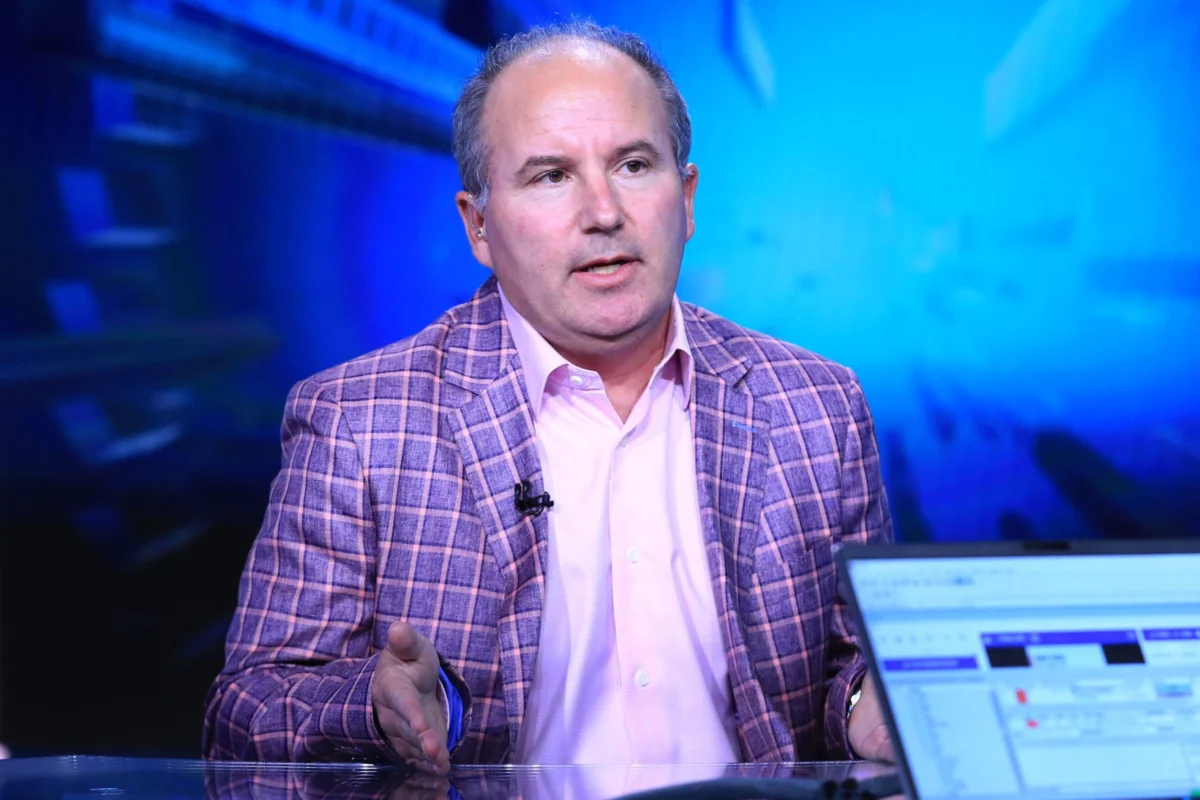
The landscape of technology finance is undergoing a seismic shift as one of Wall Street’s most recognizable voices, Dan Ives, transitions from the world of equity research to the front lines of principal investing. In a strategic partnership with Yorkville Securities, Ives has announced the formation of Yorkville Ives & Co., a specialized merchant bank designed to capitalize on the massive capital requirements of the artificial intelligence era. This new venture marks a significant departure from the traditional sell-side analyst model, signaling a broader trend where market influencers are seeking to leverage their specialized knowledge by putting their own capital to work alongside institutional clients.
The firm arrives at a pivotal moment in the global economy, which Ives frequently characterizes as the "Fourth Industrial Revolution." Unlike traditional investment banks that often operate in silos, Yorkville Ives & Co. aims to integrate high-level equity research, institutional trading, and strategic advisory with principal investing. This "under one hood" approach is intended to provide a comprehensive suite of services for companies navigating the complex intersections of technology, infrastructure, and energy. With Roger Briggs assuming the role of Chief Executive Officer and Ives serving as Partner and Senior Managing Director, the firm is positioning itself as a boutique powerhouse tailored for a new age of industrial transformation.
The emergence of Yorkville Ives & Co. is deeply rooted in the current technological zeitgeist. Over the past two years, the explosion of generative AI has triggered a global arms race for computing power, leading to a historic surge in capital expenditure by "hyperscalers" like Microsoft, Alphabet, and Amazon. Industry estimates suggest that global spending on AI-centric systems could surpass $600 billion annually by the end of the decade. However, the bottleneck for this expansion is no longer just the availability of advanced semiconductors, but the physical infrastructure required to house them. Data centers, specialized cooling systems, and massive power grids have become the new frontier of tech investment, creating a vacuum for a merchant bank that understands both the software and the hardware of the digital age.
By focusing on technology, industrials, energy transition, and infrastructure, Yorkville Ives & Co. is targeting the specific sectors where the most significant capital reallocation is occurring. The "energy transition" component is particularly critical; the International Energy Agency (IEA) has noted that the electricity consumption of data centers could double by 2026, reaching levels equivalent to the entire power demand of countries like Germany. Financing the transition to sustainable energy sources to power these digital monoliths requires a sophisticated understanding of both regulatory environments and long-term infrastructure debt—a niche that the new firm intends to fill.
The merchant banking model itself—where a firm acts not just as an intermediary but as an investor—is seeing a resurgence. In an era of high interest rates and tighter credit conditions, companies are increasingly looking for partners who have "skin in the game." Yorkville Ives & Co. plans to offer debt and equity capital raising in both public and private markets, while also investing its own capital. This alignment of interests is designed to build deeper trust with corporate clients, particularly in the mid-market sector where traditional bulge-bracket banks may lack the agility or specialized focus to provide bespoke solutions.
Dan Ives brings to the venture a reputation built over 25 years of covering the technology sector, most recently during an eight-year tenure at Wedbush Securities. Known for his bullish stance on the "Magnificent Seven" and his frequent media appearances, Ives has cultivated a brand that transcends traditional financial analysis. His move into merchant banking reflects a growing trend of "analyst-as-entrepreneur," where the value of a professional’s network and market insight is monetized through direct deal-making rather than just subscription-based research. During his time at Wedbush, Ives began experimenting with this broader role, serving on corporate advisory boards and briefly chairing Eightco Holdings, where he explored the integration of digital assets and identity-verification technologies like Sam Altman’s Worldcoin venture.

The structural shift Ives is betting on is supported by broader economic data. The global M&A market, which faced a significant downturn in 2023 due to rising interest rates, is showing signs of a robust recovery in the tech and energy sectors. According to recent market reports, technology-related deal volumes are expected to rise as private equity firms and corporate strategics look to consolidate the fragmented AI landscape. Furthermore, the infrastructure sector has become a "safe haven" for institutional capital, offering inflation-protected returns that are highly attractive in a volatile macroeconomic environment. By bridging the gap between high-growth tech and stable infrastructure, Yorkville Ives & Co. is positioning itself at the center of the most resilient segments of the market.
The firm’s strategic advisory arm will focus on mergers and acquisitions, capital structure optimization, and other corporate transactions. This is particularly relevant as many AI startups, which raised seed funding during the 2021-2022 boom, now face "Series B or C" hurdles where they must demonstrate viable business models or seek strategic exits. Simultaneously, traditional industrial companies are seeking to "tech-enable" their operations to remain competitive, creating a cross-sector demand for advisory services that can translate complex technological trends into actionable financial strategies.
From a global perspective, the launch of such a firm highlights the intensifying competition for technological supremacy. As nations like the United States, China, and members of the European Union implement industrial policies—such as the CHIPS Act and the Inflation Reduction Act—to secure their supply chains and energy independence, the role of specialized financial institutions becomes paramount. These government initiatives provide a tailwind for firms like Yorkville Ives & Co., as they create a framework of incentives for private investment in the very sectors the firm is targeting.
The leadership team’s focus on "independent equity research" as a core pillar of the merchant bank is also a strategic differentiator. In a market often criticized for "herd mentality," the ability to provide contrarian or deeply specialized insights can be a significant competitive advantage. For Ives, whose career has been defined by identifying long-term secular growth trends before they become consensus, the research arm will likely serve as the "top of the funnel" for the firm’s investment and advisory business. This synergy allows the firm to identify undervalued assets or emerging technologies before they reach the radar of larger, more generalized institutions.
As the financial world watches this transition, the success of Yorkville Ives & Co. will likely be measured by its ability to execute on its "modern merchant bank" thesis. The challenges are not insignificant; the firm will be competing against established boutique banks and the private credit arms of massive asset managers. However, the unique combination of Ives’ market visibility and Yorkville’s institutional backbone provides a foundation that few startups in the space can match.
Ultimately, the formation of Yorkville Ives & Co. is a testament to the evolving nature of Wall Street. It suggests that in an age of rapid technological disruption, the most valuable asset a financial firm can possess is not just capital, but the specialized expertise to understand where that capital should be deployed. As the Fourth Industrial Revolution continues to reshape every facet of the global economy—from how we generate power to how we process information—the need for a new breed of financial institution, one that is as comfortable in a data center as it is on a trading floor, has never been more apparent. Ives and his team are betting that by integrating research, banking, and principal investing, they can create a blueprint for the future of investment banking in an AI-driven world.