The humble cork, a material harvested from the bark of the cork oak tree, is experiencing a renaissance, proving its mettle not only in its age-old applications but also in cutting-edge industries, from aerospace to advanced construction. This remarkable natural resource, deeply rooted in millennia of human history, is now at the forefront of the global push for sustainable, bio-based materials, demonstrating an extraordinary capacity to deliver both environmental benefits and high-performance solutions across a diverse economic landscape. Its unique properties – lightness, elasticity, impermeability, and remarkable insulating capabilities – are finding new life in an era increasingly defined by environmental consciousness and a demand for circular economy principles.
The most iconic association of cork remains with the wine industry, a partnership that spans centuries and has profoundly shaped both sectors. The symbiotic relationship between a fine wine and its cork stopper is more than just functional; it is a testament to cork’s ability to protect, preserve, and even enhance the aging process of wine. While the practice of using corks dates back to antiquity, the 17th century, particularly with the influence of figures like Dom Pérignon, solidified the enduring link between the glass bottle and the natural cork closure. This connection has evolved into a critical element of the wine experience, where the cork stopper signifies quality, tradition, and a commitment to natural preservation.
At the vanguard of this enduring industry is Corticeira Amorim, a Portuguese powerhouse recognized globally as the leading producer and exporter of cork products. Established in 1870, the company has transformed from a modest family enterprise into an international leader, with a commercial reach extending to over 100 countries. While Corticeira Amorim’s expansive portfolio now encompasses innovative materials for flooring, automotive components, and even aerospace-grade composites, its reputation remains inextricably linked to its high-quality, natural cork stoppers. The company’s commitment to renewable, bio-based materials and a rigorous approach to life cycle sustainability assessment underpins its market dominance, with the production of over five billion stoppers annually underscoring its pivotal role.
The enduring preference for cork stoppers in the wine sector is multifaceted, resting on a confluence of technical superiority, sensory contributions, and, crucially, environmental performance. Extensive peer-reviewed life cycle assessment (LCA) studies and product carbon footprint analyses consistently affirm cork’s ecological advantages. Adhering to the stringent ISO 14067 standard for product carbon footprints, Corticeira Amorim has meticulously quantified the environmental impact of its cork stoppers. These cradle-to-gate studies, which encompass approximately 60% of the company’s product range and have been independently verified by APCER (Portuguese Association of Certification), provide robust, transparent, and credible data aligned with evolving EU regulatory expectations for environmental disclosures.
The findings are compelling: all analyzed cork stoppers exhibit a negative carbon footprint within their defined system boundaries, underscoring cork’s significant positive contribution as a wine packaging solution. For instance, the Spark Top II stopper, designed for sparkling wines, registers a negative carbon footprint of -28.72 grams of CO2 equivalent (g CO2e) per unit. Similarly, the Naturity cork stopper, a flagship product for still wines, achieves an even more impressive -56.4 g CO2e. These figures highlight how the natural sourcing and processing of cork contribute to carbon sequestration, effectively making it a carbon-negative material in its lifecycle.
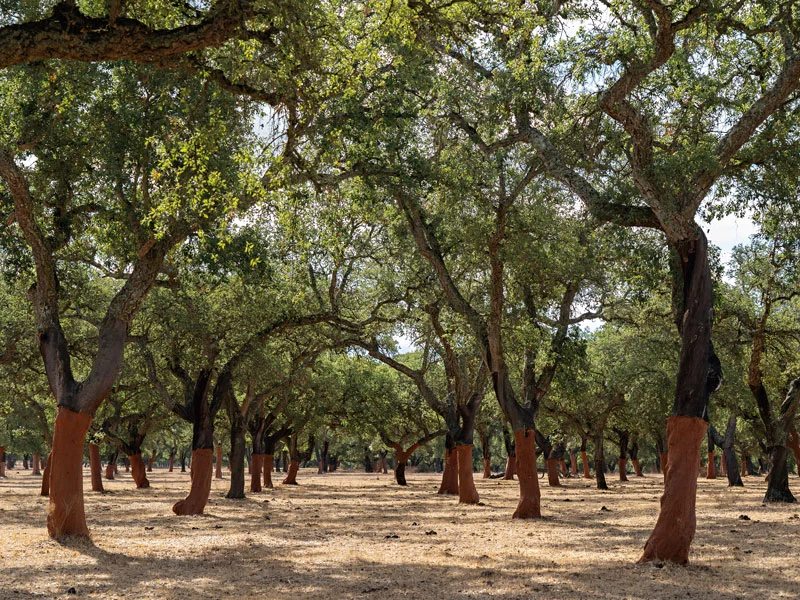
The exceptional environmental credentials of cork are intrinsically linked to the cork oak tree (Quercus suber), a keystone species in the Mediterranean landscape, particularly in Portugal’s unique Montado agroforestry system. This remarkable tree possesses the unparalleled ability to regenerate its bark after harvesting, a process that occurs every nine to twelve years, without harming the tree itself. Cork oak forests are not merely sources of raw material; they are vital carbon sinks and long-term carbon reservoirs. With an average lifespan of around 200 years, these forests play a crucial role in mitigating climate change.
Research, cited by APCOR (Portuguese Cork Association), indicates that cork oak forests can sequester up to an astonishing 73 tonnes of CO2 for every tonne of cork harvested. This demonstrates cork’s inherent capacity as a nature-based solution with substantial long-term carbon storage potential, while simultaneously delivering a cascade of other essential ecosystem services.
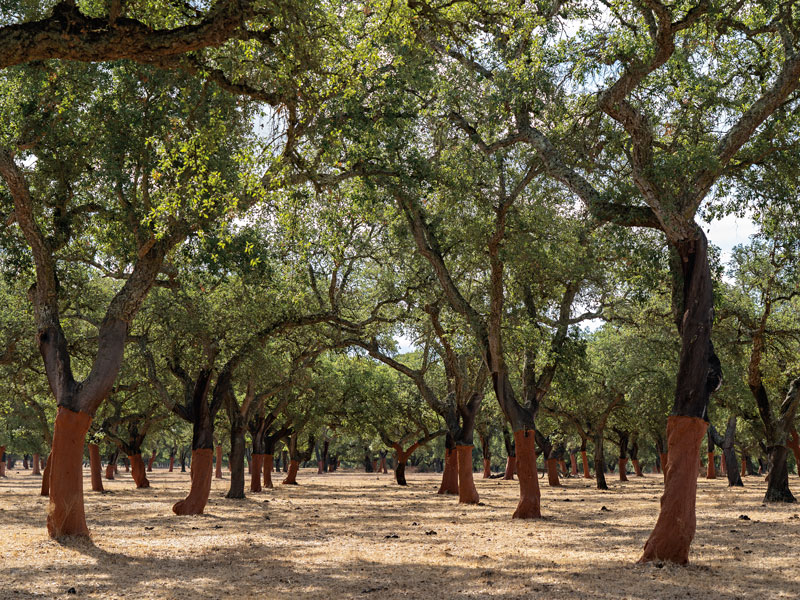
Beyond its role in carbon sequestration, the Montado ecosystem is a biodiversity hotspot, supporting a rich array of flora and fauna, including critically endangered species such as the Iberian lynx and the Spanish imperial eagle. The cork oak itself is instrumental in maintaining soil health, preventing erosion, and combating desertification across the Mediterranean basin. Unlike conventional monoculture forestry, the cork oak forest exemplifies a sustainable land-use model where ecological preservation and economic productivity are not mutually exclusive but are mutually reinforcing.
The long-term resilience and ecological integrity of these vital forests are directly dependent on responsible forest management practices and the maintenance of healthy, economically viable cork value chains. By ensuring that the harvesting and processing of cork remain a profitable endeavor, stakeholders are incentivized to preserve and expand these multifunctional landscapes for generations to come. This integrated approach, combining ecological stewardship with economic opportunity, positions cork not just as a material of the past, but as a fundamental component of a sustainable future.
The innovation within the cork industry extends far beyond its traditional applications. In the automotive sector, cork composites are utilized for their lightweight, vibration-dampening, and thermal insulation properties, contributing to fuel efficiency and enhanced passenger comfort. The construction industry is leveraging cork for its excellent acoustic and thermal insulation capabilities, offering sustainable alternatives to synthetic materials. In the realm of high-technology, cork’s inherent resistance to extreme temperatures and its ability to absorb shock make it a valuable component in aerospace applications, including heat shields and structural elements. This diversification showcases cork’s adaptability and its potential to disrupt established markets with its unique blend of performance and environmental responsibility. As global markets increasingly prioritize sustainability, the ancient material of cork is poised to play an ever more significant role in shaping a more environmentally conscious and economically robust future.