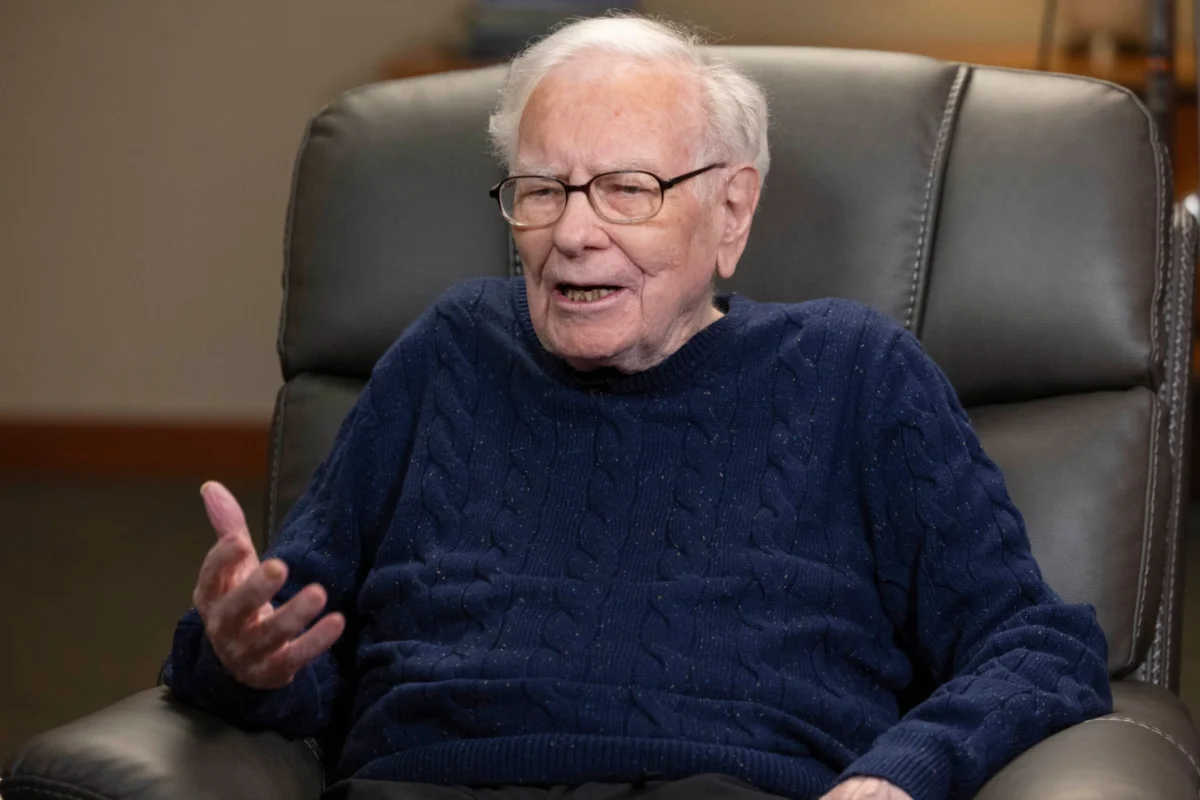
The landscape of global philanthropy underwent a seismic shift this week as Warren Buffett, the 95-year-old chairman of Berkshire Hathaway, clarified his decision to redirect his immense wealth away from the Bill & Melinda Gates Foundation. In a wide-ranging interview that touched upon personal ethics, estate planning, and the nature of friendship, Buffett characterized Bill Gates’ past association with the late disgraced financier Jeffrey Epstein as "distasteful," yet stopped short of a total moral condemnation. The "Oracle of Omaha" framed the decision to overhaul his charitable giving not as a punitive measure, but as a strategic evolution of his trust in his three children to manage his nearly $130 billion legacy.
The pivot marks a significant departure from a nearly two-decade-long arrangement that saw the Gates Foundation serve as the primary vessel for Buffett’s altruism. Since 2006, Buffett has funneled more than $47 billion worth of Berkshire Hathaway stock into the Seattle-based foundation, fueling global initiatives in public health, education, and poverty eradication. However, the recent revelation that Buffett has excluded the Gates Foundation from his latest round of donations—and, crucially, from his ultimate estate plan—suggests a desire for a more intimate, family-governed approach to wealth distribution.
While the headlines focused on the Epstein connection, Buffett’s comments provided a more nuanced view of the interpersonal dynamics at play. He admitted to reviewing the details of Gates’ relationship with Epstein extensively since the start of the year. While he found the association unpalatable, Buffett exercised his trademark pragmatism, noting that even the most seasoned leaders are susceptible to errors in judgment regarding their social circles. He compared the situation to his own experiences in business, where he occasionally hired or befriended individuals who later proved to be different from his initial assessment. This perspective suggests that while the reputational friction may have accelerated his decision, the underlying motivation for the shift is rooted in the maturation of his heirs and a long-term vision for localized impact.
The economic implications of this redirection are staggering. In his most recent distribution, Buffett allocated 9 million Class B shares of Berkshire Hathaway, valued at approximately $4.5 billion, to the Susan Thompson Buffett Foundation, named after his late first wife. Additionally, he distributed 1 million Class B shares each—worth nearly $500 million apiece—to the three foundations overseen by his children: the Sherwood Foundation (Susie Buffett), the Howard G. Buffett Foundation, and the NoVo Foundation (Peter Buffett). This $5.3 billion infusion into family-led entities represents one of the largest single-day transfers of philanthropic capital in history, signaling a shift from the Gates Foundation’s "big science" and global health focus toward the more specific, often domestic, social and environmental missions of the Buffett children.

Market analysts note that Buffett’s decision to sunset his contributions to the Gates Foundation also clarifies the long-term trajectory of Berkshire Hathaway’s stock. Buffett’s updated estate plan dictates that nearly all of his remaining Berkshire shares be placed into a charitable trust overseen by his children, with the mandate to liquidate and distribute the funds within approximately eight years of his death. This timeline provides a degree of certainty to the market, mitigating fears of a massive, uncoordinated "dump" of shares that could destabilize the company’s valuation. Instead, it suggests a controlled, decade-long infusion of capital into the global economy through various non-profit channels.
The transition also highlights a broader trend in "Big Philanthropy" where ultra-high-net-worth individuals are moving away from monolithic institutional giving in favor of more flexible, personal models. While the Gates Foundation has been praised for its data-driven approach and success in near-eradicating polio, it has also faced criticism for its perceived lack of transparency and top-down methodology. By empowering his children—who have spent decades honing their philanthropic expertise in niches ranging from Midwestern social justice to international food security—Buffett is betting on a decentralized model of giving. He expressed that while he previously felt his children were not ready for the responsibility of such vast sums, their decades of work have now equipped them to handle the stewardship of the "Buffett billions."
In a statement, Bill Gates remained magnanimous, emphasizing that Buffett’s support had been "unprecedented" and instrumental in saving millions of lives. The two titans of industry reportedly remain in close contact, having spent several hours together in Omaha recently. This suggests that the professional decoupling of their philanthropic interests has not resulted in a total personal rift. However, the optics of the situation cannot be ignored. In an era where Environmental, Social, and Governance (ESG) criteria increasingly influence investment and partnership decisions, even a titan like Gates is not immune to the consequences of reputational fallout. Buffett’s use of the word "distasteful" serves as a rare, albeit measured, public rebuke from a man who typically avoids controversy.
The Howard G. Buffett Foundation, which focuses on global food security and conflict resolution, and the Sherwood Foundation, which targets early childhood education and poverty in Nebraska, are poised to become some of the most influential players in the non-profit sector. Peter Buffett’s NoVo Foundation, which focuses on the empowerment of women and girls, also stands to see its endowment swell to levels that rival major national NGOs. This transition of power effectively creates a "triad" of philanthropic influence that will likely be more responsive to social movements and local needs than the global-scale bureaucracy of the Gates Foundation.
From an economic perspective, the shift also reflects the reality of the "Great Wealth Transfer." As the silent generation and older baby boomers begin to pass on their assets, the management of these fortunes is moving into the hands of a generation that often prioritizes different values, such as systemic social change over traditional charity. Buffett’s children, all of whom are in their 60s or 70s, represent a bridge between their father’s traditional capitalistic philanthropy and a more modern, activist-oriented approach.

Despite the heavy focus on his legacy, Buffett also provided a brief update on his current well-being, noting that he is recovering from a broken leg and a subsequent surgery. At 95, his physical resilience mirrors his intellectual sharpness, yet the very mention of his health serves as a reminder to the markets that the post-Buffett era at Berkshire Hathaway is approaching. With Greg Abel already designated as his successor for the business operations, the clarification of his philanthropic estate plan completes the final piece of the succession puzzle.
The legacy of the Buffett-Gates partnership will undoubtedly be remembered as one of the most productive alliances in human history, having redefined what is possible when private wealth is mobilized for the public good. Yet, as this chapter closes, the world is watching a new experiment in giving. By placing his trust—and his fortune—in the hands of his children, Warren Buffett is ensuring that his life’s work will be distributed through the lenses of those who know him best. It is a transition from the global to the familial, from the institutional to the personal, and it represents the final strategic move of a man who has spent a lifetime calculating the best possible return on investment—not just in dollars, but in human impact.
As the Gates Foundation prepares for a future without its most prolific donor, the organization faces a period of recalibration. It remains the wealthiest private foundation in the world, but the loss of Buffett’s future contributions and his seat on the board (which he vacated in 2021) marks the end of an era. Meanwhile, the Buffett children are stepping into a spotlight that is brighter than ever, tasked with the mission of liquidating one of the world’s greatest fortunes in a way that honors their father’s "Oracle" status while addressing the complexities of the 21st century. The redistribution of these assets will likely ripple through the global economy for decades, proving that while the association with Epstein may have been a "distasteful" footnote, the ultimate legacy of the Buffett fortune remains focused on the future.