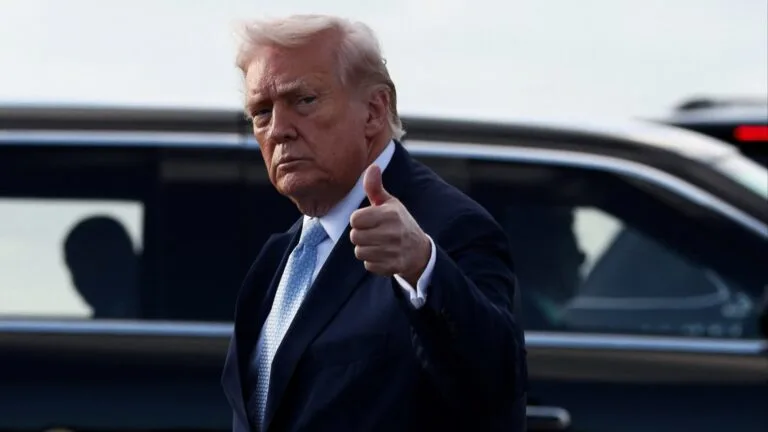
The geopolitical landscape of the Western Hemisphere has been thrust into a state of renewed volatility following a series of aggressive policy declarations and rhetorical broadsides from Donald Trump directed at the administration of Nicolás Maduro. This shift signals a potential return to the "maximum pressure" campaign that defined U.S.-Venezuela relations during his previous term, a strategy characterized by stringent economic sanctions, diplomatic isolation, and the overt pursuit of regime change in Caracas. As the global energy market grapples with instability in the Middle East and Eastern Europe, the re-emergence of Venezuela as a primary target of American foreign policy carries profound implications for international oil prices, regional migration patterns, and the broader balance of power in Latin America.
At the heart of this renewed friction is the disputed legitimacy of the Venezuelan executive branch and the systemic collapse of the nation’s democratic institutions. The Venezuelan economy, once the wealthiest in South America, has endured a decade-long contraction that experts characterize as one of the most severe peacetime economic collapses in modern history. Under the weight of mismanagement and previous U.S. sanctions, the country’s Gross Domestic Product (GDP) has shrunk by approximately 75% since 2014. Trump’s latest assertions suggest that a future administration would not only reinstate the full weight of secondary sanctions but might also move to close existing loopholes that have allowed limited humanitarian and energy-related transactions to persist.
The economic mechanism of this "attack" is primarily centered on the oil sector, which serves as the lifeblood of the Venezuelan state. Despite possessing the world’s largest proven crude oil reserves—estimated at over 300 billion barrels—Venezuela’s production capacity has withered. From a peak of 3.5 million barrels per day (bpd) in the late 1990s, production plummeted to fewer than 400,000 bpd at the height of the 2020 sanctions. While recent years have seen a modest recovery to approximately 800,000 bpd, largely due to the Biden administration’s issuance of specific licenses to companies like Chevron, Trump’s rhetoric threatens to dismantle these bridges. A total embargo on Venezuelan crude would force global refiners, particularly those on the U.S. Gulf Coast designed to process Venezuela’s heavy sour crude, to seek more expensive alternatives, potentially driving up gasoline prices for American consumers.
Market analysts are closely watching the reaction of the "Axis of Evasion," a term used by security experts to describe the network of trade between Venezuela, Iran, Russia, and China. In the face of Western isolation, Caracas has increasingly relied on Beijing for credit-for-oil swaps and on Tehran for technical assistance in maintaining its crumbling refineries. A more aggressive U.S. stance could inadvertently strengthen these ties, further integrating Venezuela into an alternative global financial system that operates outside the reach of the U.S. dollar. This "de-dollarization" of Venezuelan oil trade presents a long-term challenge to the efficacy of U.S. financial statecraft, as the Maduro government masters the art of "dark fleet" shipping and crypto-currency settlements to bypass traditional banking monitors.
Furthermore, the humanitarian dimension of this political escalation cannot be overstated. The United Nations estimates that more than 7.7 million Venezuelans have fled the country since 2014, creating a migration crisis that has strained the resources of neighboring nations like Colombia, Peru, and Brazil. Trump has increasingly linked the Venezuelan political situation to U.S. domestic concerns regarding border security, alleging that the Maduro regime has purposefully emptied its prisons to send "dangerous elements" northward. While these claims are hotly debated by sociologists and migration experts, they serve to frame the "attack" on Venezuela not merely as a foreign policy objective, but as a perceived necessity for national security. From an economic perspective, the continued exodus of the Venezuelan professional class—doctors, engineers, and educators—represents a "brain drain" that may take generations to reverse, hindering any potential post-transition recovery.
The response from Wall Street and international bondholders has been one of cautious trepidation. Venezuela and its state-owned oil company, PDVSA, are currently in default on approximately $60 billion in sovereign debt. For years, investors have held onto "zombie bonds," hoping for a political transition that would allow for a debt restructuring process. However, a return to a high-conflict diplomatic stance reduces the likelihood of a negotiated settlement. If the U.S. government moves to tighten sanctions on the secondary market for these bonds, it could further complicate the legal battles currently playing out in U.S. courts, where creditors are vying for control over Citgo Petroleum, PDVSA’s most valuable foreign asset and its primary refining arm in the United States.
Regional players are also recalibrating their strategies in light of the heightened rhetoric. Under the leadership of Gustavo Petro in Colombia and Luiz Inácio Lula da Silva in Brazil, South America’s largest economies have recently moved toward a policy of engagement rather than confrontation with Caracas. A renewed U.S. offensive creates a diplomatic rift within the hemisphere, forcing regional leaders to choose between alignment with Washington’s punitive measures or maintaining stable relations with a neighbor that controls critical transit routes and energy resources. This divergence could undermine the effectiveness of the Organization of American States (OAS) and other multilateral bodies in brokering a peaceful resolution to Venezuela’s internal crisis.
Expert insights suggest that the timing of this renewed focus is strategically aligned with the fallout of the 2024 Venezuelan presidential election. International observers and opposition leaders have presented significant evidence of electoral irregularities, claiming that the official results declaring a Maduro victory were fraudulent. Trump’s "attack" capitalizes on this moment of perceived vulnerability for the regime, seeking to galvanize international condemnation. However, critics of the "maximum pressure" model argue that previous attempts to topple the government through economic strangulation failed to fracture the military’s loyalty to Maduro, instead providing the regime with a convenient scapegoat for the country’s systemic failures.
The impact on global commodity markets extends beyond oil. Venezuela is also home to significant deposits of gold, iron ore, and bauxite, as well as "critical minerals" essential for the green energy transition. The "Arc of Mining" in southern Venezuela has become a lawless frontier where illegal mining operations, often linked to non-state armed groups, provide a shadow revenue stream for the government. By targeting these sectors, the U.S. aims to cut off the "oxygen" that sustains the Maduro administration’s security apparatus. Yet, the environmental cost of this economic warfare is staggering, as unregulated mining leads to massive deforestation and mercury contamination in the Amazon basin.
Looking forward, the trajectory of U.S.-Venezuela relations appears set on a path of confrontation that will test the resilience of the global financial architecture. If the rhetoric translates into a formal policy of total isolation, the economic fallout will be felt from the boardrooms of Houston to the streets of Bogotá. The central question for economists and policymakers remains whether sanctions can be used as a precision instrument to encourage democratic reform, or if they will continue to function as a blunt force tool that exacerbates the suffering of the Venezuelan populace while entrenching the current leadership. As the geopolitical chess match intensifies, the world remains watchful of how this "attack" will reshape the energy security and political stability of the Americas for the decade to come. The stakes are not merely confined to the survival of a single regime, but involve the fundamental principles of international trade, the sanctity of sovereign debt, and the moral obligations of global powers in the face of a protracted humanitarian catastrophe.