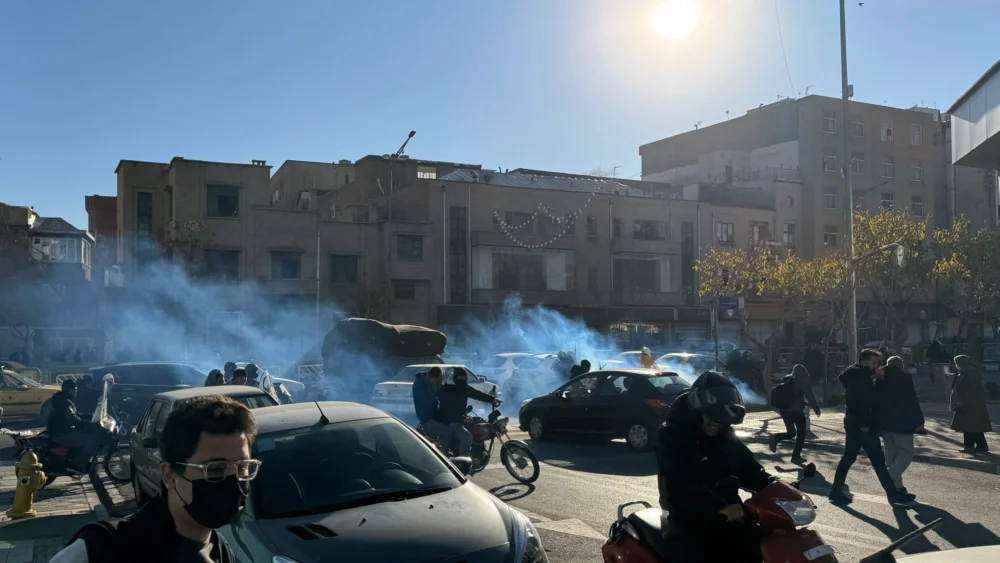
The reported deaths of three individuals during a fresh wave of demonstrations in Iran has reignited international concerns regarding the stability of the Islamic Republic and the underlying economic grievances that continue to drive civil disobedience. While the immediate catalyst for the most recent clashes remains tied to localized grievances and security crackdowns, the broader context is one of a nation grappling with a protracted economic crisis, systemic inflation, and a geopolitical isolation that has left its fiscal architecture in a state of perpetual fragility. The fatalities, occurring in a climate of heightened sensitivity, underscore the diminishing efficacy of traditional state mechanisms in suppressing a population increasingly burdened by the cost of living and a lack of social reform.
To understand the current volatility, one must look beyond the immediate headlines of street-level confrontations and analyze the macroeconomic indicators that have fueled public resentment for the better part of a decade. Iran’s economy has been trapped in a cycle of stagflation—a lethal combination of stagnant growth and high inflation. Official data from the Statistical Centre of Iran consistently places the annual inflation rate above 40%, with food price inflation frequently soaring past 60%. For the average Iranian household, the purchasing power of the national currency, the rial, has evaporated. The rial has seen a precipitous decline against the U.S. dollar on the open market, often trading at a fraction of its value from just five years ago. This currency devaluation has made essential imports, including medicine and industrial components, prohibitively expensive, further squeezing a middle class that has been systematically pushed toward the poverty line.
The structural roots of this economic malaise are twofold: internal mismanagement and the suffocating weight of international sanctions. Since the United States unilaterally withdrew from the Joint Comprehensive Plan of Action (JCPOA) in 2018 and re-imposed "maximum pressure" sanctions, Iran’s ability to access the global financial system has been severely curtailed. The primary engine of the Iranian economy—oil exports—was targeted with the intent of reducing Tehran’s revenue to zero. While Iran has successfully utilized "ghost fleets" and "dark tankers" to maintain a level of exports to buyers in Asia, particularly China, these transactions often occur at a significant discount and through convoluted barter systems that do not translate into the liquid foreign exchange reserves needed to stabilize the domestic economy.
The fiscal deficit has consequently widened, forcing the government to engage in inflationary financing. To cover its budgetary shortfalls, the central bank has frequently expanded the money supply, a move that provides short-term liquidity for state salaries but long-term misery for consumers. This fiscal desperation has led to the gradual erosion of the country’s once-robust subsidy system. For decades, the Iranian social contract was built on the provision of cheap energy and bread. However, as the state’s coffers have emptied, the government has been forced to hike prices for gasoline and utilities. Historically, these price hikes have been the primary triggers for mass mobilization, as seen in the "Bloody November" protests of 2019, where hundreds were killed following a sudden increase in fuel costs.
The human cost of these economic policies is now manifesting in a demographic that feels it has little left to lose. Iran possesses one of the most educated and youthful populations in the Middle East, yet youth unemployment remains stubbornly high, with some estimates suggesting that nearly one in four young people are without work. This "waithood"—a period where young adults cannot afford to marry, buy homes, or start lives—has transformed from a social frustration into a potent political force. The recent deaths of three protesters are viewed by many as a continuation of the state’s heavy-handed response to a generation that views the current ideological and economic framework as an obstacle to their future.
From a global market perspective, the instability in Iran introduces a layer of risk to the energy sector and regional security. Iran sits on the world’s fourth-largest proven oil reserves and the second-largest natural gas reserves. Any significant internal disruption that threatens the production or transport of these commodities can send ripples through global energy markets. Specifically, the proximity of the unrest to the Strait of Hormuz—a vital maritime chokepoint through which approximately one-fifth of the world’s oil consumption passes—means that Iranian domestic volatility is never purely a domestic issue. Analysts at major financial institutions monitor these protests not only for their human rights implications but for the potential "contagion" effect on regional stability, which could impact the premium on Brent crude oil.
Furthermore, the role of the Islamic Revolutionary Guard Corps (IRGC) complicates the economic landscape. The IRGC is not merely a military branch; it is a massive conglomerate with deep interests in construction, telecommunications, energy, and shipping. Because so much of the Iranian economy is tied to these semi-state entities, public anger is often directed at the perceived corruption and monopolistic practices of these organizations. Protesters frequently argue that the nation’s wealth is being diverted toward regional proxy conflicts and the preservation of the security apparatus rather than toward infrastructure and social welfare. This perception of "crony capitalism" exacerbates the divide between the ruling elite and the working class.
International observers and human rights organizations have noted that the state’s response to dissent has become increasingly digitized. Iran has developed sophisticated methods for internet shutdowns and the throttling of social media platforms to prevent the coordination of protests. However, these digital blackouts carry their own economic cost. In an increasingly digital global economy, cutting off the internet disrupts businesses, banking services, and logistics, further harming the very economy the state is attempting to manage. The "digital iron curtain" may provide temporary tactical advantages for security forces, but it deepens the isolation of the Iranian market from the global tech ecosystem.
Comparing the current situation to previous cycles of unrest, such as the 2009 Green Movement or the 2022 protests following the death of Mahsa Amini, reveals a pattern of escalating stakes. While the 2009 protests were largely driven by the urban middle class seeking electoral reform, more recent movements have seen a convergence of the urban intelligentsia and the rural working class. This cross-class alliance is particularly concerning for the establishment, as it bridges the traditional divide between the secularized youth and the more conservative, religious segments of society who are also feeling the pinch of economic deprivation.
The geopolitical dimension cannot be ignored. Tehran’s deepening alliances with Moscow and Beijing represent a strategic pivot away from the West, intended to create a "sanction-proof" economy. By joining the BRICS bloc and the Shanghai Cooperation Organization (SCO), Iran hopes to foster alternative trade routes and financial clearing systems. However, these memberships have yet to yield the immediate "economic miracle" required to pacify the domestic population. China’s investments in Iran, though promised in a 25-year strategic cooperation agreement, have been cautious, as Beijing balances its energy needs with the risk of secondary U.S. sanctions and regional tensions.
As the news of the three fatalities circulates, the immediate outlook remains one of high tension and low predictability. The Iranian government faces a classic "dictator’s dilemma": to reform the economy would require opening up to the West and potentially diluting its ideological control, but to maintain the status quo is to invite further cycles of violence and economic decay. For the international community, the challenge lies in balancing the support for human rights and civil liberties with the complex realities of nuclear non-proliferation and regional security.
Ultimately, the deaths of these three individuals serve as a somber reminder that the "Iranian Question" is as much about the price of a loaf of bread and the value of a currency as it is about political ideology. Until the underlying structural imbalances of the Iranian economy are addressed, and until the population sees a path toward tangible prosperity, the streets of Tehran and the provincial capitals are likely to remain theaters of discontent. The intersection of political grievance and economic desperation has created a volatile equilibrium that, as evidenced by recent events, can be shattered by a single spark, leading to consequences that resonate far beyond the borders of the Islamic Republic.