India’s television market is poised for robust expansion, with total revenue projected to climb from an estimated $14 billion in 2024 to $18.1 billion by 2029, a trajectory that challenges conventional wisdom in an era dominated by over-the-top (OTT) streaming platforms. This counter-intuitive growth, highlighted in a recent report by professional services network PwC, underscores a unique consumer landscape where traditional linear television maintains significant relevance, driven by an expanding base of pay TV households even as digital streaming services proliferate. Unlike many developed global markets where streaming has largely supplanted cable and satellite, India presents a distinct model of co-existence, largely attributing OTT as an additive rather than a substitutive entertainment option.
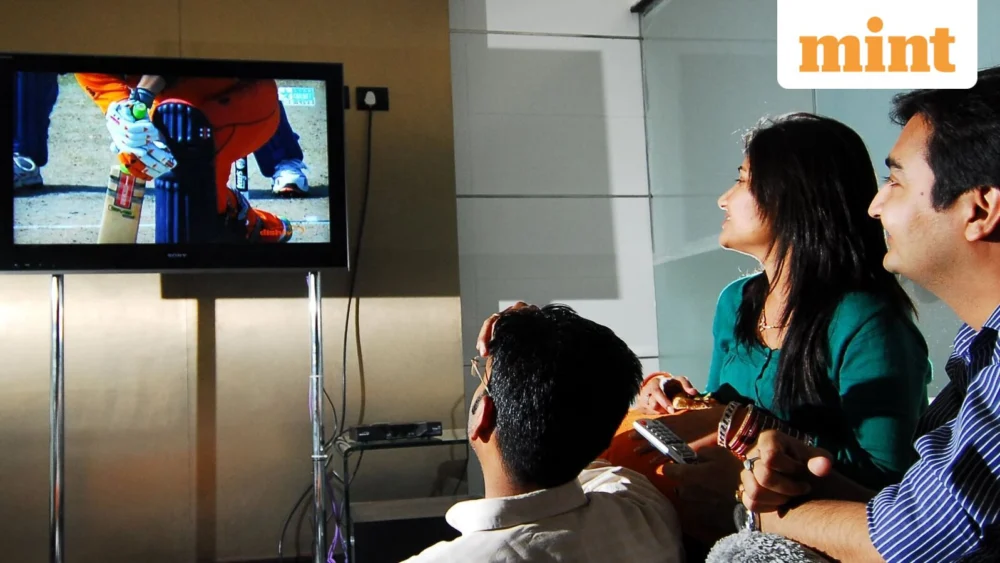
The foundational pillar of this resilience lies in India’s deeply ingrained "shared-screen" culture. Industry executives consistently point to the multi-generational household structure prevalent across the subcontinent, where the living room television serves as a central hub for communal entertainment. This cultural anchor fosters a viewing habit distinct from the individualized, mobile-first consumption patterns often associated with OTT. As Sandeep Gupta, Chief Operating Officer for Shemaroo Entertainment Ltd.’s broadcasting business, articulates, "In India, unlike most global markets, TV and OTT are not substitutes; they fulfil entirely different consumer needs." This perspective is crucial, as it reframes the competitive dynamic, suggesting that traditional TV and streaming cater to disparate emotional and practical requirements within the same family unit. With approximately 160 million Indian homes still engaging with linear television, and projections indicating that a substantial portion of the next 20-30 million households entering the entertainment ecosystem will similarly commence their journey with traditional TV, the market’s enduring appeal is evident.
Economic accessibility further fortifies linear television’s position, particularly for vast segments of the Indian population. For middle-income households, classified under the New Consumer Classification System (NCCS B-C-D), a standard cable or Direct-to-Home (DTH) pack typically ranges from ₹200 to ₹350 per month, offering access to over 100 channels across multiple languages. This presents an unparalleled value proposition: an economical and reliable shared-screen option for family viewing. In stark contrast, OTT platforms necessitate multiple paid subscriptions to access a comparable breadth of content, coupled with the prerequisite of dependable broadband connectivity, both of which significantly elevate household expenditure. This economic disparity largely explains why OTT penetration remains predominantly urban-skewed and caters primarily to individual viewing preferences, while television steadfastly retains its status as the default "family-first" medium.
Beyond affordability, the robust distribution infrastructure of DTH and cable networks plays a critical role in sustaining television’s reach, especially in semi-urban and rural areas. Anil Suryavamshi, Vice-President – Digital (South & West) at media agency Carat India, emphasizes that while OTT satisfies the demand for personalized, mobile-first viewing, "communal content still lives on TV." He highlights that in Tier-2 to Tier-4 markets, DTH remains the more affordable, simpler to install, and significantly more reliable option compared to nascent or inconsistent broadband services. The challenges of internet quality and penetration continue to constrain OTT’s growth trajectory in these regions, whereas television’s frictionless reliability ensures its widespread adoption and continued viewership. This infrastructural advantage translates into stable subscription bases, underpinning the financial health of broadcasters.

Broadcasters, keenly aware of these market dynamics, have strategically adapted their offerings to reinforce television’s momentum. A renewed emphasis on regional programming has emerged as a key differentiator. Across the industry, there is a concerted effort towards localized storytelling, tailored daypart strategies, and family-oriented entertainment designed specifically for the diverse linguistic and cultural nuances of the Indian hinterland. Markets spanning Hindi, Marathi, Tamil, Telugu, and Bangla are witnessing a surge in high-quality original programming, ranging from daily soaps and reality shows to music competitions, live events, and blockbuster movie premieres. These "television-first" experiences cultivate habitual viewing and drive subscription growth, fostering a deep emotional and cultural connection with audiences. Sanjay Dwivedi, Group CEO and CFO of Balaji Telefilms Ltd., notes this "emotional and cultural stickiness" as a major driver, affirming that "families still rely on TV for shared, appointment-based viewing – especially daily fiction, reality entertainment, and live events."
Furthermore, the industry is addressing potential "subscription fatigue" through innovative aggregation models. Platforms like Tata Play Binge, Airtel Xstream, and Amazon Channels, along with hybrid cable bundles, are consolidating TV and OTT services under a unified bill and interface. This bundled approach not only enhances perceived value for consumers by simplifying access and payment but also provides broadcasters with more predictable subscription revenues – a stability that pure-play OTT platforms often struggle to achieve independently. These strategies represent a proactive response to evolving consumption habits, seeking to integrate new technologies without alienating the traditional viewer.
Despite these strengths, the sector faces considerable challenges, particularly concerning advertising revenue. Rajesh Sethi, Partner and Leader – Media, Entertainment, and Sports at PwC India, notes that broadcast TV advertising revenue is projected to grow at a modest 2.5% CAGR between 2024 and 2029. This slowdown is largely attributed to the global phenomena of audience fragmentation and advertisers increasingly reallocating budgets towards digital formats, including advertising video-on-demand (AVoD) and Connected TV (CTV). The proliferation of smart TVs further complicates the landscape by blurring the lines between linear and digital content. Russhabh R. Thakkar, Founder and CEO of ad-tech firm Frodoh, points out that the "biggest challenge for TV is protecting its distinctive IP when most major shows also appear on CTV and broadcaster apps." As households seamlessly switch between linear broadcasts and digital feeds on the same screen, television’s exclusive pull risks dilution.
Looking ahead, the imperative for broadcasters is to cultivate stronger intellectual property (IP) that premieres exclusively on linear TV, thereby creating "appointment viewing" that digital platforms cannot immediately replicate. This strategy is vital for maintaining a distinct identity and ensuring continued engagement. While leveraging CTV can significantly widen reach, it must be done without compromising the unique value proposition of traditional television. The Indian television industry’s future hinges on its ability to navigate this intricate balance: innovating to embrace new technologies and consumer behaviors while preserving the cultural and economic advantages that have sustained its growth. Its continued expansion serves as a powerful testament to the resilience of localized strategies and the unique socio-economic fabric of India, offering a compelling counter-narrative to the global trend of digital disruption.