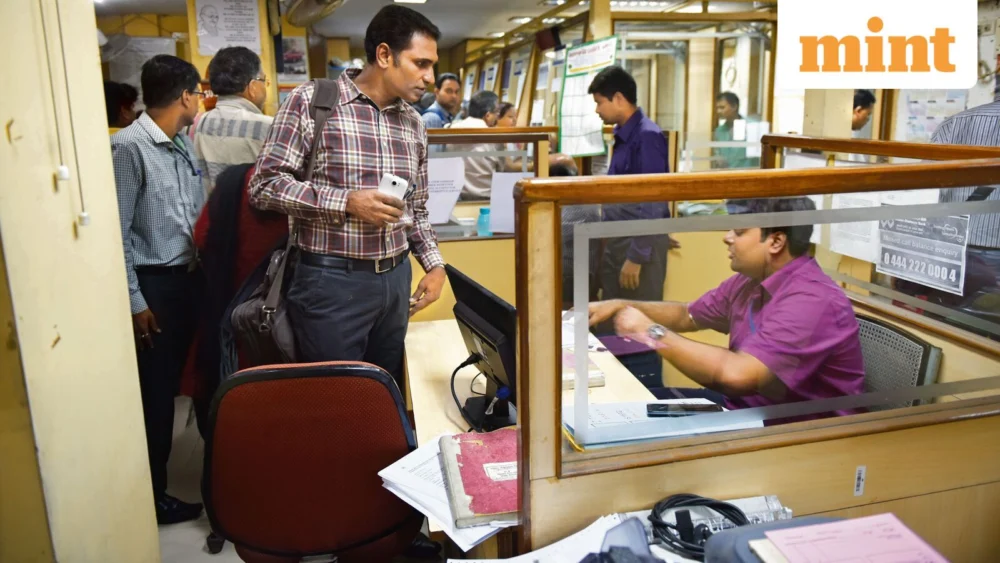
As the world ushers in 2026, financial institutions across India prepare for a complex observance of the New Year, marked by a patchwork of branch closures that underscore the nation’s diverse cultural fabric and the increasing reliance on its robust digital banking infrastructure. While the physical doors of banks in certain regions will remain shut to commemorate New Year’s Day and other localized festivals, the underlying financial arteries of the economy are set to pulse uninterrupted, a testament to technological advancements that have fundamentally reshaped consumer and business interactions with the banking sector. The Reserve Bank of India’s (RBI) meticulously curated holiday calendar for the year highlights not just national and religious observances but also a significant number of regional holidays, ensuring that the financial system remains agile while respecting local customs.
The first day of 2026, a Thursday, presents a prime example of this regional variation. While many urban centres and states will see banks operate as usual, several states in the North-East and parts of South India will observe a bank holiday. Specifically, physical branches in Tamil Nadu, West Bengal, Arunachal Pradesh, Sikkim, Tripura, Manipur, Meghalaya, Mizoram, and Nagaland are slated for closure. This localized shutdown is often driven by a confluence of New Year’s Day celebrations and significant regional festivals. A notable instance is Gaan-Ngai, a traditional post-harvest festival predominantly celebrated by the Zeliangrong Naga tribes across parts of Manipur, Nagaland, and Assam. This festival, typically held in late December or early January, marks the culmination of the agricultural cycle and the dawn of a new one, carrying profound cultural and social significance for these communities. Such observances, deeply rooted in local traditions, necessitate adjustments in the banking calendar, reflecting the RBI’s commitment to accommodating the socio-cultural specificities of India’s diverse states.
The rationale behind India’s segmented bank holiday structure is multifaceted. Unlike many Western economies where bank holidays are largely national and uniform, India’s system acknowledges its vast linguistic, religious, and ethnic diversity. The RBI categorizes holidays into three main types: those under the Negotiable Instruments Act, those under the Negotiable Instruments Act and Real-Time Gross Settlement (RTGS) Holiday, and those under the Banks’ Closing of Accounts. Beyond national holidays like Republic Day and Gandhi Jayanti, states have the autonomy to declare holidays for local festivals, ensuring that regional sentiments are respected. This framework, while complex, allows for a more inclusive approach to public life, though it does present logistical challenges for businesses operating across state lines. For instance, a cheque deposited in a state observing a holiday might experience delays in clearance if the recipient bank is in a different state with a normal working day.
However, the perceived inconvenience of physical branch closures has been largely mitigated by the explosive growth and adoption of digital banking services. India has emerged as a global leader in digital payments, with platforms like the Unified Payments Interface (UPI) revolutionizing how transactions are conducted. In 2023-24, UPI processed over 130 billion transactions worth more than ₹200 trillion (approximately $2.4 trillion), showcasing its pervasive reach and efficiency. During bank holidays, these digital channels — including UPI, internet banking, mobile banking applications, and Automated Teller Machines (ATMs) — remain fully operational 24/7. This "always-on" financial ecosystem ensures that essential services such as fund transfers, bill payments, balance inquiries, and even some loan applications can be processed without interruption, effectively decoupling core banking functions from the physical availability of branches.

The economic implications of bank holidays, particularly for a burgeoning economy like India, are increasingly being re-evaluated through the lens of digital transformation. Historically, extensive bank closures could lead to temporary slowdowns in commercial activity, affecting cash-intensive businesses, cheque clearances, and critical financial transactions. Small and Medium Enterprises (SMEs) and the unorganized sector, which traditionally relied more on physical banking services, might have faced liquidity issues or delays in payments. However, the widespread adoption of digital payment gateways has significantly cushioned this impact. Businesses can continue to accept payments, disburse salaries, and manage working capital through electronic means, minimizing revenue loss and operational disruptions. This shift is particularly vital for e-commerce, which thrives on seamless, round-the-clock transactions, irrespective of public holidays.
Globally, the approach to bank holidays varies. Countries like the United States have a relatively fixed number of federal holidays, with banks generally observing them uniformly. European nations often have a mix of national and religious holidays, with digital banking being the primary alternative during closures. China, with its rapidly digitizing economy, also experiences significant shifts towards online transactions during its major public holidays like the Lunar New Year. India’s model, with its unique blend of national uniformity and regional flexibility, stands out. The sheer volume of its digital transactions, particularly through UPI, positions it favorably in terms of maintaining financial continuity even with numerous holidays. This digital resilience is not just a convenience; it’s a strategic economic asset, fostering financial inclusion and enabling economic activity to persist through periods of physical closure.
Looking ahead, the January 2026 calendar further illustrates the varied nature of bank holidays. Beyond New Year’s Day and Gaan-Ngai, the month includes a range of other observances. For instance, January 14th and 15th will see closures in various states for Makar Sankranti, Magh Bihu, Uttarayana, Punyakala, Pongal, and Maghe Sankranti—all harvest festivals celebrated with different names and customs across India. Thiruvalluvar Day and Uzhavar Thirunal (farmers’ festival) on January 16th and 17th, respectively, will impact banks in Tamil Nadu. The birthday of Netaji Subhash Chandra Bose on January 23rd is a significant regional holiday, particularly in West Bengal. The month culminates with the national holiday of Republic Day on January 26th, observed nationwide.
Here is a glimpse into the January 2026 bank holiday schedule:
- January 1: New Year’s Day/Gaan-Ngai
- January 2: New Year Celebration/Mannam Jayanthi
- January 3: Birthday of Hazrat Ali
- January 12: Birthday of Swami Vivekanand
- January 14: Makar Sankranti/Magh Bihu
- January 15: Uttarayana/Punyakala/Pongal/Maghe/Sankranti
- January 16: Thiruvalluvar Day
- January 17: Uzhavar Thirunal
- January 23: Birthday of Netaji Subhash Chandra Bose
- January 26: Republic Day
It is crucial for both individuals and businesses to stay informed about the specific holiday calendar applicable to their region. While digital banking services offer an unparalleled level of convenience and continuity, certain branch-specific transactions, such as cash deposits beyond ATM limits, passbook updates, or complex document processing, may still require a visit to a physical branch. Planning ahead and leveraging the array of digital tools available ensures that financial operations remain smooth, irrespective of physical branch closures. The Indian banking system, therefore, stands at an interesting juncture in 2026: a system that respects its profound cultural diversity through varied holidays, yet simultaneously champions an "always-on" digital financial experience that increasingly renders physical closures a matter of mere formality for most transactions.