


In an era defined by hyper-connectivity and intense competition, the customer experience (CX) has emerged as a paramount differentiator, directly influencing brand loyalty, market share, and profitability. However, the very tools designed to illuminate CX often create a paradox: a deluge of metrics that, rather than providing clarity, overwhelm marketers and executives, hindering actionable insights and efficient resource allocation. What began as simple satisfaction surveys has ballooned into an intricate ecosystem encompassing hundreds of data points, challenging even the most sophisticated global organizations to derive tangible value.
The contemporary business landscape is awash with CX data. From immediate post-interaction surveys following a hotel checkout or a product purchase, to sophisticated analytics tracking web interactions and call center engagements, companies are collecting more customer feedback than ever before. These metrics typically fall into three broad categories: customer perceptions (capturing emotional responses and satisfaction levels), operational indicators (assessing the efficiency and effectiveness of company processes), and financial outcomes (tying CX efforts to sales, retention, and market growth). Yet, a significant portion of these metrics are adopted due to industry norms or historical practice, rather than a rigorous evaluation of their relevance to strategic business objectives or their capacity to truly enhance the customer journey. This indiscriminate accumulation leads to substantial resource drains – both human and financial – in collecting, compiling, and analyzing data that may offer minimal strategic utility.
Addressing this metrics overload is not merely an exercise in tidiness; it is a strategic imperative. Research indicates that many large enterprises track upwards of 50 CX metrics, with some exceeding 200, often managed disparately across various departments. This fragmentation complicates a holistic view of the customer journey and obscures the true impact of CX initiatives. To navigate this complexity, businesses must adopt a more discerning approach: rationalizing their metric inventories and meticulously aligning the most valuable data points with critical stages of the customer journey. This methodology promises not only operational efficiencies but also a deeper, more actionable understanding of customer needs and behaviors.
The first step in this rationalization involves a rigorous evaluation of existing metrics to identify those that offer the greatest predictive power and eliminate those with low value. For instance, in an extensive study involving 14 subscription services companies, a deep dive into call center performance metrics revealed striking inefficiencies. Across various channels – including call centers, digital chat, web platforms, and physical retail locations – these firms collectively utilized well over a hundred CX metrics. The objective was to pinpoint which of these metrics truly correlated with key dependent variables like customer churn, contact rate, and Net Promoter Score (NPS), and which could be discarded without sacrificing critical information.
Through a systematic regression analysis of 13 commonly shared call center metrics, it became evident that while some metrics exhibited substantial predictive power, others were largely redundant or irrelevant to the desired outcomes. For example, IVR (Interactive Voice Response) deflection rate, representing calls redirected from live agents to automated systems, was a strong predictor of NPS variance. Conversely, metrics such as service level (percentage of calls answered within a specific timeframe) and call transfer rate (percentage of calls moved to another queue) showed weak correlation with churn, contact rate, and NPS. While these metrics might still hold some operational significance, their limited explanatory power regarding core customer outcomes suggests they are prime candidates for elimination from a CX-focused inventory. This process, requiring minimal resources and disruption, can be trialed to demonstrate its efficacy, fostering organizational buy-in and mitigating staff concerns by positioning it as an incremental innovation aimed at enhancing overall effectiveness.
The benefits of purging low-value metrics extend far beyond mere cost savings. Industry estimates suggest that streamlining CX metric portfolios can reduce associated tracking and reporting expenditures by 10-20% in specific channels, allowing resources to be redirected towards more impactful customer experience improvements. More profoundly, this rationalization disrupts entrenched organizational thinking and the "we’ve always done it this way" mindset. By establishing a statistical link between metrics and critical Key Performance Indicators (KPIs) such as sales, retention, and customer lifetime value (CLTV), companies can resist the temptation to add new metrics without a clear demonstration of their value. This discipline ensures that every measured data point serves a strategic purpose, contributing directly to a deeper understanding of customer behavior and its financial implications.

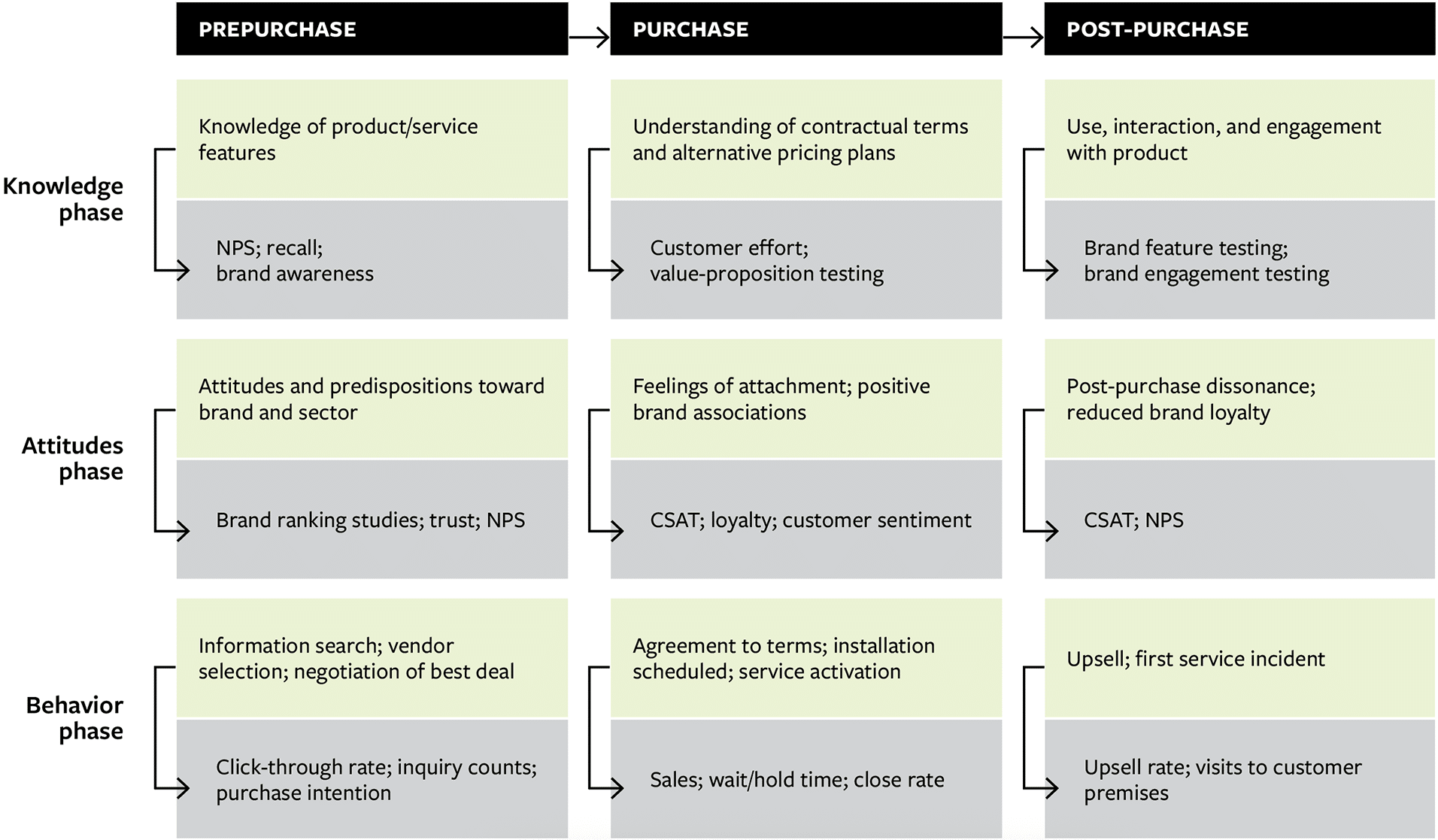
With a refined and consolidated list of CX metrics, the next crucial step is to map these metrics to specific stages of the customer journey. The entire customer journey encompasses every interaction a customer has with a company, from initial awareness and consideration through purchase, usage, potential churn, and even recovery. Often, a disconnect between marketing and CX functions leads to metrics that fail to align with the customer’s evolving knowledge, attitudes, and behaviors across this journey. To bridge this gap, organizations must either create or refresh detailed customer journey maps, focusing on specific segments of the experience.
A design-thinking approach, involving direct engagement with new customers, can yield profound insights into the granular aspects of a journey segment, such as onboarding. This includes understanding customer behaviors related to information search, vendor selection, service activation, initial billing, and early service incidents. By aligning the refined CX metrics with these specific journey steps, companies can uncover critical measurement gaps and identify opportunities for targeted interventions. For instance, many companies diligently track CX during the purchase and post-purchase stages (e.g., sales figures, CSAT, repeat purchase rates) but often overlook the pre-purchase phase. Metrics related to brand trust, reputation, and initial sentiment are vital in this foundational stage, as they capture customers’ knowledge and attitude formation even before a transaction occurs.
Consider the example of Net Promoter Score (NPS). While typically measured post-onboarding, integrating NPS earlier in the customer journey can provide real-time insights into initial customer reactions. A low early NPS can trigger immediate intervention, while a high score can highlight successful elements of the initial experience. This proactive approach allows CX managers to capitalize on insights during the critical knowledge and attitude-forming phases, significantly influencing the overall journey trajectory. Similarly, in industries like financial services, an over-reliance on NPS can lead to blind spots during the transactional phase. Measuring customer effort – particularly the gap between expected and experienced effort – during complex transactions can reveal significant pain points that, if addressed, can dramatically improve satisfaction and reduce churn.
The ability to map CX metrics to specific customer behaviors along the journey enables a more granular understanding of performance at each touchpoint. This level of insight empowers targeted strategies that enhance operational efficiency, boost customer satisfaction, and improve crucial adoption rates. The rationalization and mapping processes are not inherently complex or resource-intensive, making them accessible to a wide range of businesses, regardless of size or industry. They are low-cost, low-tech solutions that yield substantial returns.
Beyond the immediate operational and financial gains, these practices foster a more customer-centric organizational culture. Discussions among CX managers often reveal how a company’s fundamental culture – whether "profit-first" or "customer-first" – shapes its metric selection. Profit-first cultures may lean towards operational efficiency metrics, focusing on cost-saving opportunities. In contrast, customer-first cultures prioritize understanding customer motivations, emotions, and pain points, recognizing that these ultimately drive loyalty and sales. By implementing rigorous metric rationalization and journey mapping, organizations can bridge these internal divides, aligning diverse departments around a shared, data-driven understanding of customer value.
Furthermore, these methodologies enhance the analytical capabilities of CX teams, empowering employees with the skills and knowledge to continually assess and improve customer experiences. The ripple effect is considerable: some organizations leverage these insights to build sophisticated quantitative models for predicting customer turnover, while others extend journey mapping to cover additional segments of the customer lifecycle.
In a global marketplace where customer expectations are constantly escalating, the ability to accurately and efficiently measure the customer experience is no longer a luxury but a fundamental competitive advantage. By moving beyond the inertia of metric proliferation and embracing a strategic, rationalized, and journey-aligned approach, businesses can transform their CX data from an overwhelming burden into a powerful engine for innovation, sustained growth, and enduring customer loyalty. This intelligent refinement of CX measurement is key to unlocking deeper insights, fostering a truly customer-centric culture, and ultimately driving superior business outcomes in the digital age.