As the United States prepares to mark the 250th anniversary of its Declaration of Independence in 2026, a curious diplomatic and economic question has begun to circulate through the corridors of Whitehall and the boardrooms of the City of London: how should the United Kingdom, the very power from which the colonies broke away, participate in this historic milestone? The upcoming Semiquincentennial is more than a mere historical commemoration; it represents a critical juncture for the "Special Relationship," offering a unique platform for the UK to redefine its strategic and commercial ties with its largest bilateral trading partner in a post-Brexit, multipolar world.
For the United Kingdom, the anniversary of 1776 has historically been a moment of complex reflection rather than mourning. Unlike other former colonial powers that have struggled to maintain amicable ties with their previous territories, the UK has successfully transformed a revolutionary rupture into a cornerstone of global stability. The economic stakes of this relationship are staggering. As of 2024, the total trade in goods and services between the UK and the US exceeds £300 billion annually. The US remains the single largest destination for British foreign direct investment (FDI), while US firms represent the largest source of FDI into the UK, supporting millions of jobs on both sides of the Atlantic. In this context, the 250th anniversary is less about litigating the grievances of King George III and more about securing the supply chains and digital trade agreements of the 21st century.
Historical precedents suggest that the UK’s involvement will be characterized by "soft power" diplomacy and high-level symbolic gestures. During the American Bicentennial in 1976, Queen Elizabeth II visited Philadelphia and Washington D.C., famously presenting a new Liberty Bell to the American people as a gesture of enduring friendship. That moment served to solidify the post-WWII alliance during the height of the Cold War. Today, the geopolitical landscape is arguably more fragmented. With the rise of protectionist sentiments and the shifting dynamics of the Indo-Pacific, the 2026 celebrations provide an essential window for Britain to reinforce the "Atlantic Declaration" signed in 2023. This framework, which focuses on economic cooperation in areas like artificial intelligence, clean energy, and critical minerals, could see its first major "stress test" and public rebranding during the anniversary year.
The economic impact of the Semiquincentennial is expected to be particularly pronounced in the tourism and heritage sectors. For the UK, 2026 presents a prime opportunity to market "Ancestral Britain" to millions of American travelers. Sites such as Sulgrave Manor—the ancestral home of George Washington’s family—and the Benjamin Franklin House in London are already preparing for a surge in interest. Market data suggests that "heritage tourism" accounts for a significant portion of the £25 billion that international visitors spend in the UK annually. By aligning British cultural programming with the American 250 celebrations, the UK can capture a larger share of the US outbound travel market, which remains the most lucrative demographic for the British hospitality industry.
Beyond tourism, the anniversary serves as a catalyst for deeper institutional collaboration. Expert insights from transatlantic think tanks suggest that the UK should use 2026 to launch a series of "Future Leader" initiatives, connecting British entrepreneurs and scientists with their American counterparts. This would move the relationship beyond its traditional focus on defense and intelligence—exemplified by the AUKUS pact—into the realms of biotech, quantum computing, and green finance. By framing the celebration around "shared innovation" rather than "shared history," the UK can appeal to a younger generation of Americans who may feel less culturally tethered to Europe than their predecessors.
However, the path to 2026 is not without its diplomatic hurdles. The UK must navigate the internal political sensitivities of the United States, where the 250th anniversary is likely to be viewed through the lens of a highly polarized domestic environment. For British diplomats, the challenge lies in participating in a way that remains bipartisan and focuses on the long-term structural health of the alliance. Economic analysts point out that while a comprehensive Free Trade Agreement (FTA) remains elusive due to political gridlock in Washington, the 250th anniversary could provide the necessary political cover to sign smaller, sector-specific "mini-deals" on professional qualifications, digital standards, and agricultural technology.
Global comparisons illustrate the unique position Britain occupies in this anniversary. While France can celebrate its role as the indispensable ally that helped secure American victory at Yorktown, the UK’s narrative is one of reconciliation and the birth of a shared democratic model. This "adversary-to-ally" story is a powerful tool in international relations. At a time when the rules-based international order is under pressure, the UK can use the 2026 milestone to champion the values of parliamentary democracy and the rule of law—principles that, despite the revolution, remain the bedrock of both nations’ legal and economic systems.
The regional impact within the United Kingdom also deserves scrutiny. The American story is deeply intertwined with the histories of Scotland, Wales, and Northern Ireland. The Ulster-Scots heritage, in particular, played a pivotal role in the early American frontier and the drafting of the Declaration of Independence. By decentralizing the 250th-anniversary celebrations away from London and toward regional hubs like Belfast, Glasgow, and Cardiff, the UK government can foster localized economic links and investment opportunities that bypass the capital, supporting the "leveling up" agenda through international engagement.
From a financial market perspective, the stability of the US-UK relationship is a vital signal to investors. The "Special Relationship" acts as a hedge against global volatility; when the two largest financial centers, New York and London, are aligned on regulatory standards and capital flows, the global economy tends to be more resilient. The 250th anniversary provides an opportunity to harmonize ESG (Environmental, Social, and Governance) standards and carbon credit markets, leveraging the high-profile nature of the event to drive private sector commitments toward net-zero targets.
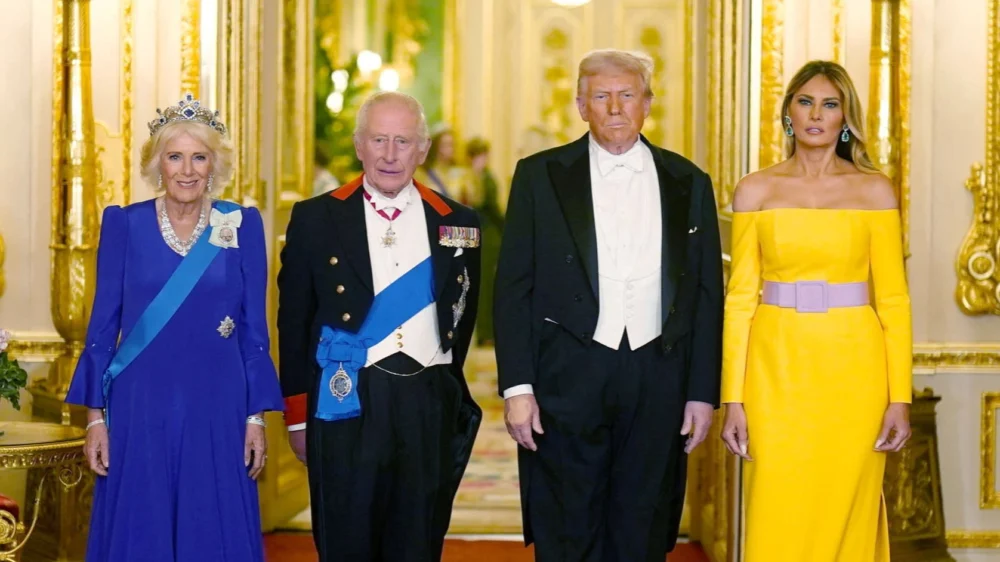
As 2026 approaches, the UK’s strategy will likely involve a blend of grandeur and pragmatism. We can expect a significant royal presence, likely involving King Charles III, whose interest in sustainability could be a central theme of a modern transatlantic partnership. Simultaneously, the Department for Business and Trade will likely organize trade missions that coincide with the major "America250" events in cities like Philadelphia, Boston, and New York. The goal will be to ensure that the "Special Relationship" is not viewed as a relic of the 20th century, but as a dynamic, forward-looking engine of the 21st.
Ultimately, the 250th anniversary of American independence serves as a mirror for the United Kingdom. It forces a reflection on Britain’s own evolution from a global hegemon to a strategic partner that derives its strength from high-value services, technological innovation, and cultural influence. By celebrating America’s birth, Britain is not just acknowledging a past defeat; it is celebrating the success of a democratic experiment that it helped seed and which remains its most vital partner in an uncertain world. The success of the UK’s participation will be measured not by the volume of the fireworks, but by the depth of the economic and strategic commitments that are forged in their glow. In the grand ledger of history, 2026 offers Britain the chance to prove that while the political union ended two and a half centuries ago, the economic and cultural synergy has never been more relevant.