The geopolitical landscape of the Mediterranean and the broader Middle East has reached a critical inflection point, as Spanish Prime Minister Pedro Sánchez issued a stark warning regarding the possibility of a direct military confrontation involving the United States, Israel, and Iran. Labeling such a conflict a "disaster" of global proportions, Sánchez’s remarks underscore a deepening rift between European leadership and the shifting foreign policy currents in Washington. This diplomatic friction is further exacerbated by a public and ideological spat with former U.S. President Donald Trump, whose "America First" doctrine and hawkish stance toward Tehran continue to cast a long shadow over transatlantic relations and international security frameworks.
Sánchez’s assessment of the situation reflects a growing anxiety within the European Union regarding the stability of the global energy market and the fragility of international trade routes. A full-scale war in the Persian Gulf would not merely be a regional humanitarian crisis; it would likely trigger a systemic economic shock that could rival or surpass the disruptions caused by the conflict in Ukraine. For Spain, a country that has positioned itself as a bridge between Europe, North Africa, and the Middle East, the stakes are uniquely high. The Prime Minister’s comments serve as a clarion call for a return to multilateral diplomacy, even as the political climate in the United States suggests a pivot toward more unilateral and confrontational strategies.
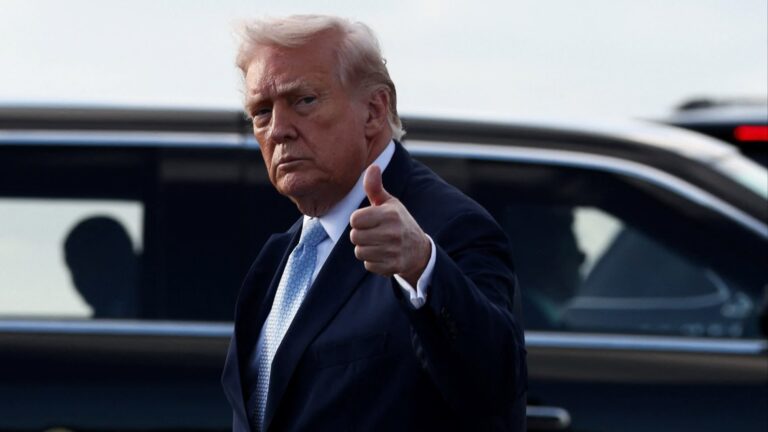
The friction between Sánchez and Trump is not a new phenomenon, but it has taken on a renewed intensity as the prospect of a second Trump administration looms over European capitals. The two leaders represent diametrically opposed visions of governance: Sánchez, a social democrat, advocates for collective security, environmental regulation, and a nuanced approach to Middle Eastern diplomacy that includes the recognition of Palestinian statehood. In contrast, Trump’s legacy is defined by the abandonment of the Joint Comprehensive Plan of Action (JCPOA), the imposition of "maximum pressure" sanctions on Iran, and a transactional approach to alliances. This ideological chasm has transformed a standard diplomatic disagreement into a high-stakes debate over the future of the Western alliance.
From an economic perspective, the "disaster" Sánchez envisions is rooted in the strategic importance of the Strait of Hormuz. Often described as the world’s most important oil transit chokepoint, the Strait sees approximately 21 million barrels of oil pass through its narrow waters every day—roughly 21% of global petroleum liquids consumption. Any direct military engagement between the U.S.-Israeli axis and Iran would almost certainly lead to a blockade or severe disruption of this corridor. Market analysts suggest that such an event could send Brent crude prices soaring past $150 per barrel, a scenario that would ignite a new wave of global inflation and potentially push the Eurozone into a deep recession.
Spain’s economy, while showing resilience in the post-pandemic era, remains sensitive to energy price volatility. As a major importer of liquefied natural gas (LNG) and petroleum products, Spain would face immediate inflationary pressure. The Spanish government has spent the last two years attempting to decouple its energy grid from Russian gas by investing heavily in renewables and LNG infrastructure, but a Middle Eastern conflagration would destabilize the global pricing mechanisms upon which these transitions depend. Sánchez’s warning is therefore as much a domestic economic defense as it is a foreign policy statement.
Beyond the immediate impact on oil, the broader supply chain implications of a conflict in Iran are staggering. The Red Sea and the Suez Canal are already under pressure due to Houthi insurgencies in Yemen—a conflict many analysts view as a proxy theater for the larger Iran-Israel rivalry. If these regional skirmishes escalate into a direct war with Tehran, the entire maritime trade route from Asia to Europe could be effectively severed. Shipping companies would be forced to reroute vessels around the Cape of Good Hope, adding weeks to transit times and billions of dollars in freight costs. For a global economy still grappling with the "long tail" of COVID-19 supply chain disruptions, this would be a catastrophic blow.
The diplomatic fallout of a U.S.-Israeli military campaign against Iran would also test the unity of the North Atlantic Treaty Organization (NATO). While the U.S. remains the primary security guarantor for much of Europe, many EU member states, led by Spain and France, have expressed a desire for "strategic autonomy." This concept suggests that Europe should develop the capability to act independently in its own security interests, particularly when those interests diverge from Washington’s. Sánchez has been a vocal proponent of this shift, arguing that Europe cannot afford to be a passive observer to conflicts that directly threaten its borders and economic stability.
The "spat" with Trump further complicates this dynamic. The former president has frequently criticized European allies for what he perceives as inadequate defense spending and unfair trade practices. During his tenure, Trump imposed tariffs on Spanish agricultural products, including olives and wine, which left a lasting mark on bilateral relations. If a future U.S. administration pursues a war in Iran without the consensus of its European allies, it could lead to a historic fracturing of the transatlantic bond. Sánchez’s proactive stance is an attempt to preempt such a scenario by asserting Europe’s preference for de-escalation and the preservation of the international rules-based order.
Moreover, the humanitarian implications of a conflict in the Middle East are a primary concern for the Spanish government. Spain is a frontline state for migration across the Mediterranean. A war in Iran would likely destabilize neighboring countries, including Iraq, Lebanon, and potentially Turkey, leading to a massive displacement of populations. Europe is still dealing with the political and social repercussions of the 2015 migrant crisis; a new wave of refugees on an even larger scale could fuel the rise of far-right populism across the continent, threatening the very fabric of the European Union.
Expert insights suggest that the window for a diplomatic resolution is narrowing. The "shadow war" between Israel and Iran—characterized by cyberattacks, maritime sabotage, and targeted assassinations—has increasingly moved into the open. Israel views Iran’s nuclear program as an existential threat, while Iran maintains that its regional influence is a necessary deterrent against Western intervention. Sánchez’s call for restraint is a recognition that there are no "limited" wars in this region; any spark has the potential to ignite a conflagration that draws in global powers, including Russia and China, both of which have deepened their strategic ties with Tehran in recent years.
In the halls of the European Commission in Brussels, there is a growing consensus that the continent must prepare for a more volatile and unpredictable American foreign policy. Whether it is through the strengthening of the European Defense Fund or the pursuit of independent diplomatic channels with Tehran, the EU is looking for ways to mitigate the risks of a conflict it did not start and cannot control. Sánchez, by positioning Spain at the forefront of this movement, is asserting a leadership role that extends beyond the Iberian Peninsula.
The economic impact analysis of such a "disaster" also extends to the financial markets. Global equity markets, which have shown remarkable bullishness despite high interest rates, are poorly priced for a major geopolitical shock in the Middle East. A war would trigger a flight to safety, driving up the value of the U.S. dollar and gold while causing a massive sell-off in emerging market currencies and risk assets. For the Spanish IBEX 35 and other European indices, the combination of high energy costs and reduced consumer spending would likely lead to a protracted period of stagnation.
Ultimately, Pedro Sánchez’s warnings reflect a fundamental disagreement over the nature of global security in the 21st century. While some in the U.S. and Israel may see military action as a necessary tool to neutralize a regional adversary, Sánchez and his European counterparts see it as a Pandora’s box that, once opened, cannot be closed. The "spat" with Trump is more than a personality clash; it is a battle over whether the future of international relations will be defined by the "law of the jungle" or the "rule of law." As the world watches the escalating rhetoric between Washington, Jerusalem, and Tehran, the Spanish Prime Minister’s words serve as a sobering reminder that in a globalized economy, there is no such thing as a distant war. The consequences of a disaster in Iran would be felt in every household and business across the globe, from the gas stations of Madrid to the trading floors of New York.