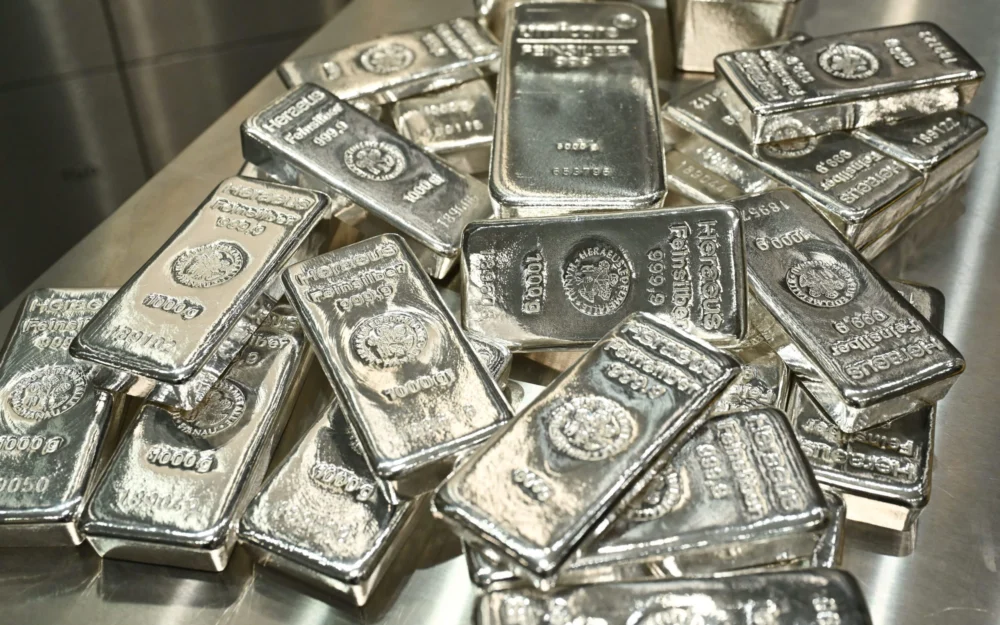
The geopolitical landscape of critical minerals has shifted once again as Beijing formalizes a new regulatory regime that elevates silver from a common industrial commodity to a strategic asset under strict state oversight. Starting this week, the Chinese Ministry of Commerce has implemented a rigorous licensing framework for silver exports, a move that closely mirrors the "rare earths playbook" utilized in previous years to consolidate control over essential high-tech supply chains. This policy shift signifies a major escalation in the ongoing resource friction between the world’s two largest economies, placing silver alongside other restricted materials like tungsten, antimony, gallium, and germanium. The timing of this implementation is particularly poignant, coming on the heels of high-level diplomatic engagements and a volatile year for global precious metal markets, signaling that China intends to leverage its dominance in mineral processing as a primary tool of economic statecraft.
The market reaction to these restrictions was immediate and vocal, most notably from the tech sector. Elon Musk, CEO of Tesla and owner of X, expressed grave concerns regarding the impact on industrial productivity, emphasizing that silver is an indispensable component in a vast array of advanced manufacturing processes. From the conductive traces in printed circuit boards to the specialized contacts in electric vehicle (EV) power electronics, silver’s unique physical properties—specifically its status as the most electrically and thermally conductive metal—make it virtually irreplaceable in the short term. Musk’s public alarm reflects a broader anxiety within the Western industrial base, which has become increasingly wary of its reliance on Chinese-refined materials for the green energy transition and the burgeoning artificial intelligence hardware sector.
While the formal implementation of these rules is now taking effect, the groundwork was laid during a period of intense diplomatic maneuvering. In October, the Chinese Commerce Ministry signaled its intent to tighten oversight of rare and strategic metals. This announcement coincided with a pivotal meeting between U.S. President Donald Trump and Chinese President Xi Jinping in South Korea, where a temporary "truce" was brokered. Under that agreement, Beijing offered a one-year pause on certain rare earth export controls in exchange for a rollback of U.S. tariffs. However, the inclusion of silver in the newest list of restricted exports suggests that the reprieve was narrow in scope and that Beijing’s long-term strategy of resource consolidation remains unchanged. To manage this transition, China recently identified 44 specific enterprises authorized to export silver through 2026 and 2027, effectively centralizing the trade under a hand-picked group of state-aligned entities.

The reclassification of silver is more than a mere bureaucratic change; it is an acknowledgment of the metal’s evolving role in 21st-century warfare and energy. For decades, silver was viewed primarily through the lens of jewelry and investment bullion. Today, it is a critical component in defense systems, including guidance kits for precision-guided munitions and advanced radar arrays. In the civilian sector, the solar energy industry has become the single largest consumer of the metal, using silver paste to facilitate the flow of electricity in photovoltaic cells. As the global push for decarbonization accelerates, the demand for silver is projected to outstrip supply, a deficit that China is now positioned to exploit. By moving silver into the same regulatory category as rare earths, Beijing has granted itself the authority to throttle supply based on national security interests, a move that the European Union Chamber of Commerce in China reports has already begun to disrupt the long-term planning of international firms.
Data from the United States Geological Survey (USGS) underscores the vulnerability of Western supply chains. In late 2024, the U.S. Department of the Interior officially added silver to its list of critical minerals, citing its essentiality to electrical circuits, medical instruments, and advanced battery technologies. China currently stands as one of the world’s premier producers and refiners of silver, holding substantial reserves and, more importantly, the industrial capacity to process raw ore into high-purity industrial grades. Trade figures illustrate the imbalance: in the first eleven months of the current year, China exported more than 4,600 tons of silver while importing a mere 220 tons. This massive net-export position gives Beijing significant leverage over the global spot price and the physical availability of the metal in overseas markets.
The immediate consequence of the new export controls has been a "scramble for physical" metal, characterized by a widening gap between paper market prices and the cost of physical delivery. Reports from the mining sector indicate that buyers are increasingly desperate to secure supply before the full weight of the restrictions is felt. For instance, Kuya Silver, a Canada-based producer, recently reported receiving unsolicited bids from Chinese manufacturers and large trading firms offering premiums as high as $8 per ounce over the prevailing market price. Similar offers have emerged from Indian industrial buyers, with premiums reaching $10 above spot. This phenomenon suggests that industrial consumers are prioritizing security of supply over cost, a hallmark of a market entering a period of structural shortage.
This supply-side shock is occurring against a backdrop of significant macroeconomic instability and a weakening U.S. dollar. The U.S. dollar index has retreated by nearly 9.5% over the past year, marking its most sluggish performance in nearly a decade. In response, investors and sovereign entities have flocked to "hard assets" as a hedge against currency devaluation and persistent inflationary pressures. Silver has been the primary beneficiary of this trend, with its price more than doubling in 2025. This rally is the metal’s most explosive performance since the late 1970s, at one point touching record peaks above $80 an ounce before stabilizing near the $73 mark. The parallel surge in gold, which has gained over 60% this year, further highlights a systemic shift away from fiat-denominated assets.

Economists have noted that the meteoric rise in precious metals prices serves as a "flashing warning" for the broader global economy. The divergence between traditional financial assets and physical commodities often signals a loss of confidence in the prevailing monetary order. While digital assets like Bitcoin were once touted as a modern alternative to gold, their performance has recently decoupled from the precious metals bull run. Bitcoin, for example, has seen a modest decline of approximately 5% over the year, while silver and gold have reached multi-decade highs. This suggests that in times of genuine geopolitical tension and trade warfare, the market favors tangible materials with intrinsic industrial utility over purely speculative digital stores of value.
The strategic implications for the West are profound. As China tightens its grip on silver, tungsten, and antimony, the U.S. and its allies are forced to accelerate "friend-shoring" initiatives and domestic mining projects. However, the lead times for opening new mines and building specialized refineries can span decades, leaving a multi-year window where Western high-tech industries remain susceptible to Chinese policy shifts. The European Union’s recent survey of its member businesses in China reveals a growing consensus: the era of seamless, apolitical commodity trade is over. A majority of firms now expect their operations to be directly impacted by export licenses and potential "end-user" certificates that Beijing may require to ensure Chinese silver does not end up in the defense systems of its rivals.
As 2026 approaches, the global silver market will likely remain in a state of heightened tension. Beijing’s decision to treat silver as a strategic material is a clear message that it views its mineral wealth as a sovereign asset to be used for national advancement rather than a global common good. For the electronics, automotive, and renewable energy sectors, this means the end of low-cost, high-availability silver. For the global economy, it marks another step toward a fragmented trade environment where the flow of essential materials is dictated by the strength of diplomatic ties and the strategic calculations of a few dominant suppliers. The "silver squeeze" of the mid-2020s may well be remembered as the moment when the world fully realized that the transition to a high-tech, green economy is entirely dependent on the very metals that are now the subject of a new Cold War.