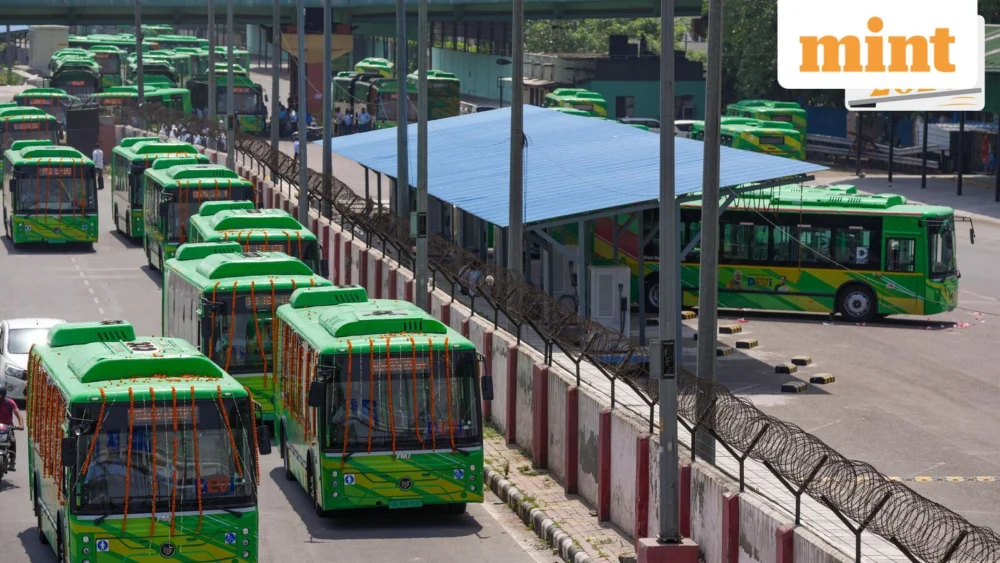
India is embarking on a strategic shift in its electric vehicle (EV) adoption drive, moving its primary focus from personal mobility solutions to the transformative potential of electric buses and trucks. This pivot is central to the nation’s ambitious target of achieving 30% electric mobility across all vehicle segments by 2030, recognizing the outsized environmental and economic impact of heavy commercial vehicles. As the global landscape of sustainable transport evolves, India’s policymakers are keenly aware that decarbonizing public transport and logistics fleets is not merely an environmental mandate but a critical pathway to energy security, urban air quality improvement, and fostering indigenous manufacturing capabilities.
The rationale behind this strategic reorientation is compelling. While overall EV adoption in India witnessed a robust increase in 2025, with sales surpassing 2 million units compared to approximately 1.9 million in 2024, the government acknowledges that the greatest leverage for emission reduction lies within the commercial segment. Large diesel-powered vehicles, despite constituting a smaller fraction of the total fleet, are disproportionate contributors to greenhouse gas emissions and particulate matter, significantly exacerbating urban air quality challenges and public health concerns. Experts like Shyamasis Das, a fellow at the Centre for Social and Economic Progress (CSEP), consistently highlight the higher pollutant output from diesel engines compared to petrol or even compressed natural gas (CNG) alternatives, making the transition to electric a crucial environmental imperative.
At the heart of this renewed focus is the ₹10,900-crore PM E-Drive scheme, which is set to prioritize incentives for electric trucks and buses from 2026. This comes as subsidies for electric two- and three-wheelers under the scheme are slated to lapse by March 2026, signaling a deliberate policy recalibration. The shift underscores a mature understanding that while two-wheelers have driven initial EV penetration, a sustainable and impactful green mobility ecosystem requires deep penetration into the commercial and public transport sectors.
The electric bus segment, in particular, has already seen significant traction. Recent weeks witnessed major tenders, with new-age manufacturers like PMI Electro Mobility, Eka Mobility, and Olectra Greentech securing nearly 80% of India’s largest electric bus tender for deploying 10,900 e-buses across major metropolitan areas such as Bengaluru, Hyderabad, Delhi, Surat, and Ahmedabad. This momentum, however, must be viewed against the backdrop of existing market realities. In fiscal year 2025 (FY25), only about 4,000 electric buses were sold in India, a stark contrast to the roughly 63,000 diesel buses sold in the same period. The PM E-Drive scheme allocates ₹4,391 crore, representing 40% of its total outlay, specifically for the procurement of 14,028 new e-buses by state transport undertakings (STUs), thereby providing a substantial impetus. Manufacturers are responding by planning capacity expansion and increased localization, as articulated by PMI Electro Mobility, which aims to strengthen its domestic value-addition footprint to enhance resilience and cost-competitiveness.
The electric truck market, while still in its nascent stages, represents an equally critical frontier. As of December 2025, sales of medium (N2) and heavy (N3) electric trucks incentivized under the PM E-Drive scheme stood at a mere 496 units, dwarfed by over 291,000 diesel-run N2 and N3 trucks. This segment, however, is considered pivotal for achieving broader electrification goals. CSEP’s Das notes that PM E-Drive marks the first dedicated incentive plan for electric trucks since FY15, and while policy clarity has improved with the heavy industries ministry’s operational guidelines published in July, 2026 is expected to see more pilot projects rather than large-scale deployments. The inherent complexities of heavy-duty logistics, including range requirements, payload capacities, and charging infrastructure for long-haul routes, demand a more measured developmental approach.
A primary impediment to faster adoption across commercial EV segments remains the upfront cost. An electric truck or bus can be approximately 2.5 times more expensive than its internal combustion engine (ICE) counterpart. This significant capital outlay necessitates substantial subsidies and innovative financing solutions. However, the total cost of ownership (TCO) argument is gaining traction. As battery prices decline, and operational costs (fuel/electricity, maintenance) for EVs prove to be significantly lower, the TCO for electric buses is already becoming competitive with ICE buses in many urban applications, particularly for fleet operators with predictable duty cycles. This trend is expected to lead to price parity between ICE and EV models in the medium term, further bolstered by maturing financing models.

Financing is indeed a critical enabler. India’s commercial EV financing market is projected to expand dramatically, from $2.37 billion in 2025 to nearly $20 billion by 2030, according to Mordor Intelligence. Bridging the gap between the high upfront cost and long-term operational savings requires robust financial innovation. Kunal Mundra, founder and CEO of Astranova Mobility, emphasizes the need for large lenders to collaborate with specialized smaller lenders. While specialists offer deep underwriting expertise, asset management capabilities, and data-driven risk assessment, mainstream lenders are essential for providing the necessary balance-sheet scale and lower cost of capital, thereby accelerating EV adoption.
Beyond PM E-Drive, India’s policy framework includes two crucial production-linked incentive (PLI) schemes: PLI-Auto for zero-emission vehicles and components (₹25,938 crore) and PLI-ACC for advanced chemistry cell batteries (₹18,100 crore). While these schemes signify strong government intent, their disbursement records have been varied. Significant amounts have been disbursed for electric two- and three-wheelers under PM E-Drive, but incentives for electric trucks and buses, as well as under the PLI-ACC scheme, have seen delays, indicating challenges in meeting compliance requirements and fostering indigenous manufacturing. PLI-Auto disbursals, for instance, increased to approximately ₹1,000 crore by November 2025 in FY26, up from ₹322 crore in its inaugural year (FY25).
A common thread across all EV incentive schemes is the stringent requirement for localizing supply chains. Mandates like 50% domestic value addition under the PLI-Auto scheme are designed not just to promote ‘Make in India’ but also to build strategic resilience against global supply chain shocks. The year 2025 provided a stark reminder of this necessity when China’s export control order on rare earth magnets sent ripples through the Indian automotive industry, highlighting vulnerabilities. Shantanu Das, Chief Architect – Automotive at Sasken Technologies Ltd., notes that Indian OEMs are progressively reducing dependency on Chinese suppliers by collaborating with domestic partners, though managing the cost aspect remains a significant challenge. This push for self-sufficiency extends to critical components like batteries, for which the PLI-ACC scheme aims to foster a robust domestic manufacturing ecosystem.
Charging infrastructure is another cornerstone of EV adoption. India’s network of public EV charging stations has expanded to approximately 29,000 as of August 2025, steadily alleviating range anxiety. However, reliance on imported components for chargers remains a concern. Complementing fixed charging, battery swapping is emerging as a critical facilitator, particularly for commercial vehicles where minimizing downtime is paramount. This nascent segment, currently dominated by two-wheelers and e-rickshaws, is poised for growth in heavier segments. Energy In Motion Ltd., for example, established India’s first heavy commercial vehicle battery-swapping station in Haryana in October 2025, projecting 400-600 heavy-duty vehicles under long-term swapping contracts by March 2026. This model promises reduced charging times and lower upfront vehicle costs by decoupling the battery ownership.
While the current policy emphasis shifts towards commercial vehicles, the initial success in the two-wheeler segment provides valuable insights. Despite scaled-down incentives under PM E-Drive for electric two-wheelers, companies like Ather Energy are demonstrating a path to profitable growth independent of subsidies. Ather, not eligible for PLI-Auto sops, has focused on building structural business strength, achieving a 15% market share in 2025, up from 10% a year prior. This market dynamic, characterized by the rise of legacy players like Bajaj Auto and TVS Motor alongside startups, illustrates the market’s capacity to adapt and innovate even as direct incentives taper off.
Ultimately, India’s focused drive towards electrifying its commercial fleet is a multi-faceted endeavor with profound implications. Economically, it promises reduced reliance on fossil fuel imports, saving foreign exchange and enhancing energy security. Environmentally, it directly tackles urban air pollution and contributes significantly to India’s climate commitments. The strategic intent is clear: by leveraging policy incentives, fostering indigenous manufacturing, expanding critical infrastructure, and facilitating innovative financing, India aims to build a sustainable, self-reliant, and globally competitive green mobility ecosystem. The government’s policy think tank, NITI Aayog, advocates for a holistic "carrot-and-stick" approach, recommending not only incentives but also measures like higher registration fees, stricter emission standards, and increased input taxes on ICE vehicles to accelerate the transition. India’s journey to 30% vehicle electrification by 2030 will undeniably hinge on the successful and rapid scaling of its commercial EV segment, setting a precedent for other developing economies navigating similar challenges.