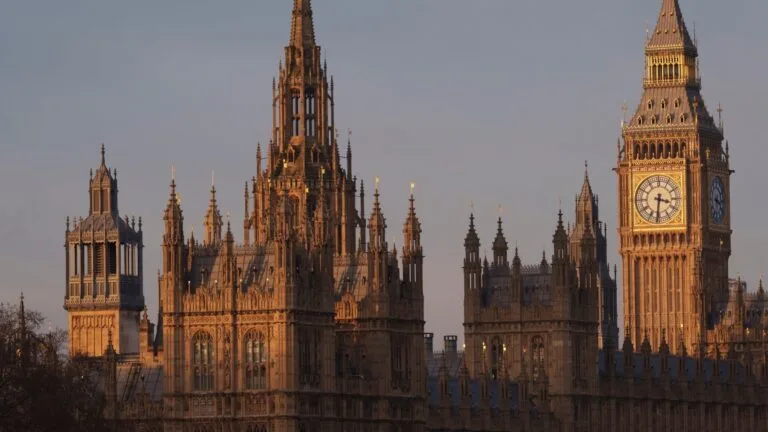
The British Foreign, Commonwealth & Development Office (FCDO) is navigating an increasingly treacherous diplomatic landscape as new scrutiny falls upon the historical social media activity of Alaa Abd el-Fattah, the British-Egyptian activist currently imprisoned in Cairo. For years, the UK government has been under immense pressure from civil rights groups, Members of Parliament, and international organizations to secure the release of Abd el-Fattah, a high-profile figure of the 2011 Arab Spring. However, a recent resurgence of controversial posts attributed to the activist—described by some critics and government officials as "abhorrent" for their perceived incitement of violence against Egyptian security forces—has created a profound political headache for Whitehall. This development complicates the delicate "realpolitik" the UK must maintain with Egypt, a nation that serves as both a critical regional security partner and a primary destination for British foreign direct investment.
The core of the controversy centers on the dual identity of the campaign for Abd el-Fattah’s freedom. To his supporters, he is a symbol of democratic resistance and a victim of an authoritarian crackdown on free speech. To his detractors, and the Egyptian judiciary, his rhetoric crossed the line from political dissent into the active promotion of violence. As the Foreign Office continues its consular efforts, it finds itself caught between the moral and legal obligation to protect a British citizen and the political fallout of appearing to champion an individual whose digital footprint contains statements that run contrary to British values regarding the rule of law and non-violence. This tension has emboldened critics who argue that the UK’s diplomatic capital is being expended on a polarizing figure at the expense of broader bilateral interests.
From an economic perspective, the stakes of the UK-Egypt relationship are substantial. The United Kingdom remains one of Egypt’s largest investors, with a total investment stock estimated to be in the region of £30 billion. Major British corporations, particularly in the energy sector such as BP and Shell, have deep-seated interests in Egypt’s Mediterranean gas fields. Furthermore, Egypt’s control of the Suez Canal makes it a linchpin of global maritime trade, a factor that has only grown in importance amid recent disruptions in the Red Sea. For the FCDO, the challenge is to advocate for human rights and the consular rights of a dual national without jeopardizing these vital economic and strategic ties. The emergence of the "abhorrent" posts provides Cairo with significant leverage, allowing the Egyptian government to frame the issue not as a human rights violation, but as a matter of national security and the prosecution of a "dangerous" agitator.
The digital age has fundamentally altered the nature of diplomatic intervention. In decades past, a political prisoner’s history was often curated by their advocates or limited to physical pamphlets and localized speeches. Today, the permanence of the digital archive means that every tweet, blog post, and Facebook status is a potential diplomatic landmine. For the Foreign Office, the vetting process for high-profile consular cases has become a minefield. When a citizen’s past rhetoric is used by a foreign state to justify their detention, the home government must decide whether to distance itself from the individual’s views while still demanding their legal rights, or to double down on the principle of citizenship regardless of the individual’s character. In the case of Abd el-Fattah, the "abhorrent" nature of some posts has fractured the domestic consensus in the UK, making it harder for the Foreign Secretary to present a unified front to their Egyptian counterpart.
Global comparisons illustrate the difficulty of these "high-stakes" consular cases. The UK’s experience with Nazanin Zaghari-Ratcliffe in Iran demonstrated how a single misstatement by a government official—or a piece of historical evidence used by the detaining state—can prolong an individual’s imprisonment by years. However, unlike Zaghari-Ratcliffe, whose case was largely viewed through a humanitarian lens, Abd el-Fattah’s case is deeply intertwined with the ideological battles of the Middle East. The Egyptian government has been adept at using Abd el-Fattah’s own words to lobby British MPs, reportedly sharing dossiers of his social media posts to suggest that his release would pose a direct threat to Egyptian stability. This strategy aims to erode the "moral high ground" typically occupied by Western governments in human rights disputes.
The economic impact of this diplomatic friction extends beyond corporate investments. Egypt is currently grappling with a severe currency crisis and high inflation, necessitating support from international financial institutions and bilateral partners. The UK’s influence within the IMF and its role as a provider of export credit guarantees are significant levers of power. However, using these economic tools to pressure Egypt over a single prisoner is a high-risk strategy. If the UK is seen as overreaching on behalf of an individual with a controversial record, it risks alienating the Egyptian leadership and pushing them closer to other geopolitical blocs, such as the BRICS alliance, which Egypt recently joined. The "abhorrent" posts provide a convenient shield for Cairo to deflect Western pressure, arguing that the UK is interfering in a legitimate criminal justice matter involving incitement.
Expert insights suggest that the Foreign Office is now attempting a pivot in its communication strategy. Rather than focusing solely on the "freedom of speech" narrative, which is weakened by the controversial posts, diplomats are increasingly emphasizing "consular access" and "procedural fairness." This shift allows the UK to maintain its obligation to its citizen without necessarily endorsing his past rhetoric. Nevertheless, the political pressure at home remains intense. Human rights organizations argue that the FCDO is being "cowed" by Cairo’s propaganda, while conservative critics within the UK argue that the government should not be "wasting" diplomatic energy on someone who has expressed hostility toward the very institutions of law and order that the UK seeks to promote globally.
The broader implications for international law are also significant. The case highlights the limitations of the Vienna Convention on Consular Relations when dealing with dual nationals. Egypt, like many countries, does not recognize dual citizenship in a way that allows foreign governments to intervene in the cases of their citizens who are also Egyptian nationals. By highlighting the "abhorrent" posts, Egypt is reinforcing its sovereign right to prosecute its own citizens under its own laws, regardless of their second passport. This creates a precedent that other nations may follow, using digital archives to delegitimize the interventions of Western foreign offices.
As the situation evolves, the Foreign Office faces a credibility test. If it scales back its efforts for Abd el-Fattah, it risks being accused of abandonment and inconsistency in its human rights policy. If it continues to lobby aggressively, it must answer to a domestic audience—and a foreign partner—about why it is supporting an individual whose words have caused such deep offense. The resolution of this impasse will likely require a quiet, behind-the-scenes deal that allows both sides to save face, perhaps involving a pardon or a deportation to the UK on the condition of political silence. However, as long as the "abhorrent" posts remain in the public domain, any such deal will be fraught with political risk.
Ultimately, the controversy surrounding Alaa Abd el-Fattah serves as a case study in the complexities of 21st-century diplomacy. It is a world where economic interests, security imperatives, and human rights obligations are constantly clashing, and where the digital ghosts of the past can suddenly materialize to haunt the present. For the British Foreign Office, the task is no longer just about negotiating the release of a prisoner; it is about managing a narrative in an era where the line between an activist and an agitator is increasingly drawn in the sands of social media. The pressure on Whitehall is unlikely to abate, as both supporters and critics of Abd el-Fattah demand a clarity that the murky world of international diplomacy is rarely able to provide. The coming months will determine whether the UK can find a way to uphold its principles of consular protection without compromising its strategic stability in one of the world’s most volatile regions.