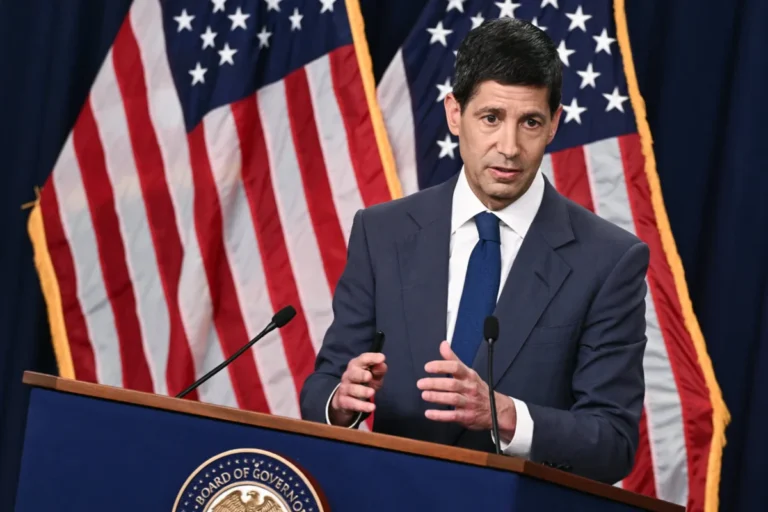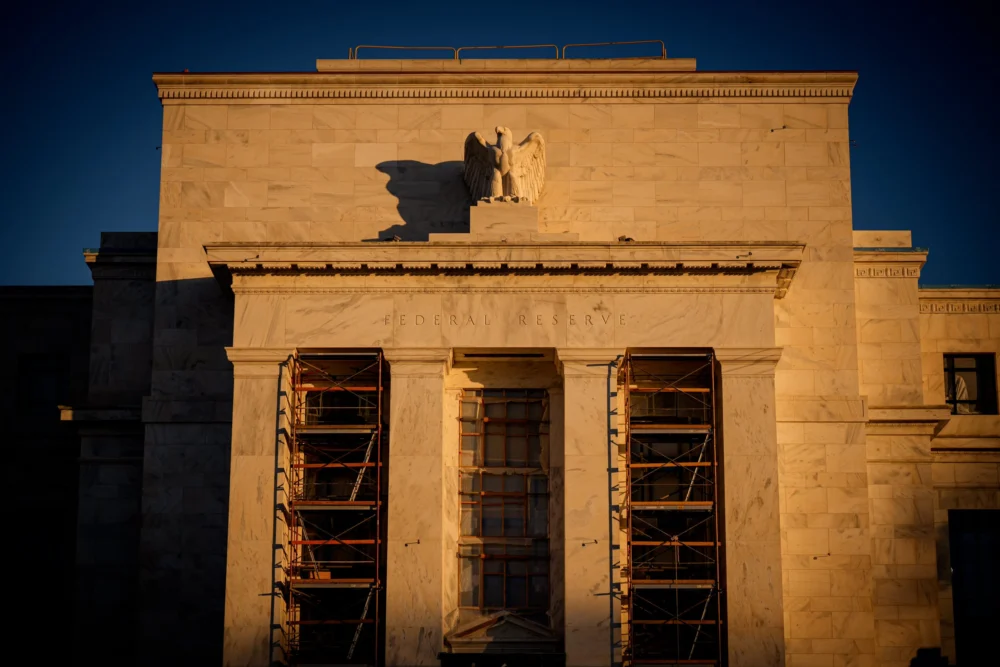
In a move widely interpreted as a strategic fortification of institutional independence, the Federal Reserve Board of Governors has unanimously voted to reappoint 11 of its 12 regional bank presidents. This decision, announced significantly ahead of the traditional schedule, signals a desire for continuity within the world’s most influential central bank as it navigates a complex transition in both the American political landscape and the global macroeconomic environment. By securing the leadership of the regional branches through 2031, the Board has effectively insulated its primary policy-making apparatus from immediate personnel shifts, ensuring that the technicians currently steering the U.S. economy remain at the helm.
The reappointments encompass a broad geographic and ideological spectrum of the Federal Reserve System, which is uniquely structured as a decentralized network of 12 regional banks overseen by the Board of Governors in Washington, D.C. The only exception to the blanket reappointment was the Federal Reserve Bank of Atlanta, where President Raphael Bostic is slated for a scheduled retirement in February. For the remaining 11 districts—ranging from the financial hub of New York to the industrial and agricultural heartlands of Cleveland, Chicago, and Kansas City—the vote confirms five-year terms that will officially commence on March 1, 2026.
The timing of this announcement is particularly noteworthy. Historically, the Board of Governors waits until the weeks immediately preceding the February 28 expiration of terms to formalize reappointments. By moving in December, the Fed appears to be providing a clear signal to global financial markets: the institutional "brain trust" responsible for managing inflation and employment will remain stable. This preemptive action arrives amid heightened speculation regarding the future of the central bank’s autonomy. With a new presidential administration taking office in January, the Federal Reserve has frequently found itself at the center of a debate over the limits of executive influence on monetary policy.
The Federal Open Market Committee (FOMC), the body responsible for setting the federal funds rate, consists of the seven governors in Washington and a rotating group of five regional bank presidents. The President of the New York Fed holds a permanent vote, while the other 11 presidents rotate into the four remaining voting slots annually. Because these regional presidents play a critical role in determining the cost of borrowing for everything from mortgages to corporate debt, their tenure is a matter of intense interest for Wall Street and international investors.
The unanimity of the vote is perhaps its most significant feature. Among the seven governors who voted in favor of the reappointments was Stephen Miran, a recent appointee by President Donald Trump. Miran’s term is set to expire in January, and his alignment with the rest of the Board suggests a consensus that transcends immediate partisan divides. This unified front serves to bolster the Fed’s "dual mandate" of price stability and maximum sustainable employment, suggesting that even those appointed under different political mandates recognize the value of the regional banks’ expertise and their role in local economic surveillance.
However, the reappointments have not occurred in a vacuum. The central bank faces renewed scrutiny from the Treasury Department and other corners of the executive branch. Treasury Secretary Scott Bessent has recently voiced concerns regarding what he characterizes as the "disproportionate influence" of the New York Federal Reserve over the rest of the system. Bessent’s critique centers on the career trajectories of several regional presidents who spent significant portions of their professional lives in the New York financial ecosystem before taking leadership roles in other districts.
Notable examples include Lorie Logan, the President of the Dallas Fed, who previously managed the New York Fed’s massive trading desk, and Beth Hammack, the President of the Cleveland Fed and a former high-ranking executive at Goldman Sachs. Bessent has floated a proposal that would require regional bank presidents to be residents of their respective districts for at least three years prior to their appointment. Proponents of this view argue it would ensure that the Fed’s leadership is more deeply rooted in the diverse economic realities of the American interior, rather than being dominated by a "Manhattan-centric" perspective on capital markets.
Despite these criticisms, the Board’s decision to maintain the current roster emphasizes the value placed on technical proficiency and market experience. The regional presidents are not merely administrators; they are the "boots on the ground" who gather anecdotal evidence—often referred to as the "Beige Book" data—from local business leaders, labor unions, and community organizations. This decentralized information-gathering is a cornerstone of the Fed’s policy formulation, allowing the FOMC to look beyond national aggregates and understand how interest rate changes are affecting specific sectors like Midwestern manufacturing or Western technology hubs.
From a global perspective, the Federal Reserve’s structure is often viewed as a model of balanced governance, though it differs sharply from other major central banks. The European Central Bank (ECB), for instance, gives each of the 20 national central bank governors in the Eurozone a seat on its Governing Council, though they operate under a rotation system for voting rights. Unlike the Fed, the ECB’s leadership is often more directly tied to national political appointments, which can lead to friction during periods of sovereign debt crises. The Bank of England, meanwhile, utilizes a Monetary Policy Committee that includes "external members" to provide independent perspectives, but lacks the vast regional infrastructure that defines the U.S. system.
The economic stakes of these reappointments are substantial. The U.S. economy is currently in a delicate transition period, attempting to navigate a "soft landing" as inflation cools toward the Fed’s 2% target without triggering a significant spike in unemployment. Market data indicates that investors are pricing in a series of gradual rate cuts over the next 18 months. Any perceived instability in the Fed’s leadership could lead to increased volatility in the bond market, potentially pushing up long-term yields and complicating the central bank’s efforts to ease monetary conditions.
Furthermore, the legal framework of the Federal Reserve provides a unique layer of protection for these regional presidents. While the Board of Governors in Washington are government officials appointed by the President and confirmed by the Senate, the regional bank presidents are technically employees of their respective private-sector corporations. They are selected by their district’s Board of Directors—specifically the Class B and C directors who represent the public and are not affiliated with regulated banks. This "public-private" hybrid was a deliberate compromise made during the passage of the Federal Reserve Act in 1913 to prevent the central bank from becoming a purely political tool of the federal government.
The retirement of Raphael Bostic in Atlanta now becomes the focal point for those seeking change within the system. The search for his successor will be a high-stakes process, monitored closely for what it reveals about the Fed’s commitment to diversity and its openness to outside economic perspectives. Bostic, the first Black and first openly gay person to lead a regional Fed bank, has been a prominent voice on issues of economic inclusivity. The selection of his replacement will be a test of whether the regional boards and the Washington governors seek to maintain his focus or pivot toward a different set of priorities.
As the new five-year terms prepare to take effect in 2026, the Federal Reserve appears more committed than ever to its historical role as a technocratic shield against short-term political cycles. By confirming the current leadership, the Board has prioritized the "institutional memory" of the FOMC. These presidents have managed the unprecedented liquidity injections of the pandemic era, the subsequent battle against forty-year-high inflation, and the ongoing reduction of the Fed’s multi-trillion-dollar balance sheet. In the eyes of the Board, now is not the time for an overhaul, but for a steady hand.
In the coming months, the interaction between the newly reappointed presidents and the incoming administration will be a defining feature of the American economic narrative. While the Treasury may push for structural reforms like residency requirements, the Federal Reserve’s preemptive move has effectively set the stage for the next half-decade. For now, the architecture of American monetary policy remains unchanged, anchored by a group of officials who have been given a clear mandate to continue their work, regardless of the political winds blowing outside the Marriner S. Eccles building.