The landscape of international finance experienced a sharp recalibration this week as investors reacted to a renewed wave of protectionist rhetoric emanating from the United States. In a series of announcements that have sent ripples through global trading floors, the prospect of aggressive new tariffs on major trading partners has upended recent market assumptions, leading to a significant rally in gold prices and a notable retreat in the U.S. dollar against several key peers. This shift underscores a growing anxiety regarding the stability of global supply chains and the potential for a resurgence in inflationary pressures, as the "Trump Trade"—once characterized by a surging dollar and equity optimism—transforms into a flight toward traditional safe-haven assets.
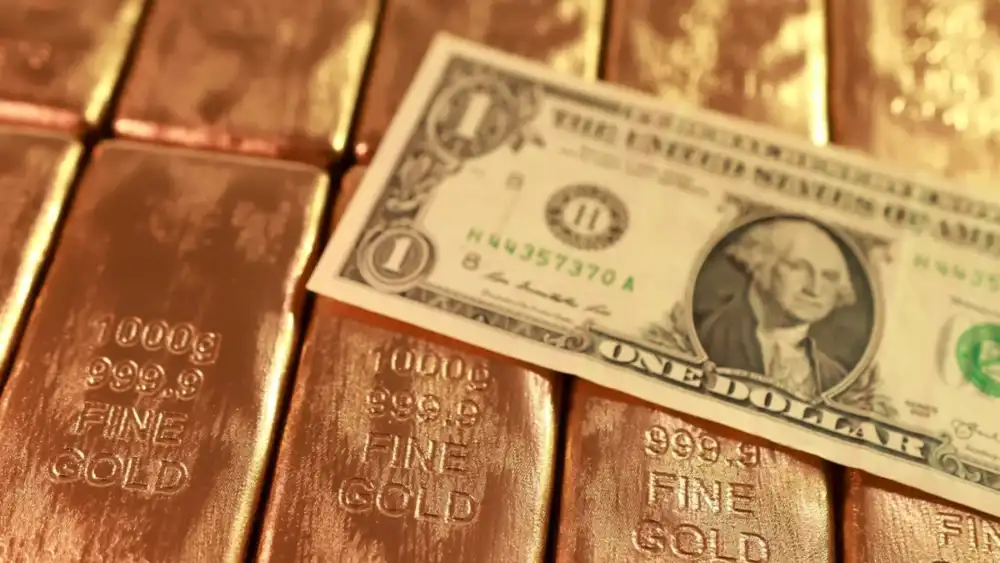
Gold, the perennial barometer for geopolitical and economic uncertainty, surged as market participants sought shelter from the looming possibility of a multi-front trade war. Spot gold climbed significantly, reclaiming critical psychological levels as institutional buyers moved to hedge against the risks of currency devaluation and market volatility. The precious metal’s ascent is not merely a reaction to immediate headlines but reflects a deeper structural concern among economists: that the era of relatively friction-free global trade is being replaced by a fragmented system of bilateral leverage and retaliatory duties. For central banks, particularly those in emerging markets that have been aggressively diversifying their reserves away from the dollar, the latest developments provide further justification for increasing bullion holdings.
Conversely, the U.S. dollar, which had enjoyed a sustained period of dominance following the recent election, showed signs of exhaustion. While tariffs are traditionally viewed as dollar-positive—due to the expectation that they will curb imports and force the Federal Reserve to maintain higher interest rates to combat inflation—the current market reaction suggests a more nuanced "sell the news" phenomenon. Investors appear to be weighing the benefits of a stronger dollar against the potential damage that widespread tariffs could inflict on the domestic U.S. economy, particularly through higher input costs for manufacturers and a squeeze on consumer purchasing power. The cooling of the dollar index reflects a market that is beginning to price in the complexity of implementing such a sweeping trade agenda, alongside the risk of aggressive retaliation from America’s largest trading partners.
The catalysts for this market upheaval are the proposed tariffs on Canada, Mexico, and China—three nations that form the backbone of the U.S. trade ecosystem. The proposal to levy a 25 percent tariff on all products coming from Mexico and Canada, and an additional 10 percent on goods from China, marks a significant escalation in trade policy. Unlike the targeted tariffs of the past, which focused on specific sectors like steel or aluminum, these broad-based measures threaten to disrupt the highly integrated North American supply chain established under the USMCA. The automotive industry, in particular, stands at the center of this storm. With parts often crossing the borders of the U.S., Mexico, and Canada multiple times before a final vehicle is assembled, a 25 percent levy could add thousands of dollars to the cost of a new car, potentially paralyzing one of the most vital sectors of the North American economy.
Economic analysts are pointing to the "inflationary impulse" that these tariffs could trigger. While the U.S. Federal Reserve has been making progress in bringing inflation back toward its 2 percent target, a sudden spike in the cost of imported goods could derail this trajectory. If businesses pass these costs on to consumers, the Fed may be forced to pause its cycle of interest rate cuts or, in a more extreme scenario, consider returning to a hawkish stance. This creates a "stagflationary" risk—a combination of stagnant economic growth caused by trade friction and rising prices caused by the tariffs themselves. This specific fear is what has driven the decoupling of gold from the dollar; typically, a stronger dollar suppresses gold, but when the dollar’s strength is perceived as a byproduct of economic instability, gold often rises in tandem or even outperforms.
The international response has been one of cautious alarm. In Beijing, policymakers are already navigating a complex domestic economic recovery, and the threat of additional tariffs adds a layer of difficulty to their efforts to stimulate internal demand. The Chinese Yuan has faced downward pressure, prompting the People’s Bank of China to intervene to maintain currency stability. Meanwhile, in Ottawa and Mexico City, the rhetoric has shifted toward the necessity of protecting sovereign economic interests. Mexico, which recently surpassed China as the top trading partner to the U.S., faces a particularly precarious situation. The Mexican Peso has seen heightened volatility, as the country’s economy is deeply tethered to the U.S. consumer. Any significant disruption in cross-border trade could lead to a recessionary environment in Mexico, which would, in turn, have spillover effects on U.S. exports and regional migration patterns.
From a historical perspective, the current pivot toward protectionism draws comparisons to the trade disruptions of the 1930s, although the modern global economy is far more interconnected. The "just-in-time" manufacturing model, which has defined the last thirty years of globalization, is predicated on low tariffs and predictable borders. The reintroduction of significant trade barriers forces companies to reconsider "near-shoring" or "friend-shoring" initiatives, but these transitions are neither quick nor cheap. The capital expenditure required to move factories and supply lines is immense, and the costs are ultimately borne by the global financial system. This structural shift is a primary reason why long-term bond yields have remained volatile, as investors struggle to price in the "new normal" of a more expensive, less efficient global trade network.
Expert insights suggest that the current market movements also reflect a strategy of "negotiation by headline." Some market strategists argue that the aggressive tariff threats are intended as a tactical opening gambit to extract concessions on non-trade issues, such as border security and fentanyl interdiction. However, the risk for markets lies in the potential for these threats to become entrenched policy. If the tariffs are implemented and sustained, the impact on global GDP could be substantial. The International Monetary Fund (IMF) has previously warned that increased trade fragmentation could shave percentage points off global economic output, with the most significant impact felt by open economies that rely heavily on exports.
In the equity markets, the reaction has been bifurcated. Multinational corporations with extensive overseas footprints have seen their shares underperform, as investors worry about the dual impact of higher costs and retaliatory measures. Conversely, domestic-focused small-cap stocks, which theoretically stand to benefit from a "protected" home market, have shown some resilience, though even they are not immune to the broader inflationary pressures that tariffs produce. The technology sector, which relies on complex global networks for semiconductor procurement and hardware assembly, remains particularly vulnerable. The "tech-heavy" indices have mirrored the volatility of the currency markets, as analysts scramble to model the impact of a 10 percent additional levy on Chinese-sourced components.
As the week progresses, the focus of the financial world remains fixed on the U.S. Treasury and the Office of the Trade Representative for further clarification. The appointment of key economic officials who have historically favored a "strong dollar, high tariff" approach suggests that the current volatility may not be a short-term blip but the beginning of a sustained period of market realignment. For investors, the mantra has shifted toward diversification and capital preservation. The surge in gold is the most visible manifestation of this shift, representing a collective vote of no confidence in the stability of the current geopolitical order.
Ultimately, the sliding dollar and rising gold prices serve as a warning signal from the markets. While protectionist policies are designed to bolster domestic industry, the immediate financial reality is one of increased cost, heightened uncertainty, and a recalibration of risk. As global trade faces its most significant challenge in decades, the movement of capital suggests that the path forward will be characterized by higher volatility and a premium on assets that exist outside the traditional fiat currency system. The coming months will determine whether these tariff threats are a precursor to a new era of "fortress economics" or a high-stakes gamble in the theater of international diplomacy. For now, however, the message from the trading floor is clear: the era of predictable global commerce has entered a period of profound and costly transformation.