The United Kingdom is standing at a critical strategic crossroads as a surge in global instability collides with a decade of fiscal austerity, leaving a staggering £800 billion funding gap that must be bridged by 2040 to meet the nation’s security commitments. This gargantuan figure, highlighted in recent economic assessments of the Ministry of Defence’s (MoD) long-term requirements, represents a paradigm shift in how the British state must prioritize its spending. As the era of the "peace dividend" officially expires, the UK government faces the Herculean task of modernizing its armed forces while navigating a precarious domestic economy and a mounting national debt.
The necessity for this capital injection is driven by a confluence of deteriorating geopolitical conditions and the rapid obsolescence of existing military hardware. For decades, the UK, like many of its NATO allies, capitalized on the relative stability of the post-Cold War world by redirecting funds from the military to social services and infrastructure. However, the full-scale invasion of Ukraine by Russia, the rising assertiveness of China in the Indo-Pacific, and volatile conditions across the Middle East have shattered the illusion of a low-threat environment. To maintain its status as a leading global power and a cornerstone of the NATO alliance, London has pledged to increase defense spending to 2.5% of Gross Domestic Product (GDP). Yet, experts warn that even this ambitious target may fall short of the actual requirements needed to field a "battle-ready" force in the mid-21st century.
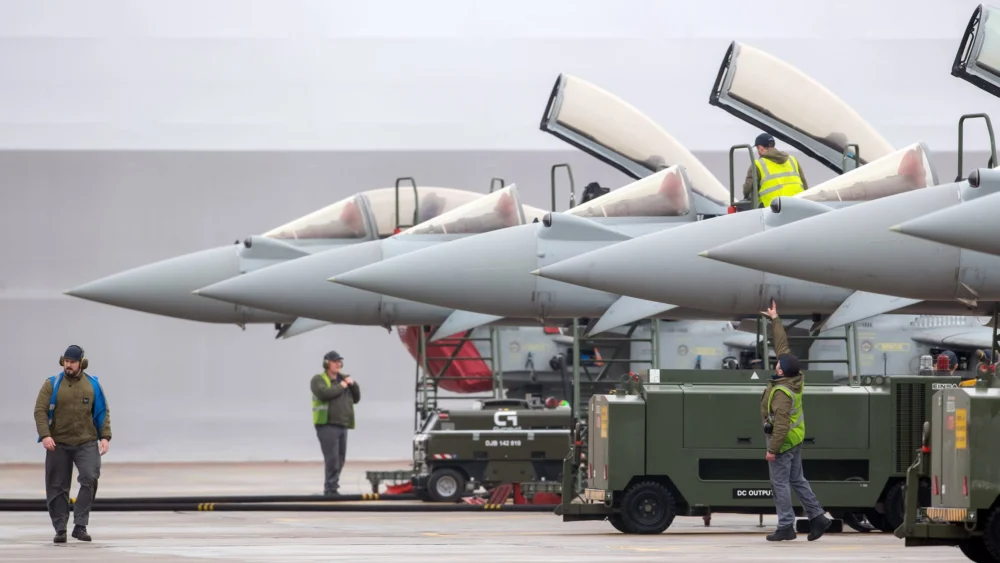
The £800 billion requirement encompasses not only the procurement of next-generation hardware but also the sustained maintenance of complex systems and the urgent need to replenish depleted stockpiles. One of the primary drivers of this cost is "defense inflation," a phenomenon where the cost of military technology rises significantly faster than the standard consumer price index. Modern fighter jets, nuclear-powered submarines, and advanced cyber-defense systems are exponentially more expensive than their predecessors. For instance, the development of the Global Combat Air Programme (GCAP), a sixth-generation fighter jet project involving Italy and Japan, requires a multi-billion-pound commitment that spans decades. Similarly, the AUKUS pact—a trilateral security partnership with Australia and the United States—demands a massive long-term investment in the UK’s sovereign nuclear submarine capabilities.
Beyond the high-profile "big ticket" items, the UK’s military infrastructure is suffering from what analysts describe as a "hollowing out" of core capabilities. The British Army is currently at its smallest size since the Napoleonic era, with personnel numbers hovering around 73,000. Reversing this trend and ensuring that troops are properly equipped, housed, and trained requires a financial commitment that extends far beyond the current budgetary cycles. Furthermore, the conflict in Ukraine has exposed a critical vulnerability in Western military planning: the lack of industrial capacity to produce munitions at scale. Restoring the UK’s "sovereign industrial base" to ensure it can sustain a high-intensity conflict is a multi-billion-pound endeavor in its own right.
The economic implications of such a massive spending requirement are profound. At a time when the UK Treasury is grappling with a "black hole" in public finances and the burden of an aging population is putting immense pressure on the National Health Service (NHS), the "guns versus butter" debate has returned to the forefront of British politics. Critics of increased defense spending argue that every pound diverted to the MoD is a pound taken away from schools, hospitals, and the green energy transition. Conversely, proponents argue that national security is the fundamental prerequisite for economic prosperity. They contend that without a credible defense posture, the UK risks losing its influence in global trade and its ability to protect vital international shipping lanes, which would ultimately lead to a far greater economic cost.
From an industrial perspective, the £800 billion investment could act as a significant catalyst for the UK’s aerospace and defense sectors, which are major contributors to the national economy. Companies such as BAE Systems, Rolls-Royce, and Babcock International are not only critical to national security but are also major employers and exporters. High-value engineering jobs and research and development (R&D) in areas like artificial intelligence, quantum computing, and directed-energy weapons have significant spillover effects into the civilian economy. By committing to a long-term funding roadmap, the government provides the private sector with the certainty needed to invest in domestic manufacturing facilities and skilled apprenticeships.
However, the challenge of procurement reform remains a persistent thorn in the side of the MoD. Historically, major UK defense projects have been plagued by delays and cost overruns. The Ajax armored vehicle program, for example, became a symbol of procurement failure, characterized by technical setbacks and billions in spent capital before a single unit was ready for deployment. To make the £800 billion investment viable, the UK must overhaul its acquisition processes, moving away from bespoke, overly complex requirements toward more agile, off-the-shelf, or modular solutions. This shift is essential to ensure that the taxpayer receives value for money and that the military receives equipment on a timeline that matches the evolving threat landscape.
International comparisons provide a sobering context for the UK’s dilemma. While the UK remains the largest defense spender in Europe, other nations are rapidly closing the gap. Poland has embarked on a massive rearmament program, targeting 4% of its GDP for defense. Germany, long a laggard in military spending, has established a €100 billion "Zeitenwende" special fund to modernize its Bundeswehr. Meanwhile, the United States continues to signal that its primary focus is shifting toward the Pacific, placing a greater burden on European nations to manage their own regional security. If the UK fails to meet its funding targets, it risks losing its "Tier One" military status and its "special relationship" leverage with Washington.
The financial markets are also watching the UK’s defense trajectory with interest. Increased government borrowing to fund military expansion could impact gilt yields and the UK’s credit rating if not managed within a credible fiscal framework. Some economists have suggested the introduction of "defense bonds" or specific tax ring-fencing to fund the gap, though such measures remain politically sensitive. The broader challenge for the Chancellor of the Exchequer is to foster enough GDP growth to make the 2.5% (or potentially 3%) defense target affordable without resorting to deep cuts in other essential departments or unsustainable levels of taxation.
As 2040 approaches, the technological nature of warfare will continue to transform. The £800 billion figure must account for a shift toward unmanned systems, space-based assets, and the persistent threat of hybrid and cyber warfare. Traditional platforms like aircraft carriers and heavy tanks, while still relevant, must be integrated into a "multi-domain" architecture where data is as important as firepower. Protecting the UK’s undersea infrastructure—such as fiber-optic cables and energy pipelines—is an emerging and costly priority that was barely on the radar a decade ago.
The roadmap to 2040 is not merely a budgetary exercise; it is a statement of national intent. The scale of the £800 billion requirement reflects a world that has become more dangerous and less predictable. For the UK, the choice is between managing a managed decline of its global influence or making the difficult fiscal sacrifices necessary to remain a potent and persuasive actor on the world stage. As the government prepares its next Strategic Defence and Security Review, the shadow of this funding gap will loom large, demanding a level of political courage and economic ingenuity that has not been required of British leaders for generations. The cost of inaction, many argue, could eventually prove to be far higher than the price of preparation.