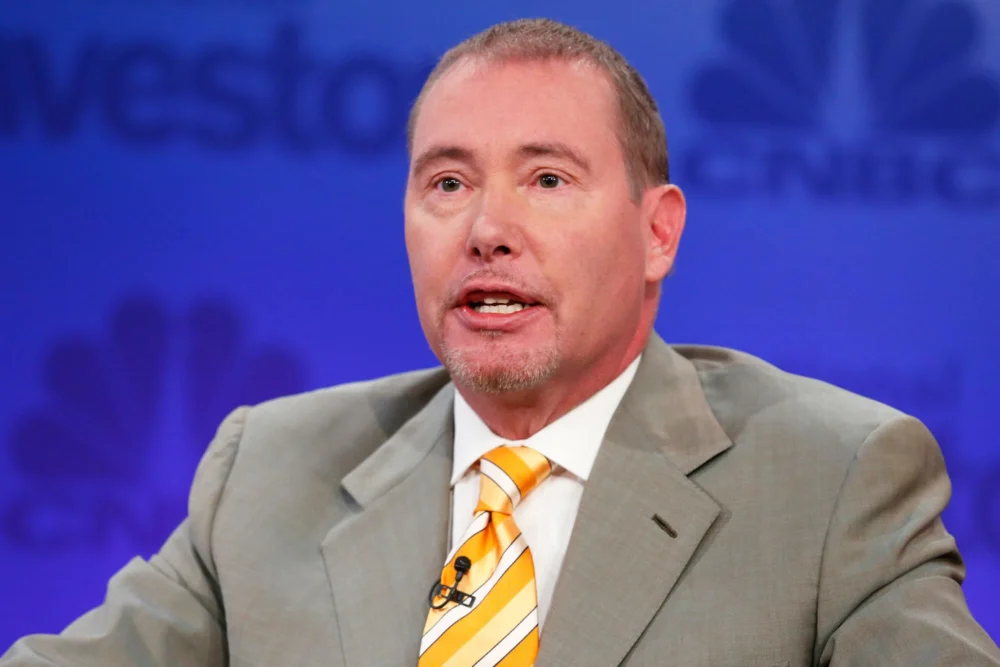
The era of aggressive monetary easing may have reached a definitive plateau, at least for the duration of Jerome Powell’s leadership at the Federal Reserve. Jeffrey Gundlach, the influential Chief Executive Officer of DoubleLine Capital, has signaled a significant shift in the macroeconomic landscape, suggesting that the central bank’s campaign to lower interest rates has likely concluded for the current administration. Speaking in the wake of the Federal Reserve’s January policy meeting, the veteran fixed-income investor, often referred to as the "Bond King," expressed a high degree of confidence that the Fed will maintain its current posture until a new chair takes the helm later this year.
The Federal Open Market Committee (FOMC) recently elected to hold its benchmark overnight lending rate steady within the 3.5% to 3.75% range. This decision reflects a central bank that is increasingly cautious, balancing the desire to support economic growth with the lingering necessity of keeping inflation in check. For Gundlach, the rhetoric emerging from the Eccles Building suggests a "mission accomplished" sentiment regarding the immediate threat of a recession, coupled with a realization that further cuts might be premature or even counterproductive.
At the heart of Gundlach’s thesis is the observation that Jerome Powell is navigating a "lame duck" period with a focus on stability and legacy. With only two policy meetings remaining in Powell’s term—scheduled for March and April—the window for meaningful policy shifts is rapidly closing. By the time the June meeting arrives, a new chairperson is expected to be seated, pending Senate confirmation. Gundlach posits that Powell is intentionally setting the stage for his successor by emphasizing a balanced outlook, one that acknowledges that while inflation remains slightly above the 2% target, the labor market has moved away from the "danger zone" of rapidly rising unemployment.
The economic data supporting this pause is multifaceted. The Fed’s most recent policy statement characterized economic activity as expanding at a "solid pace," a notable upgrade from previous, more tentative language. Furthermore, the labor market, which had shown signs of cooling throughout the latter half of the previous year, appears to have found a floor. The unemployment rate, which some analysts feared might trigger the "Sahm Rule"—a historical recession indicator—has instead stabilized. This stabilization grants the Fed the luxury of time, allowing policymakers to observe the delayed effects of previous rate hikes without the pressure to intervene further.
During his post-meeting press conference, Powell himself hinted at the limitations of further easing. He noted that it is difficult to categorize current policy as "significantly restrictive" when viewed against the backdrop of resilient consumer spending and robust corporate earnings. This admission is a pivot from the narrative of early 2024, when the market was pricing in a rapid descent toward a neutral rate. The "neutral rate," or r-star—the theoretical interest rate that neither stimulates nor restrains the economy—remains a point of intense debate among economists. If the economy continues to grow at its current pace with rates near 3.75%, it suggests that the neutral rate may be higher than previously estimated, leaving little room for the Fed to cut without risking a resurgence of inflationary pressures.
The divergence between Gundlach’s outlook and broader market expectations is stark. According to the CME FedWatch Tool, fed funds futures have been pricing in at least two additional quarter-percentage-point cuts by the end of 2026. Gundlach, however, views these expectations as overly optimistic or perhaps misaligned with the current fiscal reality. He suggests that the "tension" between the Fed’s dual mandate of price stability and maximum employment has dissipated. With both sides of the mandate appearing relatively stable, the impetus for a policy shift has vanished.

Beyond the immediate mechanics of interest rates, Gundlach’s analysis extends into the broader realm of global asset allocation and currency dynamics. He has reiterated a long-standing concern regarding the long-term strength of the U.S. dollar, advising investors to look beyond domestic borders for growth. Specifically, he recommends that diversified portfolios allocate between 30% and 40% to international equities on an unhedged basis. This strategy is predicated on the belief that the dollar is entering a period of secular weakness, driven by ballooning fiscal deficits and a potential shift in global trade alliances.
An unhedged international position allows investors to benefit not only from the performance of foreign companies but also from the appreciation of local currencies against a weakening greenback. In a high-rate environment, the U.S. dollar typically thrives as it attracts foreign capital seeking yield. However, if the Fed remains on hold while other central banks—such as the European Central Bank or the Bank of Japan—adjust their own trajectories, the interest rate differential that has supported the dollar for years could begin to narrow. Gundlach’s call for international exposure is a hedge against a "twin deficit" crisis, where the U.S. faces both a massive budget shortfall and a widening trade gap.
The fiscal backdrop cannot be ignored when analyzing the Fed’s future path. The United States continues to run a budget deficit that exceeds 6% of GDP, a level rarely seen outside of major wars or deep economic crises. As the Treasury issues massive amounts of debt to fund government spending, the supply of bonds could put upward pressure on long-term yields, regardless of what the Fed does with short-term rates. This phenomenon, known as "bond vigilante" activity, can lead to a steepening of the yield curve. If long-term borrowing costs rise due to fiscal concerns, the Fed may find its hands tied; cutting short-term rates could be seen as "monetizing the debt," which would further fuel inflation expectations and weaken the currency.
When compared to global peers, the U.S. economy remains an outlier in terms of resilience. While the Eurozone has flirted with stagnation and China grapples with a structural slowdown in its property sector, the American consumer has remained remarkably undeterred by higher borrowing costs. This "American Exceptionalism" has been the primary driver of the dollar’s strength over the past decade. However, Gundlach warns that this outperformance may be reaching its cyclical peak. Valuations in U.S. equity markets, particularly in the technology sector, remain at historic highs, whereas international markets—specifically emerging markets and select European indices—offer significantly more attractive price-to-earnings multiples.
The transition of power at the Federal Reserve will be the most watched financial event of the coming months. The potential candidates to succeed Powell represent a spectrum of economic philosophies, ranging from "hawks" who prioritize inflation control to "doves" who might be more inclined to support growth through lower rates. However, the institutional momentum of the Fed usually favors a gradualist approach. By signaling a pause now, Powell ensures that his successor inherits a stable environment rather than one in the midst of a volatile easing or tightening cycle.
For the average investor, the implications of a "static" Fed are profound. It suggests that the "easy money" era is not returning anytime soon and that the cost of capital will remain structurally higher than it was during the 2010s. This environment favors companies with strong balance sheets and consistent cash flows, rather than those reliant on cheap debt for expansion. It also necessitates a more nuanced approach to fixed income, where duration management and credit quality become paramount.
In summary, Jeffrey Gundlach’s prediction of a cessation in rate cuts marks a turning point in the post-pandemic economic narrative. By focusing on the stabilization of the labor market and the persistence of "elevated" inflation, he paints a picture of a Federal Reserve that has reached its destination. As the Powell era draws to a close, the focus shifts from the frequency of rate adjustments to the broader structural challenges facing the U.S. economy: a looming leadership change, a precarious fiscal path, and a global rebalancing of currency power. For those following Gundlach’s lead, the message is clear: the domestic rally may be tiring, and the next frontier of opportunity lies in the unhedged markets of the world, where a weakening dollar could turn modest gains into significant returns.