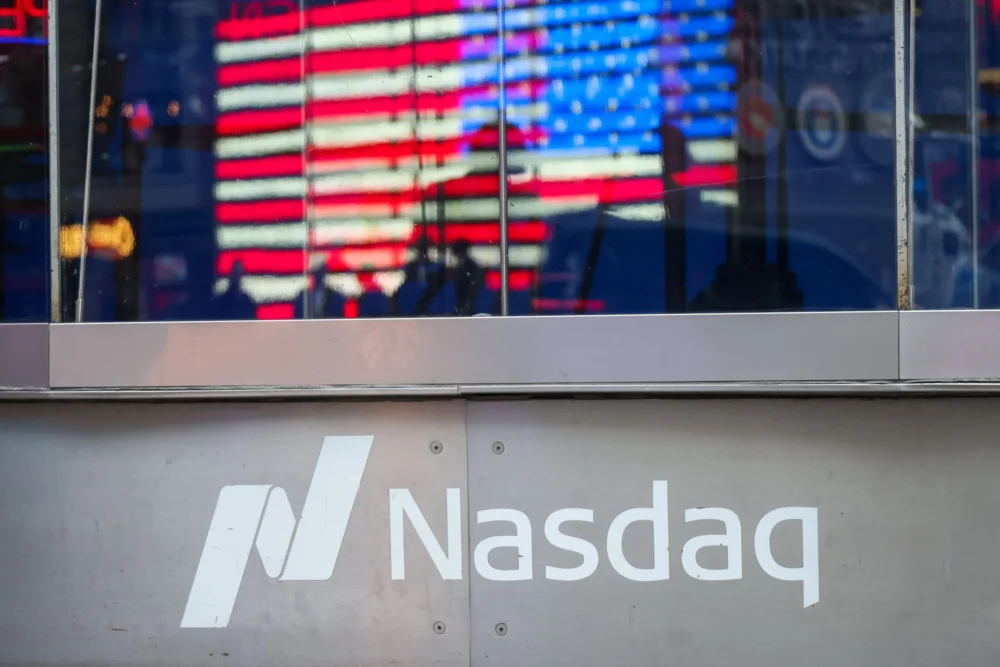
The traditional image of the stock market—marked by the ceremonial ringing of a bell and a frantic rush of activity between 9:30 a.m. and 4:00 p.m.—is rapidly becoming a relic of the past. Nasdaq, one of the world’s premier exchange operators, has officially signaled its intent to dismantle the remaining temporal barriers of the U.S. equities market. By filing a formal proposal with the Securities and Exchange Commission (SEC), Nasdaq aims to transition toward a nearly continuous trading model, a move that reflects the "always-on" nature of modern global finance but has simultaneously ignited a fierce debate over market integrity, liquidity, and the psychological well-being of the industry’s workforce.
Under the proposed framework, Nasdaq intends to facilitate the trading of U.S.-listed stocks and exchange-traded products (ETPs) for 23 hours a day, five days a week. The schedule would consist of a primary "day session" extending from 4 a.m. to 8 p.m. Eastern Time, followed by a brief 60-minute hiatus for essential system maintenance, clearing, and testing. A subsequent "night session" would then commence at 9 p.m. and run until 4 a.m. the following morning. If the SEC grants its approval, this radical restructuring of the American financial day is slated for implementation in the second half of 2026.
This initiative does not exist in a vacuum. It follows a similar maneuver by the New York Stock Exchange (NYSE), which received preliminary SEC approval in early 2025 to extend its own trading hours to 22 hours a day. The move by the "Big Two" exchanges represents a defensive response to the encroachment of retail-centric platforms like Robinhood and alternative trading venues such as Blue Ocean Technologies, which have already begun offering overnight access to a selection of blue-chip stocks. As digital assets and cryptocurrencies trade 24/7/365, traditional exchanges are feeling the pressure to modernize or risk losing volume to decentralized or off-exchange "dark" pools.
However, the push for around-the-clock trading is meeting stiff resistance from seasoned market participants who argue that the benefits of convenience are far outweighed by the risks of structural instability. The primary concern among institutional traders is the fragmentation of liquidity. Historically, the U.S. market relies on "liquidity clusters"—specific windows of time, most notably the opening and closing auctions, where the highest concentration of buyers and sellers meet to establish fair prices. By stretching the trading day across 23 hours, critics fear that volume will become dangerously thin during the overnight hours, leading to wider bid-ask spreads and heightened price volatility.
Market strategists at major financial institutions have been vocal in their disapproval. A recent internal note from the Wells Fargo trading desk characterized the proposal as a step toward the "gamification" of the equities market, suggesting that 24-hour access transforms disciplined investing into a form of high-stakes gambling. The concern is that during low-volume "night sessions," even a relatively small trade could trigger an outsized price movement, potentially setting off stop-loss orders and creating a "flash crash" environment before the primary institutional desks in New York even have their morning coffee.
The human cost of an unceasing market is another point of contention. For decades, the closing bell served as a psychological and operational reset. It allowed portfolio managers, analysts, and traders to step back, digest the day’s events, and prepare for the next session. Extending hours to 23 per day raises difficult questions about staffing and operational resilience. Many firms are questioning whether they will be forced to hire entire "night shifts" of traders and compliance officers to monitor positions in real-time, significantly increasing overhead costs without a guaranteed increase in revenue.
From a corporate perspective, the loss of "quiet hours" presents a unique set of challenges for public companies. Traditionally, the hours between the market close and the next morning’s open provide a safe window for corporations to release sensitive news, such as quarterly earnings reports, mergers and acquisitions, or executive transitions. This gap allows the market to absorb the information rationally rather than reacting impulsively. Jay Woods, chief market strategist at Freedom Capital Markets, notes that removing this buffer could force companies into a defensive posture, as news released at 2 a.m. could lead to wild fluctuations in stock price driven by a handful of retail participants or algorithmic bots, long before the company’s largest institutional shareholders can weigh in.
Despite these concerns, proponents of the shift argue that the U.S. market must adapt to the realities of a globalized economy. Currently, an investor in Tokyo or London who wishes to trade U.S. equities must do so in the middle of their night or through complex derivative instruments. A 24-hour Nasdaq would effectively turn U.S. stocks into a global currency, accessible to any investor in any time zone. Supporters also point out that news—be it geopolitical conflict, central bank announcements, or natural disasters—does not adhere to a 9-to-5 schedule. Proponents argue that being able to hedge risk immediately when news breaks, rather than waiting for the 9:30 a.m. opening bell, is a necessary tool for modern risk management.
The regulatory path forward for Nasdaq is complex. The SEC will likely subject the proposal to a rigorous public comment period, where the tension between "market democratization" and "market stability" will be the focal point. Regulators will need to evaluate whether the current clearing and settlement infrastructure—which recently moved to a T+1 (trade date plus one day) cycle—can handle the technical strain of nearly continuous operation. There are also concerns regarding the Consolidated Audit Trail (CAT) and how surveillance for market manipulation will be maintained during the "graveyard" shifts when oversight might be less robust.
Statistically, the argument for extended hours is complicated by existing data on trading volumes. Currently, the vast majority of daily turnover—often as much as 30% to 40%—occurs in the final hour of trading and the closing auction. Pre-market and after-hours sessions, which currently exist in a limited capacity, typically see only a fraction of the liquidity found in the regular session. This suggests that while there is a vocal demand for 24-hour access, the actual "need" for it among the large-scale institutional players who provide the bulk of market liquidity may be minimal.
The shift also reflects a broader economic trend toward the "on-demand" economy. Just as consumers expect to be able to order groceries or stream movies at 3 a.m., a new generation of investors expects their brokerage apps to be functional at all times. This "retailization" of the market has been a double-edged sword; while it has increased participation and lowered barriers to entry, it has also introduced a level of volatility driven by social media trends and retail momentum that traditional market structures were not designed to handle.
As Nasdaq moves toward its 2026 goal, the financial industry faces a fundamental reckoning. The debate is no longer just about the technical feasibility of 24-hour trading, but about the very philosophy of what a stock market should be. Is it a utility meant to provide stable, orderly price discovery for the long-term allocation of capital? Or is it a global platform for continuous speculation?
If the Nasdaq and NYSE proposals proceed, the global financial landscape will be irrevocably altered. The "closing bell" may survive as a symbolic gesture for television cameras, but the reality will be a relentless stream of data and transactions that never truly stops. For the institutions tasked with navigating this new world, the challenge will be finding a balance between meeting the demands of a global, digital-first investor base and maintaining the safeguards that have made the U.S. capital markets the most trusted in the world. Whether this transition proves to be a masterpiece of financial engineering or a "can of worms" that destabilizes the bedrock of the economy remains to be seen, but the era of the market pause is undeniably drawing to a close.