The investment landscape for artificial intelligence is undergoing a profound structural transformation, migrating from a concentrated bet on silicon and software toward a broader, more capital-intensive play on the physical foundations of the digital age. For the better part of two years, the "AI trade" was synonymous with a handful of trillion-dollar titans—the so-called hyperscalers and semiconductor giants that provided the brains of the operation. However, as the initial euphoria settles into a long-term industrial cycle, the market’s focus is shifting toward the "nervous system" and "circulatory system" of AI: the power grids, cooling technologies, and specialized infrastructure providers that make large-scale computation possible. This shift is creating a massive migration of capital into small- and mid-cap companies that, until recently, operated in the shadow of Big Tech but are now emerging as the indispensable gatekeepers of the next technological frontier.
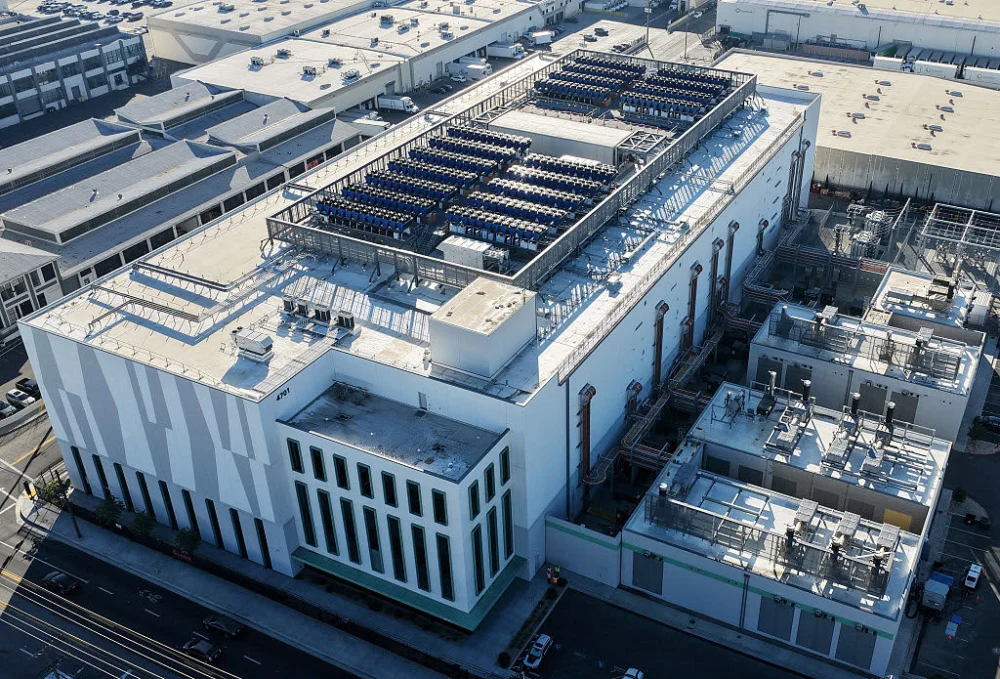
The primary catalyst for this shift is a harsh confrontation with physical reality. While code can be scaled infinitely in a virtual environment, the hardware required to run generative AI models faces rigorous constraints in the material world. Data centers are no longer just warehouses for servers; they have become high-intensity industrial plants with energy requirements that dwarf traditional commercial real estate. This reality has fundamentally reshaped the energy market, turning electricity reliability into the most valuable currency in the tech sector. Investors are beginning to realize that owning the chip is secondary to owning the power source that keeps that chip running.
The dramatic ascent of Bloom Energy serves as a quintessential case study in this market evolution. Following its initial public offering in 2018, the company spent years navigating a volatile path, struggling to maintain a valuation significantly above its debut price. However, as the AI-driven demand for "behind-the-meter" power solutions intensified, the company’s onsite fuel cell technology transitioned from a niche alternative to a critical infrastructure requirement. By providing a way for data centers to bypass the often-congested and aging public utility grid, Bloom saw its market capitalization surge toward the $30 billion mark, with shares climbing over 500% in a concentrated period of growth. This phenomenon is not an isolated incident but rather a signal of a broader trend where companies with specialized engineering solutions are "moving up the cap table" at an unprecedented velocity.
The core of the issue lies in the concept of intermittency and the limitations of the current green energy transition. For the past decade, the global energy narrative focused heavily on the falling costs of wind and solar power. While these sources are vital for decarbonization, they are inherently variable. Artificial intelligence workloads, by contrast, require a "five-nines" (99.999%) level of reliability. A data center cannot wait for the wind to blow or the sun to shine to process a trillion-parameter query. This mismatch has forced a massive strategic pivot toward baseload power sources, most notably nuclear energy and advanced fuel cells.
The nuclear sector, in particular, is experiencing a renaissance that was unthinkable just five years ago. The industry is seeing a two-pronged approach: the life extension and servicing of existing nuclear plants and the aggressive development of Small Modular Reactors (SMRs). These SMRs represent a paradigm shift in energy production, offering the potential for localized, scalable, and carbon-free power that can be sited directly adjacent to massive data center campuses. This has created a lucrative ecosystem for upstream suppliers, specialized engineering firms, and nuclear service providers. These companies often operate in narrow segments with extremely high barriers to entry and limited competition, creating a set of "mini-oligopolies" that offer significant operating leverage for early investors.

As AI models become more complex, the density of heat generated by next-generation GPU clusters is exceeding the capabilities of traditional air-cooling systems. This has turned data center thermal management into a high-stakes engineering challenge. Companies specializing in liquid cooling, heat exchangers, and advanced power distribution units are seeing their backlogs swell to record levels. In this environment, the market is rewarding the "best-of-breed" players—firms that might be the only one or two providers of a specific, mission-critical component. When a hyperscaler is spending $10 billion on a data center cluster, they are unlikely to pinch pennies on the cooling system that prevents the entire investment from melting down.
This specialization is driving a change in how investors approach the sector. While passive indices and broad-market ETFs have captured the initial wave of AI growth, they are often slow to incorporate the fast-moving mid-cap players that are currently experiencing the most explosive fundamental improvements. This has led to a resurgence in active management and the rise of thematic ETFs focused on nuclear energy, power infrastructure, and industrial efficiency. Active strategies allow portfolio managers to identify and enter positions in specialized firms before they reach the size required for inclusion in major benchmarks like the S&P 500.
However, the rapid influx of capital into these infrastructure plays is not without significant risk. Market veterans warn that the enthusiasm for AI-linked energy and cooling stocks has occasionally pushed valuations into "nosebleed" territory. There is a palpable danger of a "bubble" forming in certain pockets of the market where stock prices have outpaced even the most optimistic earnings projections. Furthermore, many of the companies in the AI ecosystem are small and financially sensitive to fluctuations in interest rates and electricity prices. The volatility associated with these trades can be jarring; it is not uncommon for a specialized energy stock to see double-digit percentage swings in a single trading session based on a single regulatory ruling or a shift in utility pricing.
Global comparisons further highlight the urgency of this infrastructure build-out. In the United States, the aging electrical grid is a significant bottleneck, leading to a surge in "self-generation" projects where tech companies build their own mini-power plants. In Europe, where energy costs are traditionally higher and regulations more stringent, the focus has shifted toward extreme efficiency and the repurposing of waste heat from data centers to warm local communities. In Asia, the race is focused on the rapid construction of massive data hubs in regions with stable, state-backed energy supplies. Regardless of the geography, the common denominator is that the "software" phase of the AI boom is being superseded by the "hardware and power" phase.
For the institutional investor, the challenge in 2026 and beyond will be one of balance and disciplined rebalancing. While the temptation to overweight the latest high-flying infrastructure stock is strong, the cyclical nature of industrial construction and the potential for technological obsolescence require a cautious approach. The goal is to capture the "alpha" provided by these rising mid-caps without becoming overexposed to the inevitable corrections that follow periods of parabolic growth.
The industrialization of AI represents a generational shift in how capital is deployed. We are witnessing the birth of a new utility class—one that combines the high-growth potential of technology with the defensive, moat-heavy characteristics of traditional infrastructure. As the digital and physical worlds continue to converge, the companies that manage the flow of electrons and the dissipation of heat will likely become as central to the global economy as the companies that write the algorithms. The era of the "narrow" tech trade is over; the era of the AI-industrial complex has begun. Through active management, a focus on technical moats, and an understanding of the grueling physical requirements of modern computation, investors can navigate this transition, moving beyond the obvious names to find the quiet giants currently building the backbone of the twenty-first century.