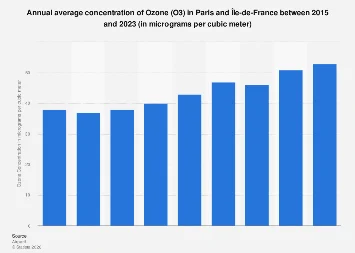
The concentration of ground-level ozone in the Île-de-France region, a critical indicator of air quality and a significant public health concern, has been exhibiting worrying trends. This atmospheric pollutant, which forms when sunlight reacts with nitrogen oxides and volatile organic compounds, poses substantial risks to human health and the environment, particularly during warmer months when its formation is accelerated. Recent data highlights the persistent challenge of managing ozone levels, even as broader efforts to combat air pollution continue across Europe.
Ground-level ozone, distinct from the beneficial stratospheric ozone layer that shields Earth from ultraviolet radiation, is a primary component of smog. Its presence in the lower atmosphere is largely a consequence of anthropogenic activities, including emissions from vehicles, industrial processes, and the use of solvents. In densely populated and industrialized areas like Île-de-France, the confluence of these emission sources creates a fertile ground for ozone formation, especially during periods of high solar radiation and stagnant weather conditions. The implications extend beyond immediate respiratory discomfort; prolonged exposure to elevated ozone concentrations has been linked to a range of adverse health outcomes, including aggravated asthma, reduced lung function, and an increased susceptibility to respiratory infections. Furthermore, ozone can damage vegetation, impacting agricultural yields and forest ecosystems.
The economic ramifications of poor air quality, including elevated ozone, are substantial and multifaceted. Healthcare systems bear a significant burden due to increased hospital admissions and treatments for respiratory and cardiovascular conditions exacerbated by pollution. Productivity losses can also occur due to illness-related absenteeism. Beyond direct health costs, environmental degradation associated with ozone pollution can impact tourism and the overall attractiveness of affected regions. For businesses operating within these areas, stringent air quality regulations, while necessary, can sometimes entail compliance costs and operational adjustments.
Across the European Union, air quality remains a paramount concern, with the European Environment Agency (EEA) consistently reporting that a significant portion of the urban population is exposed to levels of air pollutants, including ozone, exceeding recommended guidelines. The World Health Organization (WHO) sets stricter guidelines for air quality than those mandated by EU legislation, underscoring the ongoing debate about the adequacy of current regulatory frameworks and the imperative for more ambitious pollution reduction targets. While significant progress has been made in reducing emissions of certain pollutants like sulfur dioxide and particulate matter over the past decades, ozone presents a more complex challenge due to its secondary formation mechanism and its reliance on a combination of pollutants and meteorological factors.
In Île-de-France, a region encompassing Paris and its surrounding suburbs, the issue is particularly acute given its high population density and the concentration of economic and transport activities. The region’s meteorological profile, characterized by hot summers, can further intensify ozone formation. This necessitates a comprehensive approach that addresses both the direct emissions of precursor pollutants and broader strategies for urban planning and mobility that can mitigate the conditions conducive to ozone buildup.
Understanding the economic value of data related to air quality is crucial for informed policymaking and investment. Subscriptions to specialized data platforms, such as those offering detailed statistics on air pollution, can range from hundreds to thousands of dollars annually, depending on the level of access and the scope of services provided. Basic accounts might offer access to free statistics, while more comprehensive professional packages, designed for teams, can cost upwards of $1,399 per month, billed annually. This tiered pricing reflects the significant demand for granular and reliable data from researchers, policymakers, environmental consultants, and businesses seeking to assess risks and opportunities related to air quality. The cost associated with accessing such data underscores its perceived value in informing strategic decisions, from public health interventions to corporate sustainability initiatives.
The effectiveness of various policy interventions aimed at reducing ozone concentrations is a subject of ongoing research and debate. Measures such as promoting public transportation, encouraging the adoption of electric vehicles, implementing stricter industrial emission standards, and promoting energy efficiency can all contribute to lowering the levels of nitrogen oxides and volatile organic compounds. However, the widespread nature of these pollutants, often transported over long distances, means that regional and even international cooperation is essential for effective ozone control.
Global comparisons offer valuable insights into the diverse strategies employed by different nations and regions to tackle air pollution. For instance, some cities have implemented low-emission zones or congestion charges to curb traffic-related pollution, while others have focused on transitioning to cleaner energy sources for industrial and residential heating. The success of these initiatives often depends on a combination of robust regulatory frameworks, technological innovation, public engagement, and sustained political will.
The economic impact analysis of air pollution often involves sophisticated modeling that quantifies the costs of health impacts, reduced agricultural productivity, and damage to infrastructure and ecosystems. These analyses are instrumental in building a compelling case for investment in air quality improvements, demonstrating that the long-term economic benefits of cleaner air far outweigh the costs of pollution control measures. For example, studies have shown that the health benefits associated with meeting stricter air quality standards can result in billions of dollars in avoided healthcare costs and increased economic productivity.
In conclusion, the ongoing challenge of managing ground-level ozone in densely populated regions like Île-de-France underscores the complex interplay between economic activity, environmental health, and public well-being. As scientific understanding deepens and data availability improves, informed policy decisions and targeted investments are crucial to mitigating the adverse effects of ozone pollution and fostering more sustainable urban environments. The economic valuation of air quality data itself reflects the critical role it plays in this ongoing effort.