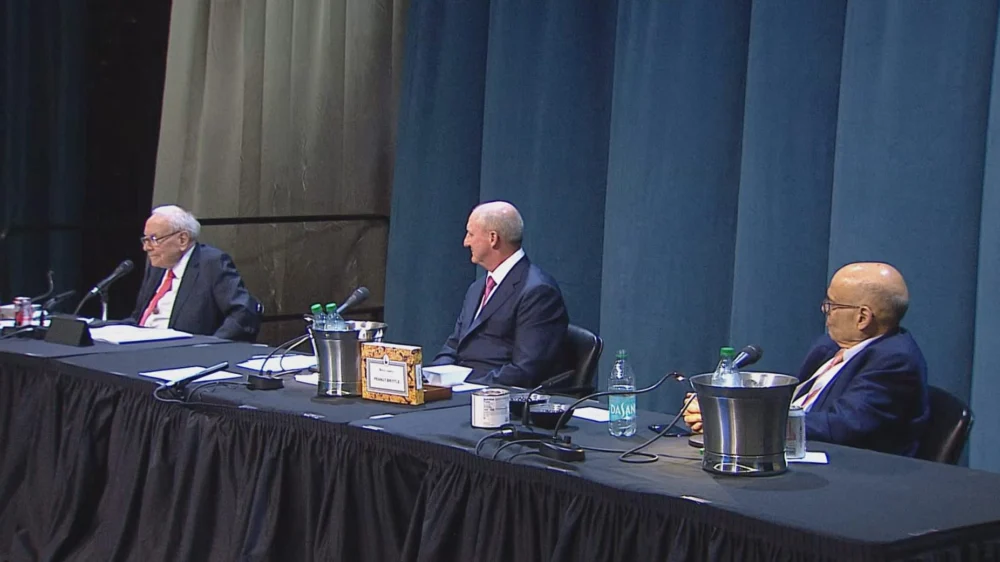
The architectural transition of power at Berkshire Hathaway has entered a decisive new phase as Chief Executive Officer Greg Abel moves to distance the conglomerate from one of the most criticized investments of the Warren Buffett era. In a formal regulatory filing that sent ripples through the consumer-packaged goods sector, Berkshire Hathaway registered its entire 27.5% stake in Kraft Heinz for potential sale, signaling a definitive end to a decade-long experiment in aggressive cost-cutting and brand consolidation that largely failed to deliver on its initial promise. The move, which involves approximately 325 million shares, grants the Omaha-based powerhouse the legal flexibility to exit its position as the largest shareholder in the food giant, a development that triggered an immediate 7.5% slide in Kraft Heinz’s market valuation during mid-week trading.
This strategic pivot marks a significant departure from the "buy and hold forever" philosophy that has defined Warren Buffett’s legendary career. While Buffett has long been celebrated for his ability to identify undervalued gems and hold them for decades, the 2015 merger of Kraft Foods and H.J. Heinz—orchestrated in partnership with the Brazilian private equity firm 3G Capital—has frequently been cited as a rare blemish on his record. By clearing the path for a total divestment, Abel is effectively "cleaning the stable," removing a stagnant asset from the portfolio as he prepares to lead Berkshire into a post-Buffett future. The decision underscores a more clinical, performance-oriented approach to capital allocation that prioritizes modern market realities over historical sentiment.
The financial narrative of Kraft Heinz since its inception has been one of persistent erosion. Since the mega-merger a decade ago, the company’s shares have plummeted by roughly 70%, a staggering decline for a firm that controls some of the most iconic household names in the American pantry. The merger was built on the premise of "zero-based budgeting," a 3G Capital hallmark that involves justifying every expense from scratch each year to maximize margins. However, while this approach initially boosted short-term profitability, it arguably starved the brands of the innovation and marketing investment necessary to keep pace with rapidly evolving consumer preferences. As health-conscious shoppers migrated toward organic, fresh, and less-processed alternatives, the "middle of the grocery store"—where Kraft Heinz reigns supreme—saw its dominance challenged by both boutique labels and high-quality private-label offerings from retailers like Costco and Aldi.
Economic analysts suggest that the timing of this filing is as much about Berkshire’s internal leadership transition as it is about the specific challenges facing the food industry. For Greg Abel, who officially assumed the CEO role with the mandate to manage a sprawling empire that includes Geico, BNSF Railway, and a massive energy portfolio, the Kraft Heinz position represented a lingering distraction. The conglomerate was forced to take a $3.8 billion non-cash write-down on the value of its Kraft Heinz holding just last year, a stark admission that the asset’s book value far exceeded its market reality. By registering the shares now, Abel is providing himself with the optionality to liquidate the position in a disciplined manner, potentially reallocating billions of dollars into higher-growth opportunities or bolstering Berkshire’s already record-breaking cash pile, which recently hovered near $190 billion.
The broader consumer-packaged goods (CPG) landscape has provided a difficult backdrop for the company’s turnaround efforts. Global inflationary pressures have squeezed margins, while the post-pandemic era has seen a fragmentation of brand loyalty. Unlike competitors such as Nestlé or Unilever, which have successfully pivoted toward premiumization and high-growth categories like pet care and specialized nutrition, Kraft Heinz has struggled to reinvent its core identity. The company’s heavy reliance on North American staples—products like Oscar Mayer meats and Kraft Singles—has left it vulnerable to shifting domestic dietary trends and rising commodity costs for proteins and dairy.
In response to these headwinds, Kraft Heinz recently announced a radical plan to split into two separate publicly traded entities. The first company is designed to house the "accelerate" brands, focusing on sauces, spreads, and shelf-stable meals that have higher growth potential in international markets. The second entity will consolidate the North American "staples" business, including its meat and cheese divisions, which are seen as mature, cash-generative assets but lack significant growth runways. This demerger is intended to unlock shareholder value by allowing investors to choose between a growth-oriented play and a dividend-heavy income play. However, Berkshire’s decision to register its shares suggests that Abel may not be interested in participating in either side of the new corporate structure.
The exit of 3G Capital in 2023 served as a precursor to Berkshire’s current maneuver. The Brazilian firm, once hailed as the gold standard of operational efficiency, quietly liquidated its remaining stake after years of trimming its holdings. Their departure left Berkshire as the last major institutional anchor from the original deal. Warren Buffett himself has been uncharacteristically blunt about the miscalculation, admitting in various forums that the price paid for Kraft was too high and that the synergy projections were overly optimistic. "It certainly didn’t turn out to be a brilliant idea to put them together," Buffett remarked, though he previously maintained that the brands themselves remained "wonderful."
From a market mechanics perspective, the registration of the shares does not mandate an immediate fire sale. Institutional analysts at firms like Stifel note that the filing is a "shelf registration," which allows Berkshire to sell portions of its stake over time or through block trades without the need for additional SEC filings until the quarterly 13F disclosures. This provides a "liquidity bridge," allowing Abel to wait for windows of market strength to offload the shares. Nevertheless, the mere existence of the filing acts as a ceiling on the stock price, as the market now anticipates a massive supply of shares hitting the secondary market in the coming months.
The economic implications of a Berkshire exit extend beyond the stock price of Kraft Heinz. It signals a broader skepticism toward the traditional "Big Food" business model that relies on massive scale and legacy brand equity. In an era of digital marketing and direct-to-consumer distribution, the barriers to entry in the food industry have collapsed, allowing smaller, more agile competitors to steal market share from giants that are too slow to innovate. Berkshire’s retreat may be interpreted by the wider investment community as a signal that the era of the "unassailable consumer moat" is over for many traditional packaged goods.
Furthermore, the move highlights the different operational styles of Buffett and Abel. While Buffett was often willing to endure years of underperformance out of loyalty to management or a belief in the long-term cycle, Abel appears to be applying a more rigorous private-equity-style filter to the Berkshire portfolio. This "portfolio pruning" is expected to be a hallmark of his tenure, as he seeks to streamline the conglomerate and ensure that every dollar of capital is working at its highest potential.
As the market looks toward mid-May for Berkshire’s next quarterly activity report, the focus will remain on how aggressively Abel chooses to execute this exit. If Berkshire successfully offloads its stake, it will represent the closing of a chapter on a merger that was once intended to be a cornerstone of the American industrial landscape. For Kraft Heinz, the challenge will be to prove it can survive—and eventually thrive—without the backing of the world’s most famous investor. For the global investment community, it serves as a potent reminder that even the most seasoned icons of finance are not immune to the disruptive forces of changing consumer behavior and the unforgiving nature of over-leveraged corporate marriages. The "ketchup and macaroni" giant now faces a future where it must stand on its own merits, even as its largest patron prepares to walk away.