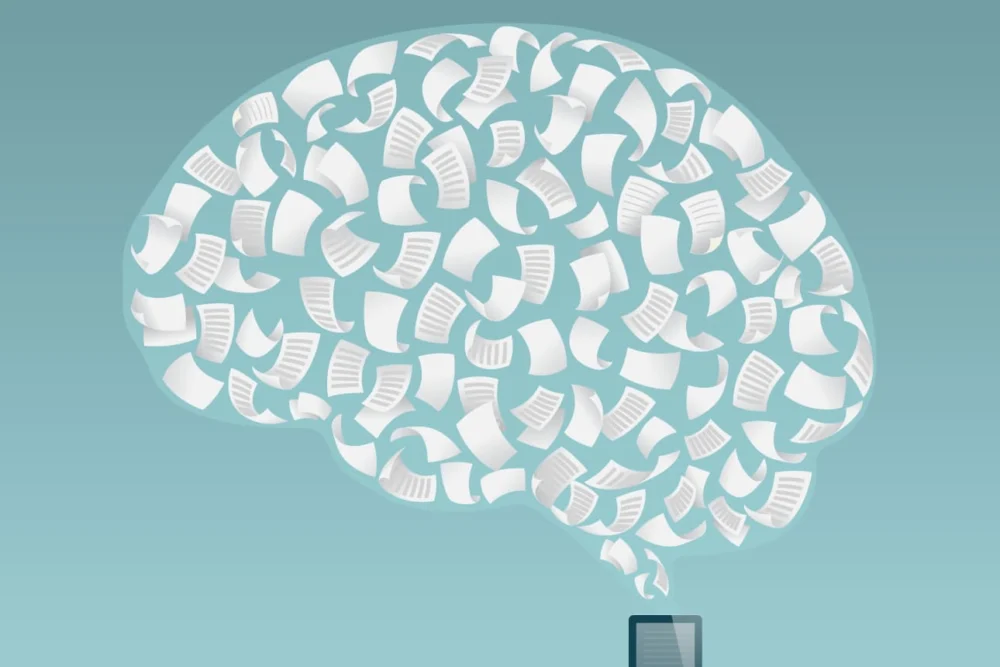
The global business landscape is currently navigating a paradoxical phase of technological adoption, where immense enthusiasm for generative artificial intelligence (GenAI) coexists with significant implementation challenges. Despite widespread investment, a substantial proportion of GenAI projects struggle to move beyond experimental proofs of concept to deliver tangible, scalable business value. Industry analysts, such as Gartner, project that by the end of 2025, as many as 30% of GenAI initiatives may be abandoned after their initial exploratory phases. This disconnect often stems not from the inherent capabilities of the technology itself, but from a more fundamental organizational hurdle: the persistent fragmentation, inaccessibility, and underutilization of enterprise knowledge, which continues to bottleneck decision-making and innovation.
For decades, organizations have recognized knowledge as a critical competitive advantage, yet efforts to manage it effectively—through portals, intranets, and wikis—have frequently fallen short. These traditional knowledge management (KM) systems, often conceived as static repositories, existed largely outside the daily operational rhythms, rendering them cumbersome and underused. Generative AI presents a transformative opportunity to transcend these limitations, fundamentally altering how knowledge is created, disseminated, and applied within an organization. It redefines knowledge from a dormant asset into a dynamic, living system that is deeply embedded within everyday workflows, driving faster, more informed decisions and fostering unprecedented levels of collaboration.
The Paradigm Shift: From Static Repositories to Dynamic Knowledge Systems
The true promise of generative AI lies not merely in automating repetitive tasks or generating content, but in its capacity to revolutionize the flow of information throughout an enterprise. By integrating GenAI directly into critical operational sequences—such as client interactions, onboarding processes, project delivery, and internal meetings—organizations can transform these workflows into intelligent conduits where knowledge is dynamically created, refined, and applied in real time. This represents a profound conceptual shift: moving beyond managing knowledge as static content to enabling adaptive knowledge systems that evolve with organizational activity.
As Julie Mohr, a principal analyst at Forrester, articulates, "GenAI provides an opportunity to embed knowledge into workflows in a seamless way. It enables organizations to work with knowledge as something dynamic that can be generated, adapted, and reconfigured in real time." This dynamic nature allows knowledge to be co-created and leveraged precisely at the moment of need, fostering an environment where intelligence is not just stored but actively applied to drive action. Research conducted with a diverse group of global organizations reveals a consistent pattern among those making significant strides: they are using GenAI to unlock and interconnect knowledge across the enterprise, transitioning from mere experimentation to integrated solutions with observable, measurable benefits.
Real-World Implementations: Rethinking Daily Work Processes
Organizations embark on their GenAI journeys from varied starting points, yet those achieving demonstrable progress invariably discover the same core principle: sustainable value emerges from embedding GenAI within and transforming existing knowledge workflows. The Bill & Melinda Gates Foundation and Mott MacDonald, despite their vastly different missions and structures, offer compelling illustrations of this principle.
The Gates Foundation, with its knowledge-intensive mandate to address global health and poverty, identified an immediate GenAI opportunity in streamlining daily administrative workflows. Automating the capture and summarization of meeting notes, for instance, liberated staff members from tedious transcription, allowing them to engage more deeply in discussions and ensuring greater consistency in documentation. Andy Stetzler, the foundation’s enterprise AI lead, noted the immediate value for "meeting-heavy organizations when notes are captured accurately and shared widely," enhancing both efficiency and knowledge dissemination.
Mott MacDonald, a global engineering and consulting giant, faced the challenge of knowledge dispersion across numerous local offices and specialized practices. Their objective was to forge a unified knowledge base to support cross-regional workflows. Nasrine Tomasi, Mott MacDonald’s group head of AI, highlighted the traditional reliance on physically relocating experts, contrasting it with the potential of GenAI: "If you can securely share nonconfidential knowledge from a project with other sites, then a new project can start with all the insights already collected." The firm meticulously curated a repository of over 15,000 documents, rigorously reviewed by subject-matter experts for accuracy, relevance, and currency. This "single source of truth" ensures that GenAI tools draw from verified insights, regardless of geographic location, thereby building trust and reliability into their knowledge system.
Both organizations underscore the critical preparatory work required before GenAI can deliver impact. The Gates Foundation prioritized "metadata hygiene," standardizing naming conventions and eliminating "untitled" files to prevent "garbage-in, garbage-out" outcomes. Mott MacDonald’s team of knowledge managers manually reviewed and enriched each document with crucial metadata—such as approval status or regional applicability—that was not explicitly present in the text. As Zsuzsa McLean, group knowledge and information manager, stated, "We spent a lot of time validating project learnings and methodologies so GenAI could work with them." These examples collectively demonstrate that GenAI’s success hinges on a symbiotic relationship where workflows provide knowledge with movement, and knowledge imbues workflows with intelligence.
GenAI Rewires Knowledge Workflows in Four Transformative Ways
The integration of generative AI is fundamentally altering organizational knowledge workflows across several dimensions:

-
Remodeling Knowledge Creation: GenAI acts as a powerful co-creator, synthesizing novel insights from vast and disparate data sources. McKinsey & Company’s internal GenAI tool, Lilli, exemplifies this by providing consultants access to over 100,000 internal documents. Beyond mere retrieval, Lilli can generate tailored communications and draft content that adheres to the firm’s stringent quality standards, effectively translating "any prose into McKinsey-quality writing," according to senior partner Erik Roth. The key to Lilli’s success was its user-centric design, with a central team continuously prioritizing use cases and integrating user feedback to ensure the tool directly addressed consultants’ daily needs, thereby embedding it seamlessly into their workflow.
-
Unifying Access Across Data Repositories: The historical challenge of codifying, organizing, and retrieving knowledge across fragmented systems is being overcome by GenAI. Tools like Evoke PLC’s custom-built GenAI Studio, leveraging AWS Bedrock and Retrieval-Augmented Generation (RAG), provide a secure, conversational interface that draws from multiple internal data repositories. This enables employees to bypass arduous searches, getting answers to policy questions, for example, through a single chat interaction. Critical to this achievement was Evoke’s extensive groundwork, employing custom AI algorithms to identify and eliminate obsolete or redundant materials across various functional units, ensuring the system’s responses are accurate and current. Similarly, Mott MacDonald’s EMMA (Every Mott MacDonald Answer), powered by a curated repository and RAG, allows employees to swiftly access best practices from over 38 specialized company practices globally. The firm’s community-based approach to curation, with human knowledge managers adding vital contextual nuance, ensures the system remains both scalable and trusted, with a human-in-the-loop verification process for new content.
-
Personalizing Knowledge Transfer: GenAI significantly accelerates the transfer of knowledge, particularly crucial during employee onboarding. Pharmaceutical giant Novartis embedded GenAI into its HR systems, allowing new hires to access role-specific policies and guidance through an intuitive conversational interface. To orchestrate such initiatives, Novartis established a Knowledge Management Centre of Excellence, strategically positioned within the People & Organization function but with direct access to technology infrastructure. This cross-functional alignment ensures that AI-enabled tools address both human and technological priorities, accelerating new employees’ time-to-competency and reducing the burden on HR staff.
-
Applying Knowledge in Daily Work: The ultimate value of knowledge is realized in its application. Austrian insurer Uniqa Insurance Group integrated GenAI into its customer service workflows via an internal RAG-based assistant, the "infobot." During live calls, the infobot automatically identifies customers, retrieves policy and tariff data from multiple back-end systems, and prepares detailed, real-time responses for agents. It also automates routine tasks, such as benefit calculations and call summaries, with a single click. This deep integration required meticulous attention to user behavior, with the development team closely observing agents to identify and alleviate high-friction moments. At the Gates Foundation, hackathons empower employees to explore specific GenAI applications for functions like HR or finance, leading to practical solutions such as an inclusive language assistant that ensures communications adhere to organizational standards. These examples highlight how GenAI, when integrated and applied at the point of decision, directly enhances operational efficiency and customer experience.
Laying the Groundwork for GenAI Success: Strategic Imperatives
While GenAI’s potential is immense, leaders consistently emphasize that its full realization hinges on meticulous, often "unglamorous" foundational work: preparing organizational knowledge, integrating technology systems, and fostering a receptive culture. Without this groundwork, workflows cannot reliably carry trusted knowledge, leading many proofs of concept to falter.
-
Start with Visible Pain Points: Initial successes are often found by addressing clear, high-friction areas, especially in knowledge-intensive domains. The Gates Foundation’s automation of meeting notes is a prime example. Silvan Melchior, a principal data scientist at Swiss tech consultancy Zühlke, advises evaluating projects across three dimensions: feasibility (data and systems support), viability (clear business case), and desirability (user demand). Focusing on high-impact use cases ensures investments reshape workflows in ways employees genuinely value.
-
Get Your Data and Documents in Order: This is perhaps the most critical and consistent lesson. Generative AI cannot compensate for messy, fragmented, or untrustworthy knowledge. Organizations like Evoke, Mott MacDonald, and the Gates Foundation all undertook extensive data cleansing, standardization, and curation efforts. This involves meticulous metadata management, eliminating redundancies, and ensuring the accuracy and currency of information that feeds GenAI systems.
-
Integrate Your Technology Stack: Technical integration presents significant complexity. As Uniqa’s Alexander Petzmann noted, moving from a demo to a secure, compliant, enterprise-scale deployment can take over a year. This requires building reusable infrastructure templates, robust governance protocols, and stringent security frameworks, especially when handling sensitive data. Uniqa’s phased rollout, starting with health insurance calls (40% of all calls) and gradually expanding, allowed for systematic testing and trust-building, achieving 95% retrieval accuracy before broader deployment.
-
Build Governance into Workflows from the Start: Successful teams proactively engage legal, risk, and security groups early in the development process. Integrating governance from the outset ensures that GenAI-powered workflows are not only secure and compliant with regulations like GDPR or HIPAA but also trustworthy in the eyes of employees and regulators. Novartis’s Knowledge Management Centre of Excellence, bringing together technologists, users, and compliance experts, exemplifies this collaborative approach to ensure both safety and trust.
-
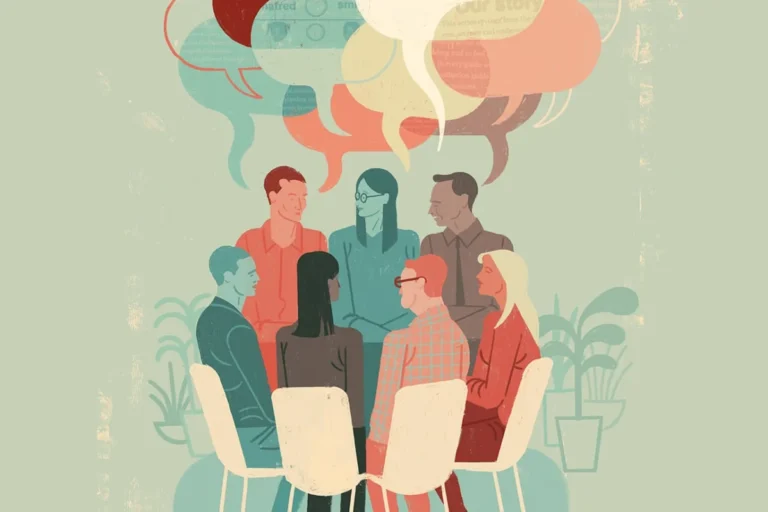
Drive Adoption Through Culture: Even the most sophisticated systems will fail without user adoption. Successful organizations treat adoption as a cultural transformation, blending visible leadership support with grassroots experimentation and the guidance of trusted intermediaries. The Gates Foundation fostered adoption through organization-wide launch events, comprehensive training, hackathons, and a "GPT gallery" for sharing custom tools, with knowledge librarians acting as champions. Mott MacDonald leveraged its existing communities of practice and knowledge curators, turning adoption into a demand-driven process as staff members recognized the tangible value of reliable, GenAI-powered insights.
In conclusion, the most forward-looking enterprises view generative AI not merely as another productivity tool, but as a profound catalyst for transforming how knowledge flows and is utilized. Its true potential lies in fundamentally rewiring workflows, enabling insights to be created, shared, and applied with unprecedented speed, coherence, and precision. Realizing this vision necessitates a holistic approach: meticulously preparing organizational knowledge to ensure its trustworthiness, seamlessly integrating technology to connect disparate workflows, and proactively shaping organizational culture to embrace new, intelligent ways of working. Ultimately, the successful deployment of GenAI is as much a workflow transformation journey as it is a knowledge transformation journey, promising to unlock agility, foster innovation, and confer sustained competitive advantage in the digital economy.