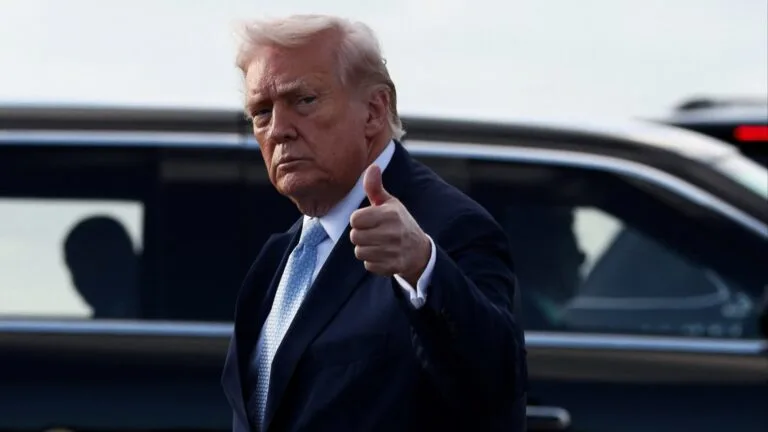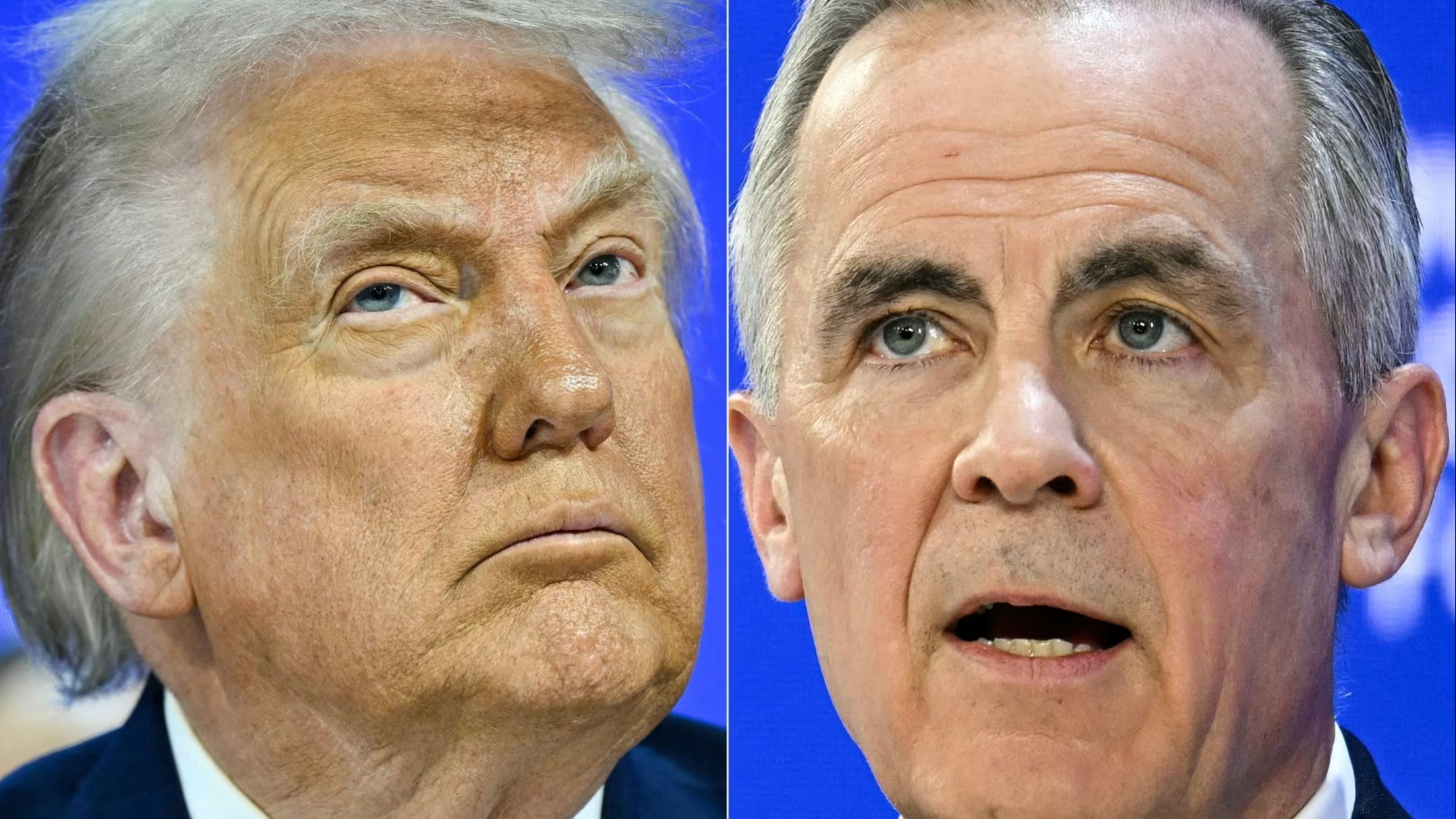
The longstanding economic alliance between the United States and Canada, often cited as one of the most successful bilateral partnerships in modern history, is facing a period of unprecedented volatility. Recent assertions from former President Donald Trump, currently the leading voice in Republican trade policy, have sent shockwaves through the halls of Parliament Hill in Ottawa and the boardrooms of North American manufacturers. The threat is as blunt as it is disruptive: the imposition of a 100% tariff on all Canadian exports to the United States should Canada pursue a comprehensive trade agreement with the People’s Republic of China. This ultimatum marks a significant escalation in the use of trade policy as a tool of geopolitical alignment, signaling a potential shift from the era of integrated North American markets toward a more fragmented, security-centric economic bloc.
At the heart of this confrontation is the United States-Mexico-Canada Agreement (USMCA), the successor to NAFTA, which was negotiated during the first Trump administration. While the agreement was designed to modernize trade for the 21st century, it contained a controversial "poison pill" provision—Article 32.10. This clause requires any member country to notify the others at least three months before entering into trade negotiations with a "non-market economy," a term widely understood to target China. Furthermore, it allows the other parties to terminate the USMCA and replace it with a bilateral agreement if one member signs a deal with such an economy. Trump’s latest rhetoric suggests that he views the existing legal frameworks as insufficient, opting instead for the "nuclear option" of total tariffs to ensure Canada remains firmly within the American economic orbit.
The economic implications of a 100% tariff on Canadian goods are difficult to overstate. The two nations share a trade relationship valued at approximately $2.5 billion per day. Canada is the primary export market for more than 30 U.S. states, and the integrated nature of their supply chains—particularly in the automotive, aerospace, and energy sectors—means that a disruption of this magnitude would be felt instantly across the continent. In the automotive industry, parts frequently cross the border as many as seven times before a finished vehicle rolls off the assembly line. A 100% tariff would effectively end the viability of this model, potentially leading to the collapse of regional manufacturing clusters that have been built over decades.
For Canada, the stakes are existential. Roughly 75% of Canadian exports are destined for the United States. While Prime Minister Justin Trudeau’s government has sought to diversify Canada’s trade portfolio through agreements like the CPTPP and deals with the European Union, the sheer gravity of the U.S. market remains the defining feature of the Canadian economy. The threat of being shut out of the American market serves as a powerful deterrent against any rapprochement with Beijing. However, it also places Ottawa in a difficult position, as it must balance its sovereign right to conduct independent foreign policy with the pragmatic necessity of maintaining access to its southern neighbor.
The geopolitical context of this threat is the deepening "Cold War" between Washington and Beijing. The U.S. policy of "decoupling"—or "de-risking"—from the Chinese economy requires the cooperation of its closest allies. From the American perspective, Canada’s vast mineral wealth and its strategic position in the Arctic make it a critical player in the race for green energy and technological supremacy. U.S. policymakers are concerned that a Canada-China trade deal could provide a "backdoor" for Chinese state-subsidized products to enter the American market, undermining U.S. efforts to rebuild domestic manufacturing. This is particularly relevant in the electric vehicle (EV) sector, where the U.S. has invested billions in domestic production and views Chinese competition as a direct threat to national security.
Interestingly, Canada has recently taken steps that align closely with U.S. interests. In late 2024, the Canadian government announced its own 100% surtax on Chinese-made EVs, matching the tariffs imposed by the Biden administration. Ottawa also implemented a 25% surtax on Chinese steel and aluminum. These moves were seen as an attempt to preemptively satisfy American demands and protect the integrated North American auto market. Despite these alignments, the persistent threat of tariffs from the Trump camp suggests that "alignment" may not be enough; the demand appears to be for total economic exclusivity.
The potential for a 100% tariff also raises significant concerns regarding inflation and consumer costs in the United States. Canada is the largest foreign supplier of energy to the U.S., providing more crude oil, natural gas, and electricity than all OPEC countries combined. If a 100% tariff were applied to Canadian energy exports, U.S. consumers would see an immediate and dramatic spike in gas prices and heating costs. Similarly, Canada is a major supplier of softwood lumber, uranium, and agricultural products. Economists warn that protectionism on this scale would be "stagflationary," simultaneously suppressing economic growth while driving up the prices of essential goods.
Market analysts suggest that Trump’s rhetoric may also be a tactical maneuver ahead of the 2026 USMCA review. The agreement includes a "sunset clause" that requires the three member nations to formally review the deal six years after its implementation. By signaling an aggressive stance now, Trump is setting the stage for a high-stakes renegotiation in which he could demand further concessions from Canada on issues ranging from dairy quotas to digital services taxes. The threat of 100% tariffs acts as the ultimate leverage, forcing Canada to enter the review process from a position of defense.
Within Canada, the political response has been a mix of defiance and diplomatic caution. Opposition leaders have criticized the Trudeau government for being too slow to recognize the changing winds in Washington, while the government itself has emphasized the "mutually beneficial" nature of the relationship. There is a growing consensus among Canadian policy experts that the country must prepare for a more transactional and volatile relationship with the U.S., regardless of who sits in the White House. This involves not only lobbying U.S. lawmakers at the federal level but also engaging directly with state governors and business leaders who rely on Canadian trade.
The global community is watching this development closely as a bellwether for the future of international trade. If the world’s largest trade relationship can be upended by unilateral tariff threats, it suggests that the rules-based order overseen by the World Trade Organization (WTO) is effectively obsolete. Other middle powers, such as Australia, South Korea, and members of the European Union, may find themselves facing similar ultimatums as the U.S. pushes for a "with us or against us" approach to trade with China.
Ultimately, the threat of 100% tariffs on Canada represents a fundamental challenge to the concept of North American economic integration. It posits that trade is no longer merely an economic activity governed by comparative advantage, but a primary theater of national security. As the 2026 review approaches and the U.S. political landscape continues to shift, the bridge over the 49th parallel—once seen as a permanent fixture of global commerce—looks increasingly fragile. The cost of a misstep in this diplomatic dance would be measured in lost billions, fractured industries, and a permanent reshaping of the geopolitical map of the Western Hemisphere. Whether this is a credible policy goal or a sophisticated negotiation tactic, its mere existence has already begun to rewire the expectations of investors and policymakers across the globe.