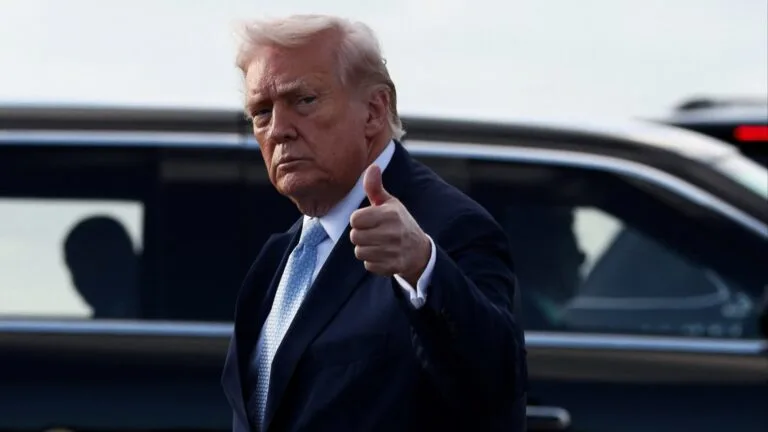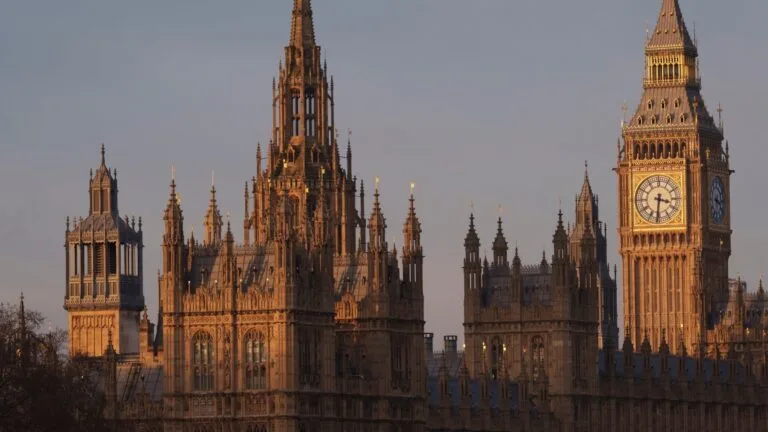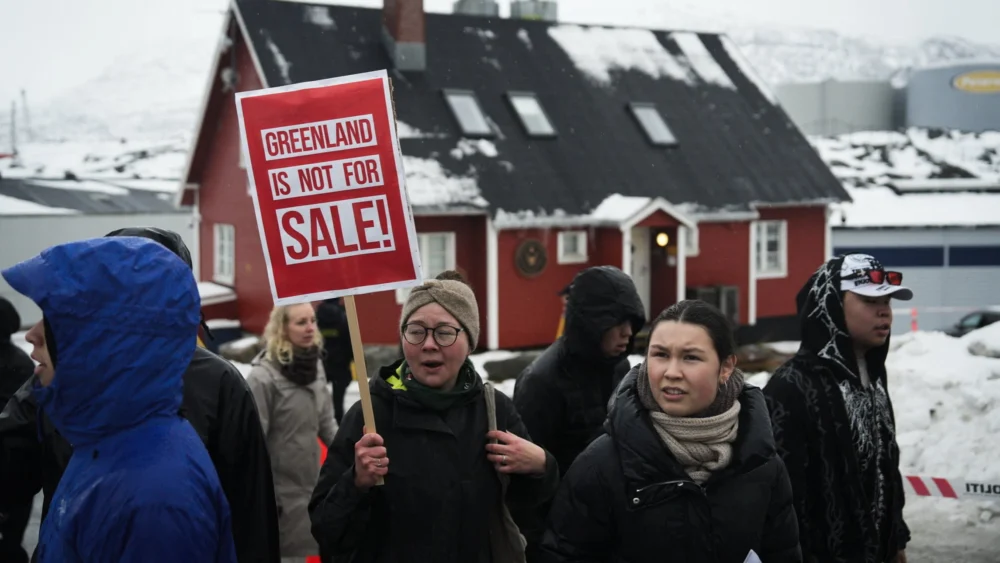
The diplomatic relationship between the United Kingdom and the United States has entered a period of renewed friction following London’s sharp condemnation of a proposal to use trade tariffs as leverage in a territorial dispute over Greenland. The controversy, sparked by suggestions from the American administration that punitive duties could be imposed on Danish goods if the sale of the autonomous territory is not negotiated, has sent ripples through global markets and raised fundamental questions about the future of the international rules-based order. By intervening in what was initially a bilateral disagreement between Washington and Copenhagen, the UK government has signaled its commitment to protecting the sanctity of national sovereignty and the stability of global trade against what it characterizes as coercive economic diplomacy.
The resurgence of the Greenland acquisition debate marks a significant escalation in the use of protectionism as a tool of foreign policy. While the idea of the United States purchasing the world’s largest island was widely dismissed as a peripheral eccentricity during previous discussions, the latest threat to weaponize trade policy has transformed the matter into a serious geopolitical crisis. For the United Kingdom, the stakes extend far beyond the icy shores of the North Atlantic. British officials have expressed profound concern that the normalization of "territorial tariffs"—the imposition of trade barriers to achieve land acquisition—would create a dangerous precedent, potentially destabilizing maritime borders and trade agreements worldwide.
The economic implications of such a tariff regime would be substantial, not only for the Kingdom of Denmark but for the broader European and Atlantic economies. Denmark, a critical NATO ally and a significant trading partner for both the US and the UK, exports billions of dollars in machinery, pharmaceuticals, and agricultural products annually. The threat of tariffs on these goods threatens to disrupt complex supply chains that have been integrated over decades. Analysts suggest that the imposition of even a 10% across-the-board tariff on Danish imports would result in a sharp contraction in bilateral trade, likely triggering retaliatory measures from the European Union, which handles trade policy for its member states.
Greenland itself has become a focal point of 21st-century strategic competition, driven by the dual forces of climate change and the global energy transition. As the Arctic ice sheet retreats, the region is becoming increasingly accessible for resource extraction and commercial shipping. The island is believed to hold some of the world’s largest untapped deposits of rare earth minerals, including neodymium and praseodymium, which are essential for the production of electric vehicle motors, wind turbines, and advanced military hardware. Currently, the global supply of these minerals is heavily dominated by China, making Greenland a high-stakes prize in the race for mineral security and technological hegemony.
Beyond minerals, the Arctic region holds an estimated 13% of the world’s undiscovered oil and 30% of its undiscovered gas. However, it is the potential for new shipping lanes, such as the Northern Sea Route and the Northwest Passage, that has captured the attention of global powers. These routes could reduce transit times between Asia and Europe by up to 40%, bypassing the Suez Canal and fundamentally altering the economics of global logistics. The United States views Greenland as a critical "stationary aircraft carrier" in this emerging theater, anchored by the Thule Air Base (Pituffik Space Base), which provides vital early-warning capabilities for North American aerospace defense.
The United Kingdom’s decision to publicly oppose the US stance reflects a complex balancing act in its post-Brexit foreign policy. While London remains eager to secure a comprehensive free trade agreement with Washington, it cannot afford to see the principles of the World Trade Organization (WTO) eroded by unilateralism. The British Foreign Office has emphasized that trade policy should be governed by economic merit and established legal frameworks, rather than being used as a bludgeon for territorial expansion. This stance aligns the UK more closely with its European neighbors, who view the threat of tariffs as a direct assault on the sovereignty of a fellow EU and Nordic Council member.
Economists warn that the use of tariffs in this manner could lead to a fragmentation of global trade. If the world’s largest economy begins to link market access to land concessions, other regional powers may follow suit, leading to a "might makes right" era of commerce. This would be particularly damaging for middle-sized economies like the UK and the Nordic nations, which rely on predictable, rules-based environments to thrive. The uncertainty generated by these threats has already been felt in currency markets, where the Danish Krone and the British Pound have seen increased volatility as investors weigh the risks of a broader transatlantic trade war.
Furthermore, the diplomatic fallout threatens the cohesion of the NATO alliance at a time of heightened tension in Eastern Europe and the Indo-Pacific. Denmark is a founding member of NATO and a key contributor to Arctic security. By targeting a core ally with economic sanctions over a territorial disagreement, the US administration risks alienating the very partners it needs to contain Russian and Chinese influence in the High North. The UK, as a leading military power in Europe, views this discord as a gift to strategic rivals who seek to exploit divisions within the Western bloc.
The reaction from Greenland’s own government has been one of resolute defiance. While the island relies on an annual block grant from Denmark—amounting to roughly $600 million, or one-third of its budget—its leadership has been moving steadily toward greater autonomy. The Greenlandic government has made it clear that while they are open for business and investment, the country is not for sale. This sentiment is echoed by the Danish parliament, where there is a rare cross-party consensus that the notion of selling a territory and its people belongs to a bygone era of 19th-century colonialism.
From a legal perspective, the use of tariffs to force a land sale likely violates several international treaties and WTO mandates. Under the General Agreement on Tariffs and Trade (GATT), member nations are generally prohibited from raising tariffs outside of specific circumstances, such as national security exceptions or anti-dumping measures. While the US has increasingly invoked "national security" to justify various trade actions in recent years, legal scholars argue that applying this to the acquisition of Greenland would be an unprecedented stretch of the law. If challenged at the WTO, such tariffs would almost certainly be ruled illegal, though the current paralysis of the WTO’s appellate body makes enforcement difficult.
As the rhetoric continues to sharpen, the role of the UK as a diplomatic bridge-builder will be tested. London’s condemnation serves as a reminder that even the closest of allies have limits to their cooperation. The "Special Relationship" has survived many storms, but the introduction of territorial ambition into the realm of trade policy represents a new and unpredictable variable. For global businesses, the message is clear: the era of geopolitical stability that defined the late 20th century has been replaced by an age of volatility where even the most fundamental borders and trade rules are subject to negotiation and pressure.
In the coming months, the international community will be watching closely to see if the threat of tariffs is a genuine policy shift or merely a tactical maneuver. Regardless of the outcome, the episode has already altered the discourse surrounding Arctic governance. It has highlighted the urgent need for a more robust international framework to manage the resources of the North as the ice continues to melt. For the United Kingdom, the priority remains the preservation of a system where trade is used to build prosperity and cooperation, rather than as a weapon to redraw the map of the world. The defense of Greenland’s sovereignty, in this context, is not just a matter of Nordic solidarity, but a defense of the very principles that sustain the global economy.