The global steel industry, a bellwether for economic activity, has long navigated a complex landscape of overcapacity, fluctuating raw material costs, and geopolitical trade tensions. For India, a rising giant in both steel production and consumption, these dynamics have taken a distinct turn, culminating in a significant domestic market shift witnessed in January. Following the imposition of a crucial safeguard duty on steel imports, Indian steelmakers enacted two rapid price hikes within weeks, signaling a robust recovery driven by revitalized construction demand and strategic market maneuvers. This aggressive repricing, particularly notable in construction-grade rebar, underscores a renewed confidence within the domestic industry, with far-reaching implications for national infrastructure projects, corporate profitability, and broader economic stability.
The catalyst for this market recalibration was New Delhi’s decision, formalized in a gazette notification on December 30th, to impose a staggered safeguard duty of 12% on certain steel imports. This protective measure, designed to shield domestic producers from a deluge of cheaper foreign steel, is set to gradually decrease by half a percent in its second and third years. Such duties are a common tool in trade policy, employed by nations worldwide, including the United States and the European Union, to counteract unfair trade practices like dumping or to support strategic domestic industries against global market distortions. For India, which aims to significantly boost its steel production capacity under ambitious national policies, this duty serves as a critical bulwark against import pressures that have historically depressed local prices and hindered capacity utilization.
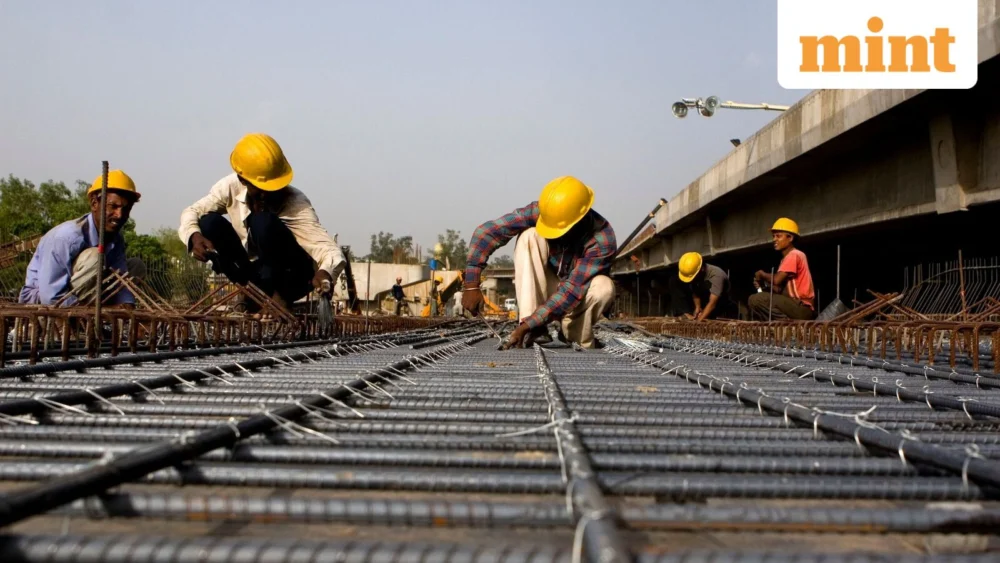
Immediately following the implementation of these import curbs, the domestic market responded with alacrity. Leading steel producers moved to adjust their pricing structures, first in early January and then again in the second week of the month. Hot-rolled coil (HRC) and cold-rolled coil (CRC), fundamental components in automotive, white goods, and general manufacturing sectors, saw their prices ascend by an initial 2-4%, followed by another substantial 4% increase, pushing rates to approximately Rs. 51,700 per tonne. However, it was the rebar segment, crucial for infrastructure and construction, that experienced the most pronounced upward revision. Rebar prices surged by an initial 3-4% and then by nearly 7% in the subsequent hike, reaching around Rs. 52,500 per tonne. This disproportionate increase in rebar prices highlights a specific and intense demand surge from the project segment, which typically accounts for a significant portion—around 70%—of large mills’ rebar sales.

Market intelligence indicates that several factors converged to empower steelmakers in executing these rapid price adjustments. Foremost among these was the resurgence of construction activity across the nation. Following the seasonal slowdown during the monsoon months and the typical year-end lull, infrastructure projects—ranging from highways and railways to urban development and renewable energy installations—witnessed a significant acceleration. This renewed impetus in project execution, often intensified as the financial year-end approaches, created a robust demand pull. Concurrently, domestic mills had entered January with relatively lean inventories, a consequence of cautious production strategies in previous quarters and healthy booking volumes secured in late December. This combination of strong order books, improved demand visibility, and constrained supply provided an optimal environment for price increases.
The economic implications of these price hikes are multifaceted. For large integrated steel producers, the immediate effect is a significant uplift in profit margins. After a period where steel prices had bottomed out, particularly during October and November, these increases offer a much-needed opportunity to recover profitability and absorb past cost pressures. This positive outlook is reflected in the performance of steel stocks. While the broader market, as represented by the benchmark Sensex, advanced by 1.9% during this period, major steel players exhibited mixed but generally positive trends. Tata Steel emerged as a top performer with a 3.47% gain, followed by JSW Steel with a 1.34% rise, and Steel Authority of India (SAIL) marginally higher at 0.62%. Such movements underscore investor confidence in the sector’s improved fundamentals, driven by both protective duties and underlying demand.
However, the ripple effects extend beyond corporate balance sheets. Rising steel prices inevitably influence the cost structures of downstream industries. The construction sector, a primary consumer of steel, will face higher input costs, potentially impacting the budgets of ongoing and planned infrastructure projects. Government-led initiatives in highways, rail corridors, urban transit systems, airports, and digital infrastructure, which represent investments totaling tens of billions of dollars, will need to factor in these revised material costs. Similarly, sectors like automotive manufacturing, capital goods, and real estate, all heavily reliant on steel, could experience inflationary pressures, which might eventually be passed on to consumers.
Despite the recent surges, expert analysis suggests that there may still be some headroom for further price adjustments, particularly for higher-value products and players emphasizing quality. Compared to the peak prices observed in fiscal year 2022, current rates remain substantially lower, providing a cushion for additional increases. Grant Thornton Bharat’s Niladri N. Bhattacharjee estimates a potential maximum headroom of Rs. 4,000-5,000 per tonne for HRC coil, though he cautions that rebar might see a more limited scope of Rs. 2,000-3,000 per tonne, primarily for mills offering superior quality and brand recognition. This differentiation underscores the evolving market landscape where product quality and brand equity are increasingly important competitive advantages.

Nevertheless, the sustainability of aggressive price hikes faces inherent limitations. The widening price disparity between large, integrated mills and smaller, regional players is a critical factor. Should the gap become too pronounced, contractors and project developers might opt to source from mid-to-small sized mills, which typically operate with lower overheads and can offer more competitive pricing. This potential shift in procurement patterns could cap the upside for further significant price increases in the near term, especially for rebar. Moreover, while domestic demand is robust, the Indian steel market remains intertwined with global trends. Any sharp downturn in international steel prices or a resurgence of global oversupply could exert downward pressure, regardless of domestic protective measures.
Looking ahead, India’s steel sector stands at a pivotal juncture. The safeguard duty has provided a vital shield, enabling domestic players to optimize pricing and recover margins. The robust demand from the nation’s ambitious infrastructure development plans promises a sustained growth trajectory for steel consumption. However, the industry must balance profitability with the broader economic impact, ensuring that rising steel costs do not unduly impede national development projects or fuel widespread inflation. Continued investment in modernizing production facilities, enhancing energy efficiency, and adopting greener technologies will also be crucial for long-term competitiveness in a global market increasingly focused on sustainability. The dual price hikes in January serve not just as a financial adjustment, but as a barometer of a dynamic, protected, and increasingly self-reliant Indian steel industry poised for strategic growth.