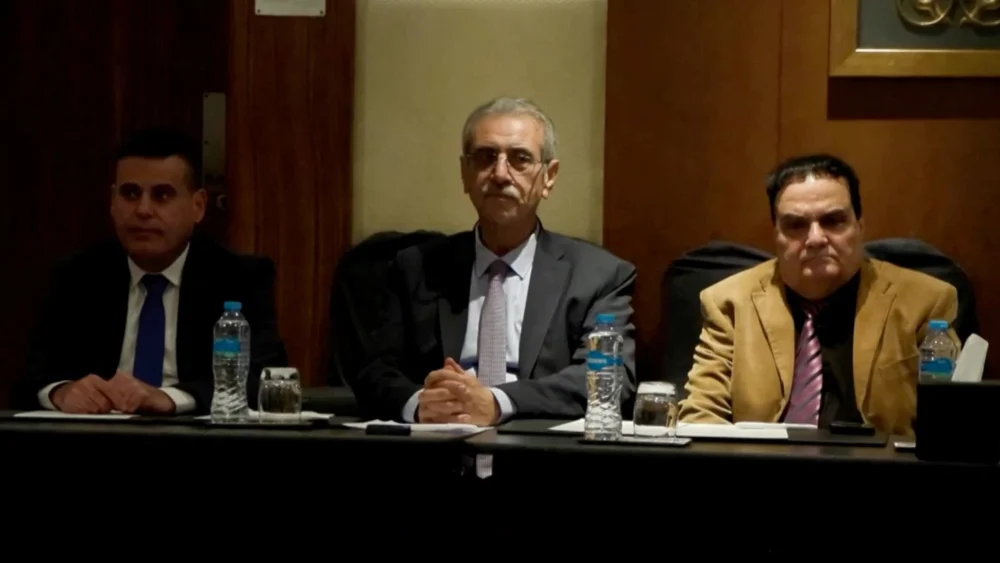
The appointment of Ali Sha’ath to lead the reconstruction efforts in the Gaza Strip marks a pivotal, if daunting, moment in the region’s modern history. As the head of the newly formed Technical Committee for the Reconstruction of Gaza, Sha’ath inherits a landscape that is not merely damaged, but fundamentally erased. His mandate extends far beyond the traditional duties of an urban planner or a civil administrator; he is being tasked with the architectural and economic resurrection of an enclave where the basic components of modern civilization—electricity, water, housing, and commerce—have been systematically dismantled. In the corridors of international diplomacy and global finance, Sha’ath is viewed as a technocratic bridge-builder, a man whose background in engineering and logistics must now serve as the foundation for what experts suggest will be the most expensive and complex reconstruction project since the aftermath of World War II.
The scale of the destruction Sha’ath must address is staggering. According to preliminary assessments by the World Bank and the United Nations, the cost of repairing Gaza’s critical infrastructure is estimated to exceed $18.5 billion, a figure that continues to climb as the conflict persists. This data point, however, only scratches the surface of the logistical nightmare. Estimates suggest that there are over 40 million tons of rubble scattered across the territory, much of it contaminated with unexploded ordnance and hazardous materials. To put this in perspective, the debris in Gaza is currently more than double the amount generated during the conflict in Mosul, Iraq. Clearing this waste is a prerequisite for any physical rebuilding, yet the machinery and fuel required for such an operation are subject to intense security restrictions and a volatile supply chain.
For Sha’ath, the challenge is as much about macroeconomic stabilization as it is about bricks and mortar. Before the recent escalation, the Gaza Strip was already suffering from what economists termed "de-development," a state of chronic economic contraction fueled by a long-standing blockade and internal political fragmentation. Today, the economy has effectively ceased to function. The Palestinian Central Bureau of Statistics reports that Gaza’s GDP has plummeted by over 80% in the last year, with the private sector suffering near-total collapse. Unemployment, which hovered near 45% for years, has reached an unprecedented 100% in many sectors, as farms, factories, and retail hubs have been leveled. Sha’ath’s role involves creating an environment where international donors feel confident enough to inject billions of dollars into a territory that remains a high-risk zone for investment.
Sha’ath’s background as a former deputy transport minister and a respected academic in the field of urban planning makes him a strategic choice for this role. Unlike political figures who may be bogged down by factional loyalties, Sha’ath is perceived as a pragmatist capable of speaking the language of international NGOs and global financial institutions. His primary objective is to establish a "Technical Committee" that operates with transparency and fiduciary rigor, ensuring that reconstruction funds are not diverted and that projects are executed with maximum efficiency. This technocratic approach is essential for securing the "buy-in" of the European Union, the United States, and the Gulf monarchies—entities that will likely foot the majority of the bill but are wary of the region’s historical corruption and political instability.
The reconstruction of Gaza is frequently compared to the Marshall Plan, yet the comparison fails to account for the unique geopolitical constraints Sha’ath faces. Unlike post-war Europe, Gaza does not have sovereign control over its borders or its trade routes. Every bag of cement and every steel beam required for Sha’ath’s vision must pass through crossing points controlled by Israel, which maintains a strict "dual-use" list of materials that could potentially be repurposed for military use. Negotiating the entry of these materials will be one of Sha’ath’s most persistent headaches. He must convince Israeli security officials that the materials are destined solely for civilian infrastructure while simultaneously convincing a skeptical Gazan population that he is not merely an administrator of the status quo.
Energy and water remain the two most critical pillars of Sha’ath’s immediate agenda. Before the current crisis, Gaza’s water table was already over-extracted and increasingly saline. Today, the destruction of desalination plants and wastewater treatment facilities has created a public health emergency. Sha’ath is reportedly prioritizing a decentralized energy model, leaning heavily on solar power and localized micro-grids to bypass the reliance on a centralized power plant that has been a frequent target during hostilities. By integrating renewable energy into the reconstruction plan, Sha’ath aims to build a more resilient infrastructure that can withstand future shocks, though the initial capital expenditure for such a transition is significantly higher than traditional repairs.
The human capital crisis is perhaps the most profound obstacle in Sha’ath’s path. The "brain drain" from Gaza has accelerated, with thousands of doctors, engineers, and teachers fleeing the enclave. Furthermore, the destruction of every university in the territory has halted the education of a generation. Sha’ath’s plan must therefore include a strategy for "Human Capital Reconstruction"—incentivizing the return of skilled professionals and establishing temporary educational hubs. Without a local workforce capable of maintaining the new infrastructure, any physical rebuilding will be unsustainable in the long term.
Global comparisons offer a sobering look at the timeline Sha’ath is working with. The reconstruction of cities like Aleppo or Mosul has taken years, and even then, they remain shadows of their former selves. Gaza’s situation is compounded by its extreme population density; rebuilding a city where 2.3 million people are squeezed into 365 square kilometers requires a level of precision and vertical planning that is rare in post-conflict zones. Sha’ath has hinted at a "Building Back Better" philosophy, suggesting that the new Gaza should not just be a replica of the old, congested enclave, but a modern urban environment with improved transit corridors and sustainable housing. However, the immediate pressure to provide shelter for hundreds of thousands of displaced people living in tents often clashes with the slow, methodical pace of high-quality urban planning.
Financing remains the ultimate variable. While the Gulf Cooperation Council (GCC) nations, particularly Qatar and Saudi Arabia, have historically been the largest donors to Palestinian causes, their willingness to fund Gaza’s reconstruction this time is reportedly contingent on a clear political "day-after" plan. Sha’ath must navigate this political minefield, positioning his committee as a neutral body that can operate regardless of whether the Palestinian Authority or a new transitional government holds formal power. His success depends on maintaining a delicate balance: he must be independent enough to satisfy donors but integrated enough to have authority on the ground.
The private sector’s role in this recovery cannot be overstated. Entities like the Bank of Palestine and the Paltel Group have expressed a desire to lead the revitalization of the local market, but they require a stable regulatory environment and physical security. Sha’ath is expected to champion public-private partnerships as a way to stretch donor dollars further. By creating "special economic zones" or offering guarantees to local businesses, he hopes to jumpstart the internal economy, moving Gaza away from a total reliance on humanitarian aid and toward a model of self-sustained growth.
Ultimately, Ali Sha’ath’s mission is a race against time and despair. With each passing month, the social fabric of Gaza frays further, and the cost of reconstruction rises. His appointment represents a gamble on technocracy—a belief that engineering solutions and economic management can provide a path forward where politics has failed. Whether Sha’ath can transform a landscape of rubble into a functioning economy will depend not only on his technical expertise but on his ability to navigate the most volatile geopolitical landscape on earth. As he begins to lay the groundwork for Gaza’s future, the world is watching to see if a shattered enclave can truly be rebuilt from the ground up, or if the weight of history and the constraints of the present will prove too heavy even for a master of logistics.