The landscape of American consumer finance underwent a seismic shift this week as JPMorgan Chase officially reached an agreement to become the new issuer of the Apple Card, effectively ending Goldman Sachs’ tumultuous and costly venture into the retail banking sector. This transition, the result of more than a year of high-stakes negotiations, represents a consolidation of power within the credit industry and a significant recalibration for two of Wall Street’s most influential institutions. Under the terms of the deal, JPMorgan Chase will assume responsibility for a portfolio boasting more than $20 billion in outstanding loan balances, further cementing its position as the preeminent credit card issuer in the United States.
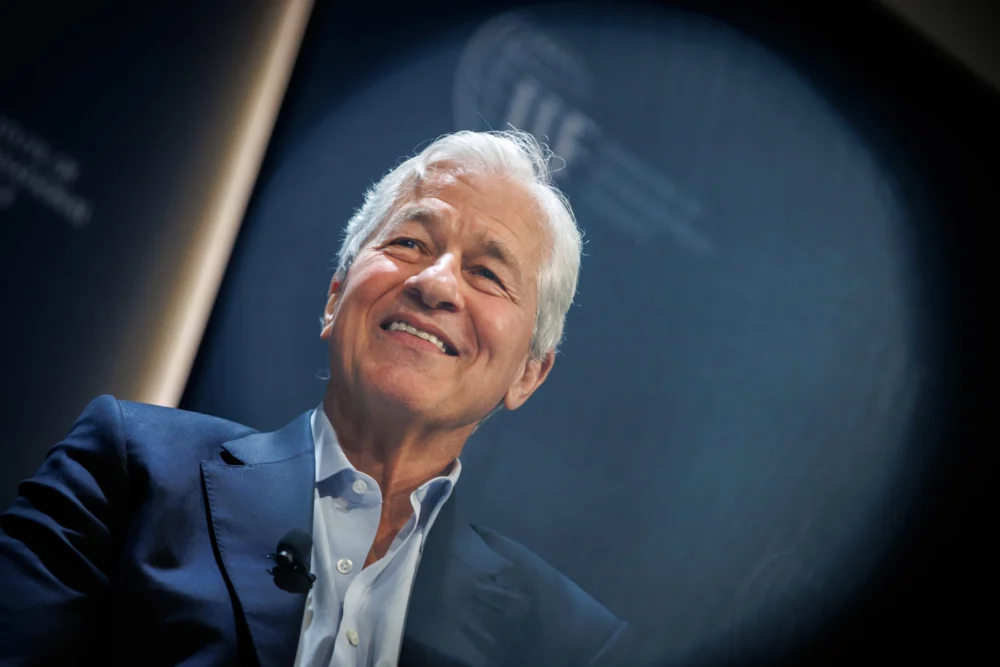
For JPMorgan Chase, the acquisition is less of a gamble and more of a strategic fortification. The bank, led by CEO Jamie Dimon, already commands the largest share of the U.S. credit card market by purchase volume. By absorbing the Apple Card program, JPMorgan deepens its relationship with one of the world’s most valuable technology companies and gains access to a massive, digitally-native user base. However, the move is not without its complexities. The bank disclosed that the full transition of the program is expected to take approximately 24 months to finalize. In a move reflecting the inherent risks of the portfolio, JPMorgan also announced it would book a $2.2 billion provision for credit losses during its fourth-quarter 2025 earnings report, a proactive measure to buffer against potential defaults within the acquired book of business.
The exit of Goldman Sachs from the partnership marks the conclusion of a sobering chapter for the investment banking giant. Under CEO David Solomon, Goldman Sachs launched the Apple Card in 2019 with significant fanfare, viewing it as the crown jewel of its "Marcus" consumer banking initiative. The goal was to diversify revenue streams away from the volatile world of trading and advisory services toward the steady, predictable interest income of Main Street. Yet, the reality of retail banking proved far more challenging than anticipated. High customer acquisition costs, regulatory scrutiny over credit limit algorithms, and higher-than-expected loss rates on loans eventually soured the venture. By offloading the Apple Card, Goldman Sachs is effectively signaling a return to its "core franchises"—namely, servicing institutional clients, wealth management, and high-net-worth individuals.
Economists and market analysts view the deal as a masterclass in opportunistic acquisition by JPMorgan. Sources familiar with the negotiations indicate that JPMorgan secured the portfolio at a discount of more than $1 billion. This haircut was a necessary concession from Goldman Sachs and Apple to entice JPMorgan into taking over a portfolio that has historically trended toward a more diverse credit profile than JPMorgan’s typical "prime" customer base. One of the primary points of friction during the Goldman-Apple era was Apple’s insistence on a high approval rate for iPhone users, which led to a higher concentration of subprime and "near-prime" borrowers. JPMorgan’s willingness to step in suggests that the bank believes its superior data analytics and massive scale can manage these risks more effectively than Goldman Sachs could.
The integration of the Apple Card into the JPMorgan ecosystem will extend beyond just credit lines. The agreement also includes the management of the Apple Savings account, a high-yield product that saw rapid adoption upon its launch. By bringing both the credit and savings components under its roof, JPMorgan is positioning itself to be the primary financial engine behind the Apple Wallet. This "walled garden" approach to finance mirrors the broader trend of "embedded finance," where banking services are woven directly into the software and hardware consumers use daily. For Apple, the partnership with JPMorgan provides a more stable, experienced hand to guide its financial services roadmap, ensuring that the user experience remains seamless and the "Daily Cash" rewards system remains uninterrupted.
From a broader economic perspective, this deal highlights the increasing difficulty for "non-traditional" banks to disrupt the entrenched retail banking hierarchy. When Goldman Sachs entered the space, it was seen as a major threat to the status quo. However, the sheer infrastructure required to manage millions of retail accounts—including customer service, fraud detection, and regulatory compliance—carries a high barrier to entry. JPMorgan’s ability to absorb $20 billion in loans while simultaneously booking a multi-billion dollar loss provision speaks to the fortress-like balance sheet that only a handful of global systemically important banks (G-SIBs) possess.
The competitive landscape for credit card issuers is also likely to tighten in the wake of this announcement. During the search for a new partner, Apple reportedly held discussions with American Express, Synchrony Financial, and Barclays. Each of these players eventually stepped back, wary of the terms Apple demanded or the credit quality of the existing cardholders. JPMorgan’s emergence as the "last bank standing" underscores its unique capacity to dictate terms and absorb large-scale portfolios that competitors find too risky or operationally burdensome. This move may prompt other major issuers like Citigroup or Capital One to seek their own high-profile tech partnerships to avoid losing further market share to the Chase juggernaut.
Consumer impact is expected to be minimal during the transition phase. JPMorgan has confirmed that the card will continue to operate on the Mastercard network and maintain its existing suite of perks, including the 3% cashback at select merchants and the lack of traditional fees. For the millions of Apple Card users, the change will primarily manifest in the "fine print" of their monthly statements and the backend infrastructure that processes their transactions. However, industry experts suggest that JPMorgan may eventually look to cross-sell its own proprietary services, such as Sapphire-branded travel benefits or Chase mortgage products, to the Apple audience, further blurring the lines between tech ecosystems and traditional banking.
The financial implications for Goldman Sachs are immediate and quantifiable. The bank noted that the transaction would provide a boost of 46 cents per share to its earnings when it reports its upcoming results. While this provides a short-term win for shareholders, it also serves as a final accounting of the billions of dollars in cumulative losses Goldman sustained during its consumer banking foray. The "narrowing of focus" mentioned by David Solomon reflects a broader trend among investment banks to retrench and prioritize capital efficiency in an era of higher interest rates and tightening capital requirements.
As the 24-month transition period begins, the industry will be watching closely to see how JPMorgan manages the credit migration. The $2.2 billion provision is a clear signal that the bank expects some turbulence as it reconciles Apple’s inclusive lending philosophy with its own rigorous risk-management standards. If JPMorgan successfully integrates the portfolio without a significant spike in charge-offs, it will have pulled off one of the most significant retail banking expansions of the decade.
Ultimately, the JPMorgan-Apple deal serves as a definitive case study in the evolution of modern finance. It demonstrates that while technology companies like Apple can revolutionize the user interface of money, the underlying "plumbing"—the capital, the risk management, and the regulatory framework—remains the domain of the banking titans. As Goldman Sachs retreats to the familiar halls of institutional finance, JPMorgan Chase stands taller than ever, bridging the gap between Silicon Valley’s innovation and Wall Street’s enduring scale. The partnership not only secures the future of the Apple Card but also signals a new era where the world’s most powerful bank and the world’s most powerful tech company are inextricably linked in the pockets of millions of consumers.