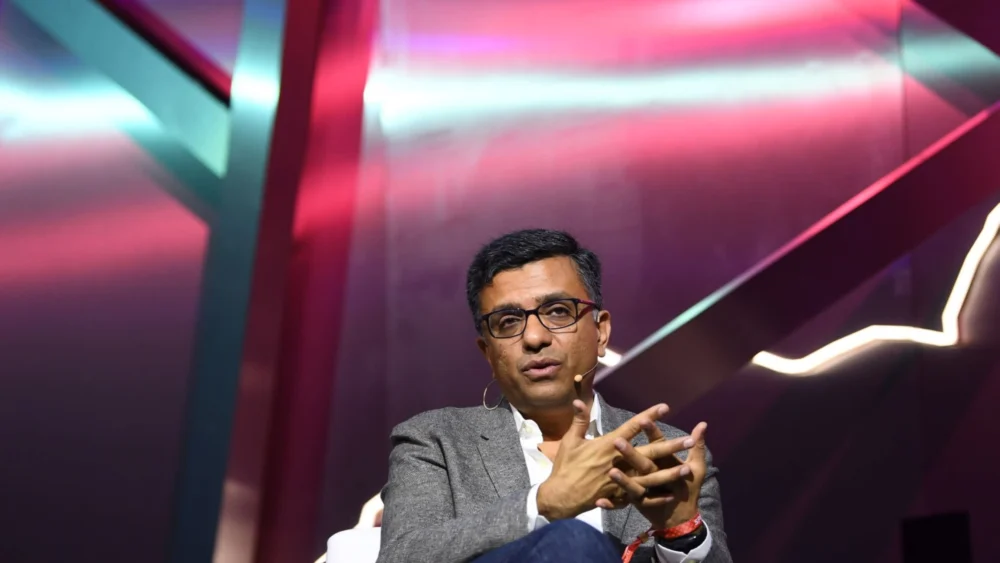
In a move that signals both a consolidation of power and a strategic hardening of its corporate structure, the British digital banking powerhouse Monzo has confirmed that its Chief Executive Officer, TS Anil, will take on an expanded leadership mandate. This decision follows a period of intense dialogue with institutional investors regarding the firm’s governance framework as it prepares for an eventual public listing. By unifying the executive and oversight functions under Anil, Monzo is navigating a delicate path between the entrepreneurial agility that defined its early years and the institutional stability required by global capital markets.
The transition marks a pivotal moment for the London-based neobank, which has spent the last four years evolving from a venture-backed startup into a profitable financial institution. TS Anil, a veteran of traditional finance with a pedigree including senior roles at Visa, Standard Chartered, and Citigroup, was originally brought in to provide "adult supervision" following the departure of founder Tom Blomfield. Under his stewardship, Monzo has successfully pivoted from a high-burn growth model to a sustainable business, recently reporting its first full year of profitability—a milestone that has eluded many of its contemporary rivals in the fintech sector.
However, the decision to expand Anil’s role did not come without friction. The move initially met with resistance from certain corners of the investor community, where traditional governance principles often dictate a clear separation between the CEO and the Chairman of the Board. In the United Kingdom, the corporate governance code generally favors a split leadership model to ensure robust checks and balances. The pushback reflected concerns that a dual role could concentrate too much authority in a single individual, potentially weakening the board’s ability to provide independent oversight.
Despite these reservations, the board and major shareholders ultimately reached a consensus that Anil’s leadership is the primary driver of the bank’s current momentum. To mitigate concerns regarding governance, the bank is expected to bolster its board with additional independent non-executive directors and enhance the powers of its senior independent director. This compromise reflects a broader trend in the tech industry, particularly among "unicorn" companies approaching an Initial Public Offering (IPO), where the stability of a proven leader is often prioritized over rigid adherence to traditional governance structures.
The financial backdrop of this leadership change is one of remarkable resilience and growth. In its most recent fiscal reporting, Monzo revealed a pre-tax profit of £15.4 million for the year ending March 2024, a dramatic turnaround from the £116 million loss reported just two years prior. This profitability was driven by a surge in net interest income, catalyzed by higher interest rates, and a significant expansion of its lending products, including personal loans and the "Monzo Flex" buy-now-pay-later service. Total revenue more than doubled to £880 million, underpinned by a customer base that has now surpassed 9 million users.
Monzo’s valuation has similarly defied the "fintech winter" that saw many of its peers suffer swingeing devaluations. Following a $610 million funding round earlier this year led by CapitalG, Alphabet’s independent growth fund, the bank’s valuation was pegged at approximately $5.2 billion. This capital injection has provided Monzo with a formidable war chest as it seeks to expand its footprint both domestically and internationally. The investor confidence demonstrated by Alphabet and other blue-chip backers like Tencent and Passion Capital suggests that the market views Monzo’s path to a public exit as increasingly viable.
A significant component of the expanded mandate for TS Anil involves spearheading Monzo’s second attempt at the United States market. The U.S. has historically been a graveyard for European neobanks, with competitors like N26 retreating after failing to gain traction against entrenched incumbents and a fragmented regulatory landscape. Monzo’s initial foray into the U.S. was also met with challenges, leading to a withdrawal of its initial banking license application in 2021. However, under Anil’s direction, the bank is adopting a more methodical, product-led approach in America, focusing on niche features that resonate with a digitally native demographic before seeking a full charter.
The leadership consolidation also places Monzo in a unique position relative to its primary domestic competitors, Starling Bank and Revolut. While Starling has undergone its own leadership transition following the departure of founder Anne Boden, and Revolut continues its protracted struggle to secure a UK banking license, Monzo has achieved a level of regulatory and financial equilibrium that makes it a bellwether for the entire sector. The stability of Anil’s tenure is seen as a strategic asset in maintaining a constructive relationship with the Prudential Regulation Authority (PRA) and the Financial Conduct Authority (FCA).
From a broader economic perspective, Monzo’s evolution reflects the maturing of the UK’s fintech ecosystem. The "move fast and break things" ethos of the 2010s has been replaced by a focus on unit economics, regulatory compliance, and diversified revenue streams. As central banks maintain higher interest rates to combat inflation, the era of "free money" for loss-making startups has ended. Monzo’s ability to generate profit from its deposit base while maintaining high levels of customer engagement—evidenced by the fact that a large percentage of its users use Monzo as their primary salary-receiving account—demonstrates a successful transition to a "full-stack" banking model.
The debate over TS Anil’s dual role also touches upon the ongoing tension between the London Stock Exchange and the New York markets. The UK government and the London Stock Exchange have been lobbying hard to ensure that homegrown tech champions like Monzo choose a domestic listing. However, New York’s Nasdaq and NYSE often offer higher valuations and a more permissive environment for dual-class share structures and concentrated leadership models. By aligning its governance more closely with American tech norms, Monzo may be keeping its options open for a potential transatlantic listing.
Market analysts suggest that the expanded role for Anil is a "pre-IPO hardening" of the executive suite. In the lead-up to a public offering, investors look for a "steady hand" who can navigate the rigors of quarterly reporting and public scrutiny. Anil’s background in institutional banking provides the gravitas required for a multi-billion-dollar float, while his success in maintaining Monzo’s "challenger" culture has prevented the bank from becoming the very thing it sought to disrupt.
The path forward will not be without hurdles. As Monzo expands its lending book, it will face increased credit risk, particularly if the UK economy faces a downturn. Furthermore, as it moves into more complex financial products like mortgages or wealth management, it will face stiffer competition from traditional "High Street" banks that have significantly upgraded their own digital offerings. The bank’s ability to maintain its low customer acquisition costs while scaling these high-margin products will be the ultimate test of Anil’s expanded leadership.
In the immediate term, the resolution of the investor backlash regarding Anil’s role allows Monzo to focus on its product roadmap. The bank is reportedly exploring new features in the generative AI space to enhance customer support and financial planning, as well as deeper integrations into the e-commerce ecosystem. These innovations are intended to ensure that Monzo remains at the center of its customers’ financial lives, moving beyond a simple spending tool to a comprehensive financial hub.
Ultimately, the empowerment of TS Anil represents a bet on continuity. In an industry characterized by rapid disruption and executive churn, Monzo’s board has decided that doubling down on a proven leader is the most effective way to navigate the complexities of global expansion and the transition to public ownership. While the concentration of power may still draw scrutiny from governance purists, the bank’s financial performance provides a powerful counter-argument. For now, the "coral card" pioneer appears to have traded the volatility of its youth for a more disciplined, executive-led era of growth, with TS Anil firmly at the helm.