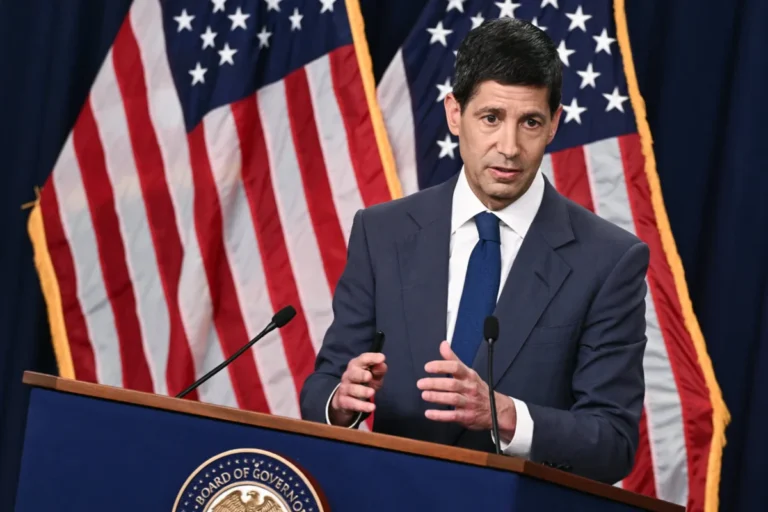
The United States executive branch is signaling a defiant posture regarding its aggressive trade agenda, suggesting that any judicial setbacks to its current tariff framework will be met with a swift transition to alternative legal mechanisms. National Economic Council Director Kevin Hassett recently clarified that the administration is fully prepared to navigate a potential adverse ruling from the Supreme Court concerning the use of the International Emergency Economic Powers Act (IEEPA). This stance underscores a broader commitment to protectionist measures and domestic industrial policy that has come to define the current era of American economic strategy. According to Hassett, the administration has already engaged in high-level strategic planning to ensure that the core objectives of its trade policy remain intact, regardless of how the high court interprets the limits of presidential emergency powers.
The legal crux of the matter lies in the administration’s reliance on the IEEPA, a 1977 statute that grants the president broad authority to regulate international commerce during a declared national emergency. While traditionally used for targeted sanctions against foreign entities or nations, the current administration has leveraged it as a tool for broad-based tariffs, arguing that economic imbalances and the erosion of domestic manufacturing constitute a national security crisis. Critics and legal scholars have challenged this interpretation, arguing that such a wide-ranging application oversteps the bounds of executive authority and infringes upon Congress’s constitutional power to regulate foreign trade and levy taxes. As the Supreme Court deliberates on the legality of these measures, the global financial community is watching closely, anticipating a ruling that could redefine the separation of powers in the realm of economic policy.
Despite the uncertainty surrounding the judicial outcome, Hassett’s remarks indicate that the White House is not operating in a vacuum. A significant meeting of "principals"—the highest-ranking officials in the cabinet and executive office—was recently convened to map out a "Plan B." This contingency strategy is reportedly being spearheaded by U.S. Trade Representative Jamieson Greer, whose office is tasked with identifying existing statutory authorities that could mirror the effects of the IEEPA-driven tariffs. By pivoting to other frameworks, such as Section 232 of the Trade Expansion Act of 1962 or Section 301 of the Trade Act of 1974, the administration believes it can achieve the "same place" in terms of trade protection and geopolitical leverage.
Section 232 allows for tariffs based on national security concerns, a mechanism that has been used in the past for steel and aluminum imports. Section 301, meanwhile, provides the executive branch with the power to retaliate against foreign trade practices deemed "unreasonable or discriminatory." By layering these authorities or invoking them in new configurations, the administration aims to maintain its tariff wall even if the Supreme Court strikes down the use of emergency powers. This "multi-pronged" approach is designed to provide a seamless transition, preventing any temporary window of duty-free trade that could lead to a surge in imports or market instability.

The economic implications of this persistent tariff strategy are profound. From a macro perspective, the continued reliance on trade barriers is a cornerstone of the "America First" economic framework, which seeks to decouple critical supply chains from adversarial nations and revitalize the domestic industrial base. However, this strategy is not without its risks. Economists often warn of "cost-push inflation," where the increased price of imported raw materials and intermediate goods is passed on to consumers. In an environment where the Federal Reserve is already struggling to maintain price stability, a permanent and expanding tariff regime could complicate the path toward a "soft landing."
Furthermore, the global reaction to these developments has been one of wary preparation. Major trading partners, including the European Union, China, Mexico, and Canada, have historically responded to U.S. tariffs with retaliatory measures of their own, often targeting politically sensitive American exports like agricultural products and high-end machinery. The prospect of a "forever war" in trade, sustained by a rotating door of legal authorities, creates a climate of uncertainty for multinational corporations. Businesses that rely on "just-in-time" global supply chains are increasingly forced to price in "geopolitical risk premiums," which can dampen capital expenditure and slow overall economic growth.
The timing of this legal and strategic maneuvering is particularly significant given the impending leadership transition at the Federal Reserve. Kevin Hassett himself has emerged as a frontrunner to succeed Jerome Powell, whose term as Fed Chair is set to expire in May. Hassett’s potential elevation to the world’s most powerful central banking role would represent a significant shift in the nexus between trade and monetary policy. While the Federal Reserve is technically independent, a Chair who is closely aligned with the administration’s trade philosophy might be more inclined to view tariff-induced inflation as a structural necessity rather than a cyclical anomaly to be crushed by high interest rates. This alignment could usher in a new era of "coordinated economic nationalism," where fiscal, trade, and monetary policies are all oriented toward domestic industrial goals.
In the halls of the U.S. Trade Representative’s office, Jamieson Greer is reportedly refining the technical aspects of these alternative trade tools. The challenge for Greer and the legal team is to ensure that any new tariffs can withstand the same level of judicial scrutiny that the IEEPA measures are currently facing. This involves a meticulous process of data collection and "injury findings" to justify tariffs under more traditional trade laws. For instance, if the administration pivots to Section 301, it must demonstrate specific unfair trade practices by foreign competitors—a process that is more labor-intensive than the broad declaration of a national emergency under IEEPA but potentially more resilient in court.
Market analysts suggest that the administration’s proactive communication about its contingency plans is an attempt to reassure investors and prevent a "tariff shock" if the Supreme Court rules against the president. By signaling that the "end state" remains the same, the White House is trying to manage expectations and maintain its bargaining position in ongoing trade negotiations with foreign capitals. The message to the world is clear: the U.S. is committed to its protectionist path, and a single court ruling will not result in a return to the era of unfettered globalization.

However, the legal battle over IEEPA is about more than just tariffs; it is a fundamental test of the "Non-delegation Doctrine." This legal theory posits that Congress cannot delegate its core legislative powers to the executive branch without providing "intelligible principles" to guide that authority. If the Supreme Court uses the tariff case to strengthen this doctrine, it could have repercussions far beyond trade, potentially limiting the power of federal agencies to regulate everything from the environment to healthcare. In this sense, the administration’s trade policy has become the tip of the spear in a much larger constitutional debate.
As the first decision days of the 2026 term pass without a definitive ruling, the tension in Washington is palpable. The administration remains confident in its legal standing, yet the existence of a detailed "Plan B" suggests a pragmatic recognition of the risks involved. The global economy, meanwhile, remains in a state of flux. The transition from a rules-based international trading system, overseen by organizations like the World Trade Organization (WTO), to a system defined by bilateral leverage and national security imperatives appears to be accelerating.
Ultimately, the White House’s strategy reflects a belief that the political and economic benefits of reshoring industry and reducing trade deficits outweigh the costs of judicial challenges and international friction. Whether through IEEPA, Section 232, or other obscure corners of the U.S. code, the administration is signaling that the era of aggressive trade intervention is here to stay. As Kevin Hassett noted, the goal is to get to the "same place"—a destination where American economic sovereignty is prioritized above all else, and where the tools of the state are used unhesitatingly to reshape the global marketplace. The coming months will determine if the judiciary serves as a roadblock or if the executive branch successfully navigates around it to continue its transformative economic agenda.