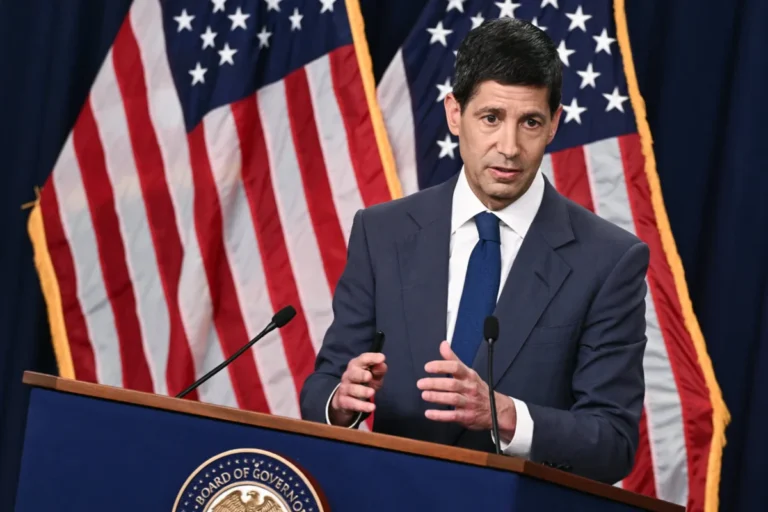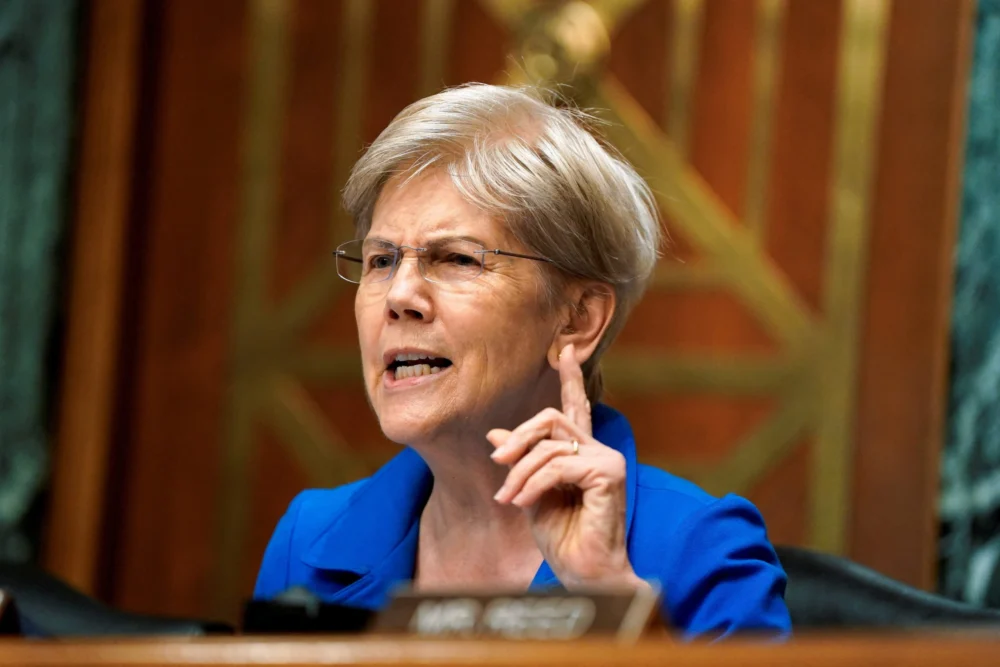
In an era defined by deep partisan polarization, an unexpected alliance has emerged between two of the most influential and traditionally adversarial figures in American politics. Donald Trump and Senator Elizabeth Warren, a Democrat from Massachusetts, have initiated a dialogue focused on a radical restructuring of the American consumer credit market: the implementation of a federal cap on credit card interest rates. This potential collaboration, sparked by a direct telephone conversation between the former president and the ranking member of the Senate Banking Committee, signals a tectonic shift in the political landscape, where populist economic sentiment is increasingly overriding traditional ideological boundaries.
The outreach occurred shortly after Senator Warren delivered a high-profile address at the National Press Club, in which she articulated a strategic roadmap for the Democratic Party ahead of the 2026 midterm elections. During her speech, Warren criticized the lack of legislative movement regarding skyrocketing consumer debt costs, noting that despite populist rhetoric, tangible action on interest rate ceilings had remained elusive. Trump’s subsequent call to Warren—a frequent target of his political rhetoric—underscored a shared interest in a policy that would cap credit card annual percentage rates (APRs) at 10%. This figure represents a dramatic reduction from current market averages, which have hovered between 21% and 25% following the Federal Reserve’s aggressive tightening cycle.
The economic implications of a 10% interest rate cap are profound, carrying the potential to reshape the profitability of the trillion-dollar banking sector and the daily financial lives of millions of Americans. As of the third quarter of 2024, total U.S. credit card debt surpassed $1.14 trillion, a record high that reflects both persistent inflationary pressures and a shift in consumer spending habits. For many households, the cost of carrying a balance has become a significant burden; at a 25% APR, a consumer with a $5,000 balance making only minimum payments could find themselves trapped in a debt cycle for decades, paying more in interest than the original principal.
From a macroeconomic perspective, proponents of a rate cap argue that it would function as a massive middle-class stimulus. By reducing the amount of discretionary income diverted to interest payments, a cap could theoretically increase consumer purchasing power, thereby fueling demand in other sectors of the economy. This "fiscal populism" aligns with Trump’s recent efforts to court working-class voters by addressing "kitchen table" issues, as well as Warren’s long-standing career focus on consumer protection and her foundational role in creating the Consumer Financial Protection Bureau (CFPB).
However, the proposal has encountered immediate and stiff resistance from within the traditional Republican establishment and the financial services industry. Critics argue that a federally mandated ceiling on interest rates would lead to a catastrophic "credit crunch." House Speaker Mike Johnson recently voiced these concerns, cautioning that a 10% cap could trigger unintended secondary effects that might ultimately harm the very consumers it intends to help. The primary argument from the banking lobby is that interest rates are a reflection of risk. If lenders are prohibited from charging rates that compensate for the risk of default, they may simply stop extending credit to "subprime" or "near-prime" borrowers—individuals with lower credit scores or limited financial histories.
This potential contraction of credit availability could lead to the emergence of "credit deserts," where low-income Americans are forced to turn to even more predatory lending alternatives, such as payday loans or unregulated "buy now, pay later" schemes. Furthermore, industry analysts suggest that banks would likely recoup lost interest revenue by increasing annual fees, eliminating grace periods, or dismantling popular rewards and cashback programs. The American Bankers Association has historically argued that the current competitive market, though expensive, ensures that credit is available to a wide spectrum of the population, a liquidity that might vanish under a rigid federal mandate.

Global comparisons provide a nuanced view of how interest rate caps function in other advanced economies. Many European nations, including France and Germany, maintain usury laws that link maximum interest rates to a "market average" plus a certain percentage. In the United Kingdom, the Financial Conduct Authority (FCA) has implemented price caps on high-cost short-term credit, though it has resisted a blanket cap on credit cards, preferring to focus on "persistent debt" interventions. The United States, by contrast, has largely lacked federal usury limits since the 1978 Supreme Court decision in Marquette National Bank of Minneapolis v. First of Omaha Service Corp., which allowed nationally chartered banks to export the interest rates of their home states to customers across the country. This led to a "race to the bottom" among states to deregulate interest rates to attract banking headquarters, effectively ending local usury protections.
The burgeoning alliance between Trump and Warren on this issue also highlights a growing divide within the Republican Party. While the "MAGA" wing of the party increasingly embraces populist interventions in the market—ranging from tariffs to industrial policy—the traditional libertarian and pro-business wings remain committed to free-market principles. The 10% cap proposal serves as a litmus test for this internal struggle. If Trump continues to champion the cap, he may force a realignment where Republican lawmakers must choose between loyalty to the party’s leader and the interests of their financial donors.
Market data suggests that the banking sector is already pricing in the possibility of increased regulation. Shares of major credit card issuers, such as Capital One, Discover, and Synchrony Financial, have shown sensitivity to political rhetoric regarding fee caps and interest limits. Earlier this year, the CFPB’s move to slash credit card late fees from an average of $32 to $8 was met with significant litigation from the U.S. Chamber of Commerce, illustrating the industry’s readiness to fight federal interventions in court. A 10% interest cap would represent an even more existential threat to the current business models of "monoline" lenders who rely heavily on interest income rather than diversified investment banking.
The legislative path for such a proposal remains fraught with hurdles. Even with the backing of a former president and a senior Democratic senator, a bill would need to navigate a fractured Congress where the financial services industry maintains one of the most powerful lobbying presences in Washington. However, the political optics of the proposal are undeniably potent. In an environment where the cost of living remains a primary concern for voters, a "war on interest rates" offers a clear, easily understood narrative of the "people versus the banks."
As the 2026 midterms approach, Senator Warren’s strategy appears to involve forcing a public debate on these economic realities. By engaging with Trump, she effectively broadens the coalition for her policy goals, making it more difficult for opponents to dismiss the idea as a fringe progressive fantasy. For Trump, the proposal reinforces his image as a disruptor who is willing to challenge even his party’s traditional allies on Wall Street to deliver for his base.
The ultimate impact of a 10% credit card interest rate cap would likely fall somewhere between the utopian relief promised by its advocates and the economic collapse predicted by its detractors. While it would undoubtedly provide immediate breathing room for millions of debt-laden Americans, the long-term structural changes to the American financial system would be permanent. Banks would be forced to innovate new revenue streams, and the very definition of "creditworthiness" would be rewritten. Whether this unlikely bipartisan momentum can overcome the institutional inertia of the financial sector remains to be seen, but the conversation itself marks a new chapter in the American economic narrative—one where the populist impulse is no longer confined to the fringes of the political spectrum.