Bank of America, the second-largest financial institution in the United States by assets, delivered a robust fourth-quarter performance that surpassed Wall Street expectations, signaling a period of sustained operational strength despite a complex macroeconomic backdrop. The Charlotte-based lender reported a 12% increase in net income, reaching $7.6 billion, or 98 cents per share. This figure comfortably beat the consensus estimates of analysts, who had been closely watching the bank’s ability to navigate a shifting interest rate environment and a resurgence in capital markets activity. The bank’s revenue also demonstrated significant momentum, climbing 7.1% year-over-year to $28.53 billion, underscoring the diversified nature of its revenue streams and its ability to capture value across both consumer and institutional segments.
The primary engine behind this quarterly success was a better-than-anticipated performance in net interest income (NII). As the difference between what a bank earns on its loans and what it pays out to depositors, NII is the lifeblood of traditional commercial banking. While many market participants had braced for a sharper contraction in NII due to the Federal Reserve’s evolving monetary policy and the increasing pressure to offer higher yields to depositors, Bank of America managed to maintain a resilient margin. The bank’s management credited this stability to disciplined deposit pricing and a loan portfolio that has benefited from higher yields on new originations. This performance suggests that the "asset-sensitive" nature of Bank of America’s balance sheet continues to provide a defensive cushion, even as the broader industry prepares for a potential transition toward lower benchmark rates.
In addition to the strength of its core lending business, Bank of America saw a significant contribution from its Global Markets division. Equities trading revenue emerged as a standout performer, fueled by heightened market volatility and increased client engagement across global exchanges. As institutional investors recalibrated their portfolios in response to shifting geopolitical risks and domestic economic data, Bank of America’s trading desks captured a larger share of the resulting flow. This surge in trading activity mirrors a broader trend across the "Bulge Bracket" firms, where Wall Street operations have increasingly offset fluctuations in more traditional retail banking sectors. Furthermore, the bank reported a healthy uptick in investment banking fees, driven by a recovering environment for mergers and acquisitions (M&A) and equity capital markets (ECM) underwriting. After a period of relative dormancy, corporate clients are once again seeking advisory services, a move that provides Bank of America with high-margin fee income that complements its interest-bearing assets.
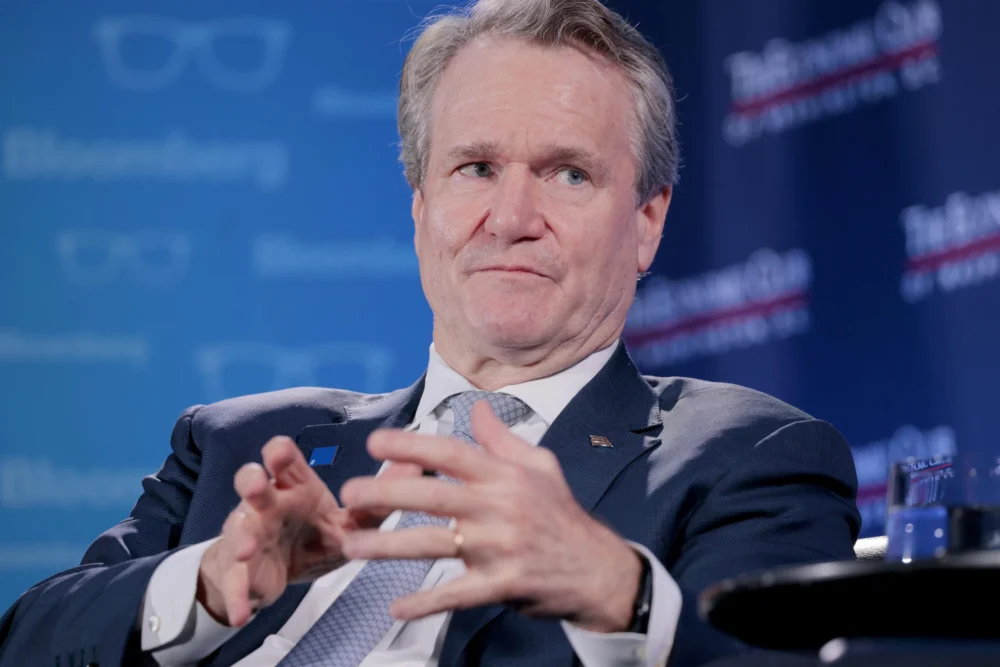
The fourth-quarter results arrive at a pivotal moment for the U.S. banking sector, which has been buoyed by several significant tailwinds over the past twelve months. Bank of America’s stock price reflected this optimism, gaining 24% over the preceding year as investors bet on a "soft landing" for the American economy. This rally has been supported by three main pillars: stable consumer credit quality, a resurgence in Wall Street fee generation, and the growing anticipation of a more favorable regulatory environment. Under the leadership of Chairman and CEO Brian Moynihan, the bank has leaned into a philosophy of "responsible growth," focusing on maintaining a high-quality credit profile while expanding its digital footprint to lower operational costs.
Consumer health remains a critical focal point for economists assessing the durability of the current expansion. Bank of America’s latest data suggests that the American consumer remains on solid footing, characterized by steady spending patterns and manageable debt levels. While some peer institutions have noted a slight uptick in credit card delinquencies among lower-income brackets, Bank of America’s portfolio continues to show resilience. This stability in consumer credit is a vital component of the bank’s risk management strategy, allowing it to maintain lower provisions for credit losses than might be expected at this stage of the credit cycle. The bank’s massive retail deposit base, which remains one of the largest and lowest-cost in the industry, provides it with a competitive advantage in funding its operations, particularly as the "war for deposits" intensifies among smaller regional lenders.
The broader industry context provides a useful benchmark for Bank of America’s performance. Just a day prior to its release, JPMorgan Chase, the nation’s largest bank, also posted results that cleared the bar, driven largely by exceptional trading revenue. The synchronous success of these banking giants points to a concentrated strength at the top of the U.S. financial hierarchy. As Citigroup and Wells Fargo also prepare to release their figures, and with Goldman Sachs and Morgan Stanley set to report later in the week, the narrative of the fourth quarter is increasingly becoming one of "big bank dominance." These institutions have the scale to invest heavily in technology and artificial intelligence—areas where Bank of America has spent billions—allowing them to gain efficiency and offer superior digital experiences that attract and retain high-value clients.
Deregulation has also entered the conversation as a potential catalyst for future growth. Following recent political shifts and a changing of the guard at various regulatory bodies, there is a growing expectation that the "Basel III Endgame" capital requirements may be softened. For a bank like Bank of America, a reduction in required capital buffers could unlock billions of dollars that could be redirected toward share buybacks, increased dividends, or further loan growth. Market analysts are eagerly awaiting further guidance from Moynihan regarding the bank’s capital return strategy for 2026, as the institution’s Common Equity Tier 1 (CET1) ratio remains well above regulatory minimums, providing it with significant "dry powder" for strategic maneuvers.
However, the path forward is not without its challenges. The primary concern for the upcoming fiscal year revolves around the sustainability of NII. If the Federal Reserve pursues a more aggressive series of rate cuts than currently priced into the market, the yields on the bank’s floating-rate assets could decline faster than its deposit costs, leading to margin compression. Additionally, while equities trading has been a boon, it is notoriously volatile and cannot be guaranteed to provide the same level of support in every quarter. Global economic uncertainty, particularly regarding trade tensions and cooling growth in international markets, could also dampen the demand for investment banking services and advisory roles.
From a global perspective, the performance of U.S. banks continues to diverge from their European and Asian counterparts. While European lenders struggle with sluggish domestic growth and a fragmented regulatory landscape, American banks like Bank of America have benefited from a more dynamic domestic economy and a deeper capital market ecosystem. This disparity has allowed U.S. firms to capture a dominant share of global investment banking fees, a trend that showed no signs of reversing in the fourth quarter. The ability of Bank of America to maintain its 12% profit growth while managing a balance sheet of over $3 trillion is a testament to the structural advantages currently enjoyed by the American financial system.
As the financial community digests these results, the focus turns to the long-term strategic trajectory of the bank. Brian Moynihan’s tenure has been marked by a transition away from the high-risk, high-reward model that defined the pre-2008 era, moving instead toward a more predictable, diversified, and technology-driven organization. The bank’s efficiency ratio, a key metric of how much it costs to generate revenue, has shown consistent improvement, aided by the closure of physical branches and the migration of customers to the Erica virtual assistant and the bank’s award-winning mobile app.
In conclusion, Bank of America’s fourth-quarter earnings report is more than just a victory for the institution; it is a barometer for the health of the U.S. financial sector and the broader economy. By beating expectations on both the top and bottom lines, the bank has demonstrated that it can thrive in a high-rate environment while simultaneously capitalizing on the revival of Wall Street activity. As 2026 approaches, the market will remain focused on whether this momentum is sustainable, but for now, Bank of America has solidified its position as a resilient and high-performing cornerstone of the global financial landscape. The interplay between interest rate cycles, regulatory shifts, and technological innovation will continue to define its future, but its current standing suggests a firm that is well-positioned to navigate whatever economic weather lies ahead.