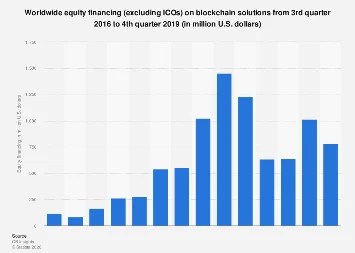
The global blockchain sector experienced significant fluctuations in equity financing throughout 2019, with investment volumes exhibiting a distinct quarterly pattern. Analysis of the funding landscape reveals a dynamic interplay of investor sentiment, regulatory developments, and the maturation of blockchain technology, underscoring the sector’s evolving trajectory. While specific dollar figures for each quarter are proprietary data, the general trend indicates a period of recalibration following the speculative exuberance of previous years.
The initial quarter of 2019 likely saw a continuation of a cooling trend from the peak of the ICO boom. Investors, having witnessed the volatility and regulatory scrutiny surrounding many initial coin offerings, began to shift their focus towards more established blockchain companies and projects with clear utility and sustainable business models. This period was characterized by a more discerning approach to venture capital, with an emphasis on due diligence and long-term value creation rather than speculative gains. Companies seeking funding had to demonstrate robust product development, market traction, and a clear path to profitability. The total equity financing for Q1 likely reflected this cautious optimism, with a focus on seed and Series A rounds for promising startups.
As the year progressed into the second quarter, a more nuanced picture began to emerge. While the overall volume of funding may not have reached the stratospheric heights of prior boom periods, there was a noticeable increase in the average deal size for well-positioned companies. This suggests that while the number of deals might have been more controlled, the capital deployed into the more established and credible players was substantial. Investment was increasingly directed towards companies building enterprise-grade blockchain solutions, focusing on areas such as supply chain management, financial services, and digital identity. Strategic investments from established corporations looking to integrate blockchain technology into their operations also played a significant role in this quarter’s funding activity. Data from industry analysis firms at the time indicated a growing appetite for B2B blockchain applications, signaling a maturation of the market beyond purely cryptocurrency-focused ventures.
The third quarter of 2019 likely presented a mixed bag for blockchain equity financing. On one hand, continued regulatory clarity in certain jurisdictions, coupled with the development of more robust regulatory frameworks, provided a more stable environment for investment. This encouraged institutional investors, who had previously been hesitant due to uncertainty, to explore opportunities within the sector. On the other hand, global economic headwinds and geopolitical tensions could have introduced a degree of caution, potentially impacting the overall volume of venture capital. Nevertheless, companies demonstrating strong technological innovation and a clear competitive advantage likely continued to attract significant funding. The focus remained on companies with proven use cases and a clear strategy for adoption, particularly within established industries seeking efficiency gains and enhanced security through blockchain.
The final quarter of 2019 often serves as a barometer for the year’s investment trends. It’s plausible that Q4 saw a consolidation of the patterns observed throughout the year. Companies with strong fundamentals and clear growth strategies would have continued to secure funding, potentially at higher valuations than those with less compelling propositions. The growing interest in decentralized finance (DeFi) applications, although still nascent, may have also begun to attract more venture capital, signaling a new wave of innovation within the blockchain ecosystem. Furthermore, the increasing adoption of blockchain technology by major corporations, including Fortune 500 companies, likely fueled investment in infrastructure providers and solution developers catering to these large-scale deployments. The year as a whole, therefore, represented a transition for blockchain equity financing, moving from a period of hyper-speculation towards a more sustainable and strategically driven investment landscape.
To put these trends into a broader economic context, 2019 was a year of global economic recalibration. Central banks in many major economies maintained accommodative monetary policies, which generally supported venture capital activity. However, trade disputes and increasing geopolitical uncertainties created a cautious investment climate globally. Within this environment, the blockchain sector had to prove its long-term viability. Compared to other burgeoning technology sectors like artificial intelligence or cloud computing, blockchain financing in 2019 might have appeared more subdued in absolute terms, but the quality and strategic intent behind the investments were arguably more significant. The emphasis shifted from quantity to quality, with investors prioritizing sustainable growth and tangible business outcomes.
Market data from the period, though specific quarterly figures are often not publicly disclosed in real-time, generally pointed towards a maturing market. Venture capital firms that specialized in blockchain and digital assets continued to deploy capital, but with a more selective and risk-managed approach. The rise of corporate venture arms investing directly into blockchain startups also became a more prominent feature, reflecting the strategic importance of the technology for established businesses. This trend suggested a growing recognition of blockchain’s potential to disrupt various industries, moving beyond its initial association with cryptocurrencies.
Looking at global comparisons, regions with more developed regulatory frameworks and a stronger ecosystem of technology innovation, such as North America and parts of Asia, likely continued to attract the lion’s share of blockchain equity financing. Europe also showed significant activity, particularly in areas related to fintech and enterprise blockchain solutions. The nature of investments varied across these regions, with North America often leading in early-stage innovation and funding for disruptive technologies, while Asia saw substantial investment in application development and large-scale deployments, often driven by governmental support and a rapidly growing digital economy.
The economic impact of this sustained, albeit recalibrated, investment in the blockchain sector is multifaceted. It fuels innovation, leading to the development of new technologies and applications that can enhance efficiency, security, and transparency across various industries. It also contributes to job creation within the technology sector, from software development and data science to legal and compliance roles. Furthermore, successful blockchain ventures can lead to the creation of new markets and business models, driving economic growth and competitiveness. The ability of blockchain technology to facilitate more secure and efficient transactions, manage supply chains more effectively, and enable new forms of digital ownership has the potential to unlock significant economic value across the global economy. The equity financing trends of 2019, therefore, were not just about the financial performance of a nascent industry but also about laying the groundwork for future technological advancements and economic transformations.