In the high-stakes world of global finance, where systemic stability often clashes with the relentless pursuit of shareholder returns, BNY is signaling a definitive shift from its traditional role as a legacy utility to a high-performance financial powerhouse. Under the leadership of Chief Executive Officer Robin Vince, the world’s largest custody bank has officially upgraded its medium-term financial objectives, a move that underscores a successful three-year "turnaround" and a renewed confidence in the institution’s ability to extract value from its massive $50 trillion asset-servicing engine.
The bank recently announced a significant upward revision of its core performance metrics, raising its targets for pre-tax margin and return on tangible common equity (ROTCE) by 500 basis points each. The new benchmarks—a 38% pre-tax margin and a 28% ROTCE—place BNY in a rarified tier of profitability, challenging the returns of even the most aggressive investment banks and high-growth fintech firms. These targets, set on a three-to-five-year horizon, represent a bold declaration that the structural changes initiated since Vince’s arrival in 2020 are yielding tangible results.
Robin Vince, a veteran of Goldman Sachs who assumed the mantle of CEO in 2022, has spent his tenure dismantling the siloed culture of the 240-year-old institution. His strategy has centered on transforming BNY from a passive provider of "back-office" services into a proactive data and technology partner for the world’s largest institutional investors. This pivot is not merely cosmetic; it is a fundamental reconfiguration of how the bank interacts with the global financial plumbing. By integrating its custody, clearing, and management functions, BNY aims to offer a seamless "end-to-end" experience that justifies premium pricing and fosters deeper client loyalty.
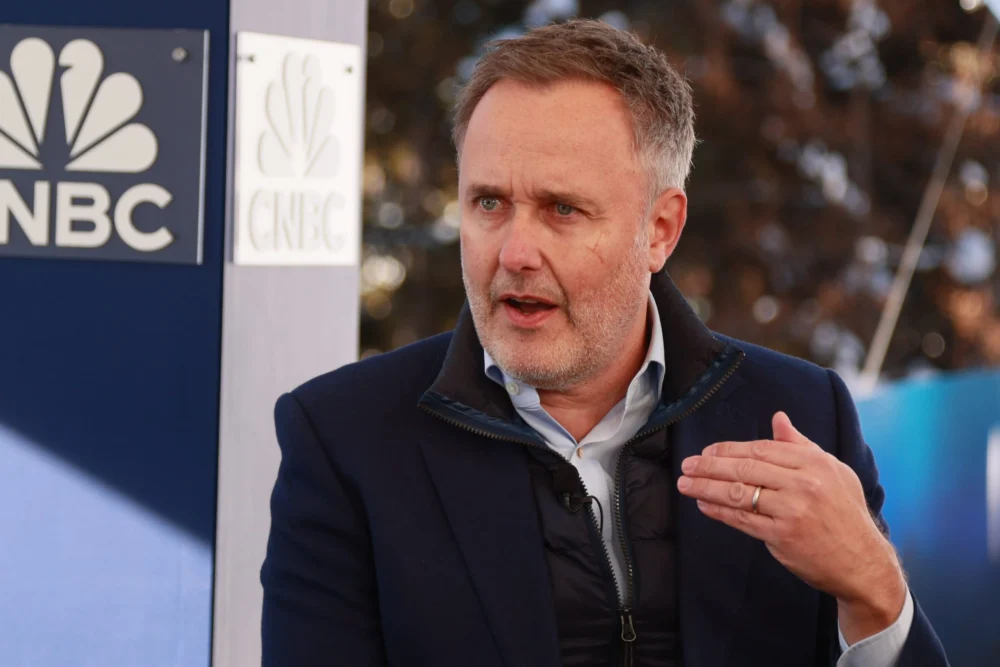
The timing of this strategic upgrade is no coincidence. The broader banking sector is navigating a complex macroeconomic landscape defined by fluctuating interest rates and a shifting regulatory tide in the United States. During the recent World Economic Forum in Davos, Vince highlighted that the bank’s track record of execution over the past three years has provided the necessary "confidence" to reach for higher goals. He noted that the "turnaround" is no longer a theoretical projection but a reality reflected in the company’s operating leverage and capital efficiency.
To understand the scale of BNY’s ambition, one must look at the competitive landscape of the custody banking industry. For decades, BNY, State Street, and Northern Trust have engaged in a fierce "race to the bottom" regarding fees for basic asset servicing. However, the rise of "as-a-service" models in finance has allowed BNY to diversify its revenue streams. By leveraging its vast data repositories to provide analytics, liquidity solutions, and collateral management, the bank is moving up the value chain. The 38% pre-tax margin target is a testament to this shift toward higher-margin, technology-driven services that are less sensitive to the commoditization of basic custody.
Furthermore, the 28% ROTCE target is particularly striking. Return on tangible common equity is a critical barometer for bank efficiency, measuring how effectively a firm generates profit from its core equity base. In an era where many European peers struggle to break into double digits and domestic rivals hover in the high teens, a 28% target signals that BNY believes it can generate exceptional returns without taking on the excessive balance sheet risk typical of traditional commercial lending or volatile trading desks.
The geopolitical and regulatory environment also plays a pivotal role in this narrative. The financial sector has observed a trend toward deregulation under recent U.S. administrations, which has provided banks with more flexibility in capital deployment. As the Trump administration’s regulatory appointees previously signaled a move toward simplifying the Volcker Rule and easing capital requirements for G-SIBs (Global Systemically Important Banks), institutions like BNY found themselves with a tailwind. This environment allows the bank to return more capital to shareholders through buybacks and dividends while simultaneously investing in the digital infrastructure required to maintain its market-leading position.
However, the path to these elevated targets is not without its hurdles. The global custody business is inherently sensitive to market valuations; when equity and bond markets decline, the assets under custody (AUC) shrink, dragging down fee revenue. Additionally, the transition to a technology-first model requires massive, ongoing capital expenditure. BNY has had to balance the need for modernizing legacy mainframe systems—some of which date back decades—with the demand for immediate profitability.
Artificial intelligence and blockchain technology are also reshaping the competitive moat that BNY has long enjoyed. The bank has been an early mover in exploring the tokenization of real-world assets and the use of AI to automate complex fund accounting processes. If successful, these initiatives could further drive down the "cost-to-serve," pushing margins even higher than the newly announced 38% target. Conversely, if the bank fails to keep pace with agile fintech disruptors, it risks becoming a "dumb pipe" for financial transactions—a utility that provides the infrastructure but captures none of the premium value.
Market analysts have reacted to the target hike with cautious optimism. While the 5% jump is ambitious, the bank’s recent quarterly performances have shown a consistent ability to control expenses while growing non-interest income. In a world of "sticky" inflation, BNY’s ability to maintain expense discipline is a key differentiator. The bank has implemented a more rigorous performance-management framework under Vince, focusing on "doing fewer things better" and divesting from non-core business lines that do not meet the firm’s strict return-on-capital hurdles.
Global comparisons further illuminate the bank’s standing. Compared to its primary rival, State Street, BNY has focused more heavily on a diversified business model that includes a significant investment management arm. This provides a natural hedge; when custody fees are pressured, the investment management side can often capture gains from market volatility. By raising its targets, BNY is essentially betting that its integrated model is superior to the more specialized approaches of its competitors.
Economic impact analysis suggests that a more profitable and efficient BNY is a net positive for the global financial system. As a G-SIB, the bank’s health is intrinsically linked to the stability of the markets. A bank that generates high returns on equity is better positioned to absorb shocks, reinvest in cybersecurity, and provide the liquidity necessary for the smooth functioning of capital markets. BNY’s role in clearing U.S. Government securities, for instance, is a critical function that requires constant technological refinement and robust capital buffers.
As Robin Vince looks toward the next three years, his focus remains on "unlocking value." This phrase, often used in corporate jargon, has a specific meaning at BNY: it refers to the monetization of the bank’s unique position at the center of the financial ecosystem. With $50 trillion in assets passing through its systems, even a fractional increase in the efficiency of how those assets are managed, moved, or accounted for can result in billions of dollars in incremental profit.
The "Vince Era" at BNY will likely be defined by this transition from a steady, reliable dividend payer to a more dynamic, growth-oriented financial technology leader. By raising the bar on its financial targets, the bank is inviting investors to view it through a different lens—not as a relic of Wall Street’s past, but as a blueprint for its future. The 38% margin and 28% ROTCE are not just numbers on a spreadsheet; they are the markers of a successful cultural and operational transformation that aims to redefine what it means to be a custody bank in the 21st century. As the "turnaround" takes hold, the industry will be watching closely to see if this historic institution can indeed bridge the gap between its storied heritage and the high-velocity demands of modern global finance.