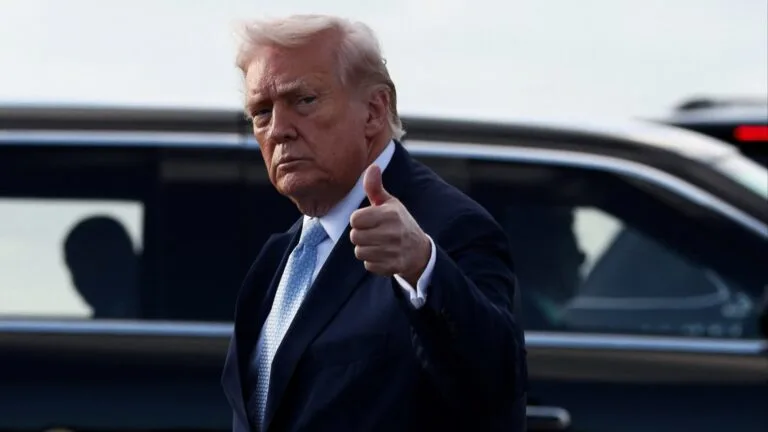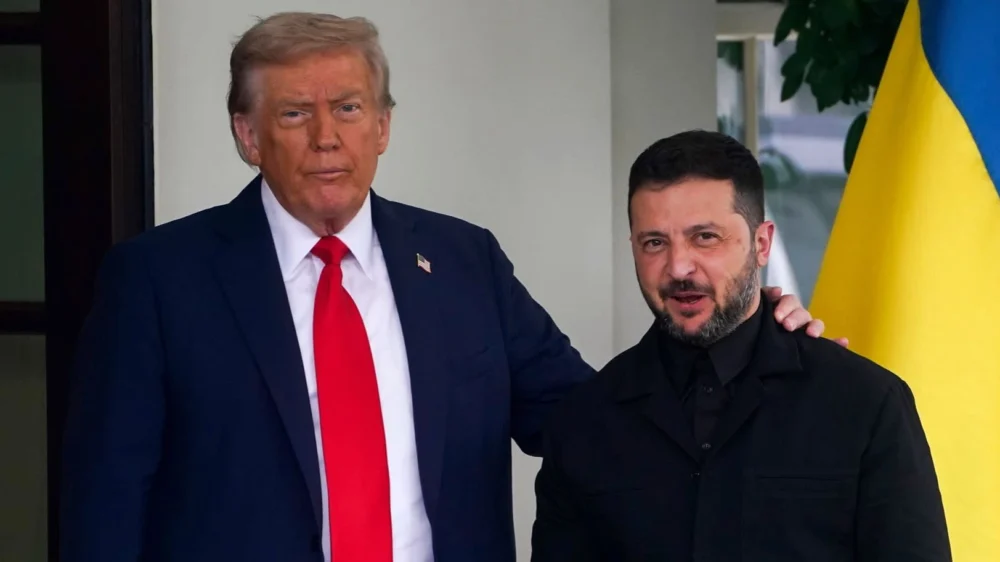
The palm-lined corridors of Mar-a-Lago are set to become the center of the global diplomatic stage this weekend as Ukrainian President Volodymyr Zelenskyy travels to Florida for a high-stakes meeting with former President Donald Trump. This encounter represents far more than a standard diplomatic courtesy; it is a critical pivot point in a conflict that has reshaped global energy markets, strained Western defense industrial bases, and forced a massive reallocation of international capital. As the 2024 U.S. presidential election approaches, the dialogue between the wartime leader and the Republican frontrunner carries profound implications for the future of the North Atlantic Treaty Organization (NATO), the stability of the Eurozone, and the multi-billion-dollar reconstruction projects currently being planned in the halls of global financial institutions.
The timing of the meeting is dictated by a convergence of military urgency and political volatility. Zelenskyy arrives in the United States at a moment when the Ukrainian "Victory Plan" is being socialized among Washington’s elite, seeking to secure long-term security guarantees and a sustainable flow of advanced weaponry. For Trump, the meeting offers an opportunity to demonstrate his self-styled role as a dealmaker capable of de-escalating a conflict that he has frequently characterized as a drain on American resources. However, beneath the political optics lies a complex web of economic interdependencies that both men must navigate.
Since the full-scale invasion began in February 2022, the United States has committed over $175 billion in total aid to Ukraine, according to data from the Council on Foreign Relations and the Kiel Institute for the World Economy. This massive fiscal outlay has become a point of contention in domestic American politics, with the "America First" wing of the Republican Party questioning the return on investment. Yet, economic analysts point out that a significant portion of this funding—estimated at nearly 60%—never leaves the United States. Instead, it is funneled directly into the U.S. defense industrial base, revitalizing manufacturing sectors in states like Pennsylvania, Arizona, and Arkansas as the Pentagon replenishes its own stockpiles with next-generation equipment from Lockheed Martin, RTX (formerly Raytheon), and General Dynamics.
Zelenskyy is expected to emphasize this "circular economy" of defense spending during his discussions at Mar-a-Lago. By framing Ukrainian military support as a catalyst for American industrial renewal and high-tech job creation, the Ukrainian President hopes to appeal to Trump’s transactional approach to foreign policy. The argument is clear: supporting Ukraine is not merely an act of democratic solidarity, but a strategic investment in the U.S. manufacturing sector and a stress test for the logistics chains that would be vital in any future conflict in the Indo-Pacific.
Beyond the immediate requirements of the battlefield, the summit will likely touch upon the gargantuan task of post-war reconstruction. The World Bank, in its most recent Rapid Damage and Needs Assessment, estimated that the cost of rebuilding Ukraine has surged to at least $486 billion over the next decade. This figure represents one of the largest infrastructure opportunities in modern history, drawing the attention of global asset managers like BlackRock and JPMorgan Chase. These firms have already signed memorandums of understanding with the Ukrainian government to coordinate private investment for reconstruction.
For the international business community, the meeting at Mar-a-Lago serves as a barometer for "geopolitical risk." If a consensus can be reached on a path toward stability, it could unlock significant "wait-and-see" capital currently sitting on the sidelines. Conversely, if the meeting highlights a deepening rift in U.S. policy, it may signal a period of prolonged uncertainty that could depress investment in Eastern Europe and maintain high volatility in the global commodities markets.
Energy security remains a cornerstone of the economic dialogue surrounding the Ukraine-Russia conflict. The war accelerated Europe’s decoupling from Russian natural gas, a shift that has been a windfall for U.S. liquefied natural gas (LNG) exporters. The United States became the world’s largest LNG exporter in 2023, with much of that volume diverted to European hubs to replace Gazprom’s lost market share. Any shift in U.S. policy toward the war—whether a push for an immediate ceasefire or a change in the sanctions regime—would have immediate repercussions for global Brent crude prices and Dutch TTF gas futures. Zelenskyy’s task is to convince Trump that a strong, energy-independent Ukraine serves as a permanent buffer against Russian energy blackmail, thereby stabilizing global markets in the long run.
Furthermore, the agricultural dimension cannot be overlooked. Ukraine, often referred to as the "breadbasket of Europe," remains a vital cog in global food security. The disruption of Black Sea shipping routes has previously caused spikes in the Food and Agriculture Organization (FAO) Food Price Index, contributing to inflationary pressures in developing economies. The stability of the "Grain Corridor" is essential not just for Ukraine’s GDP, but for the macroeconomic stability of the Middle East and North Africa. A Trump-Zelenskyy alignment on securing these trade routes could be presented as a move to combat global inflation—a key pillar of Trump’s domestic economic platform.
However, the path to a shared vision is fraught with diplomatic obstacles. Trump has repeatedly claimed he could end the war within 24 hours of taking office, a statement that has caused unease in Kyiv and Brussels. The fear among Ukrainian officials is that a "deal" might involve significant territorial concessions or a "neutrality" status that would leave Ukraine vulnerable to future incursions. From an economic perspective, a "frozen conflict" or a forced peace that lacks international guarantees would likely fail to attract the private capital necessary for reconstruction, as the "sovereign risk" would remain prohibitively high.
The meeting also takes place against the backdrop of shifting dynamics within the European Union. While the U.S. remains the largest individual donor, the EU and its member states have collectively overtaken the U.S. in total committed aid. Leaders in Berlin, Paris, and Warsaw are watching the Mar-a-Lago meeting with intense scrutiny. A potential U.S. withdrawal or reduction in support would force a massive fiscal realignment in Europe, likely leading to increased sovereign debt issuance to fund a continent-wide defense buildup. This would have significant implications for the Euro’s exchange rate and the European Central Bank’s long-term monetary policy.
Expert insights suggest that Zelenskyy’s strategy will be to offer Trump a "win" that aligns with his "Peace through Strength" doctrine. This might include proposals for Ukraine to pay for future military equipment through long-term leases or mineral rights agreements, tapping into Ukraine’s vast deposits of critical minerals like lithium and titanium—resources that are essential for the global green energy transition and are currently dominated by Chinese supply chains.
As the weekend approaches, the global financial markets are quietly indexing the potential outcomes. A harmonious meeting could bolster defense stocks and provide a lift to European equities tied to infrastructure and energy. A contentious encounter, however, might reinforce the "geopolitical discount" currently applied to many European assets.
In the final analysis, the Zelenskyy-Trump summit is a testament to the reality that in the modern era, war and economics are inextricably linked. The decisions made in the private rooms of a Florida estate will echo through the boardrooms of multinational corporations and the halls of central banks. President Zelenskyy is not just seeking weapons; he is seeking a partner in a long-term economic and security framework. Former President Trump, meanwhile, is weighing the costs of leadership against the benefits of a redefined global order. The world is watching to see if these two leaders can find a common language that balances the harsh realities of a front-line war with the cold calculations of global trade and finance.