As the opening bell approaches this Tuesday, the financial world’s attention is firmly fixed on JPMorgan Chase & Co., the largest lender in the United States and a primary barometer for the health of the global economy. The bank’s fourth-quarter earnings report arrives at a critical juncture, serving as both a retrospective on a surprisingly robust 2025 and a definitive roadmap for the fiscal challenges of 2026. For investors, the release is more than a mere tally of profits and losses; it is an essential diagnostic tool for assessing the stamina of the American consumer, the vitality of corporate dealmaking, and the banking sector’s ability to navigate an increasingly complex regulatory and political landscape.
The preceding twelve months have been characterized by what many analysts describe as a "Goldilocks" environment for the banking industry. While the broader market faced various headwinds, the financial sector thrived under a unique confluence of favorable conditions. Rebounding activity in Wall Street’s trading and investment banking divisions provided a significant boost to non-interest income, while a gradual softening of interest rates by the Federal Reserve began to ease the pressure on deposit costs. Simultaneously, consumer credit remained remarkably stable despite years of inflationary pressure, and a wave of anticipated deregulation provided a psychological and structural lift to bank stocks. This momentum was clearly reflected in the markets; the KBW Bank Index, a key benchmark for the industry, surged by 29% last year. This marked the second consecutive year that the index outperformed the S&P 500, signaling a profound shift in investor sentiment toward traditional financial powerhouses.
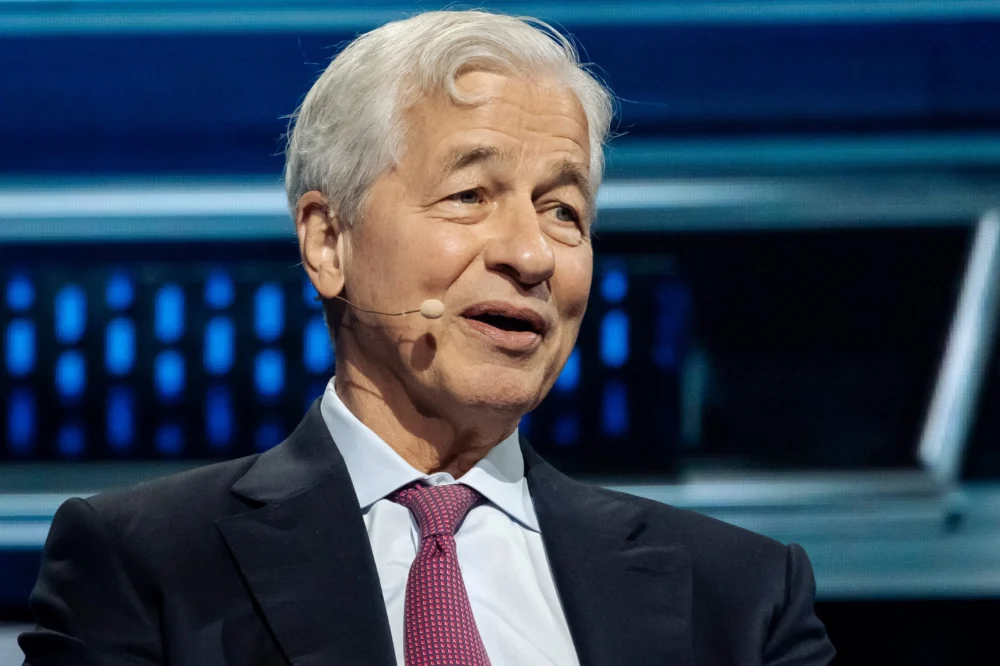
However, as Jamie Dimon, the veteran Chairman and CEO of JPMorgan Chase, prepares to address shareholders, the optimism of 2025 is being tempered by emerging uncertainties. Chief among these is the trajectory of the labor market. While employment remained resilient for much of the previous year, recent data from the December jobs report has sparked concerns regarding a potential cooling of the economy. Any evidence of a weakening labor market typically translates to higher delinquency rates in credit cards and mortgages—areas where JPMorgan holds massive exposure. Analysts will be scrutinizing the bank’s provisions for credit losses, looking for any indication that the "fortress balance sheet" is being fortified against a coming storm of consumer defaults.
The consumer banking segment is also facing an unexpected political challenge. The industry is currently grappling with a proposal from the Trump administration to enforce a 10% cap on credit card interest rates. Such a move would represent a radical departure from the market-driven rate structures that have historically fueled the profitability of retail banking. For a behemoth like JPMorgan, which manages one of the largest credit card portfolios in the world, a mandated rate cap could significantly compress margins and force a reassessment of risk appetite. Dimon, known for his candid and often blunt assessments of public policy, is expected to face sharp questions regarding how the bank intends to lobby against or adapt to such a drastic regulatory intervention.
Beyond the consumer side, the earnings report will offer a deep dive into the state of global capital markets. After a prolonged drought in initial public offerings (IPOs) and mergers and acquisitions (M&A) during the high-interest-rate era of 2023 and early 2024, the latter half of 2025 saw a meaningful thaw. JPMorgan, a perennial leader in investment banking fees, has been a primary beneficiary of this resurgence. Investors are eager to learn if the current pipeline of deals suggests a sustained boom or if the recent activity was merely a temporary release of pent-up demand. Guidance for 2026 will be pivotal in determining whether the "dealmaking spring" has truly arrived, particularly as corporate boards weigh the implications of a new administration’s approach to antitrust enforcement and trade policy.
Monetary policy remains another centerpiece of the discussion. The relationship between the banking sector and the Federal Reserve has entered a sensitive phase. With interest rates on a downward trajectory, the "net interest income" (NII)—the difference between what a bank earns on loans and what it pays out on deposits—is under pressure. While lower rates can stimulate loan demand, they also narrow the spreads that have generated record profits for banks over the last two years. Furthermore, the independence of the Federal Reserve has become a recurring theme in political discourse. Any commentary from Dimon regarding the central bank’s autonomy or the potential for political interference in interest rate decisions will be parsed for its impact on long-term market stability.
The wealth management division of JPMorgan is also expected to show significant strength, buoyed by the record highs seen in equity markets throughout 2025. As asset values rose, so too did the fee-based income generated from managing the portfolios of the ultra-wealthy and institutional clients. This diversification has been a cornerstone of JPMorgan’s strategy, providing a cushion against the volatility of the trading floor or the cyclical nature of retail lending. However, the sustainability of these gains depends heavily on continued market confidence and the avoidance of a "hard landing" for the U.S. economy.
While JPMorgan leads the reporting cycle, its results will set the tone for its peers. Bank of America, Citigroup, and Wells Fargo are scheduled to report their own figures on Wednesday, followed by the investment banking specialists Goldman Sachs and Morgan Stanley on Thursday. The collective data from these institutions will provide a comprehensive view of the financial system’s plumbing. If JPMorgan’s results exceed expectations, it could catalyze a broader rally across the sector; conversely, any signs of strain in the bank’s guidance could trigger a re-evaluation of the premium valuations currently enjoyed by many financial stocks.
Internal strategic shifts at JPMorgan will also be a point of interest. The bank has been investing billions of dollars annually into technology, specifically artificial intelligence and cybersecurity, to maintain its competitive edge against both traditional rivals and fintech disruptors. Investors will be looking for evidence that these massive outlays are beginning to yield efficiencies or create new revenue streams. In an era where digital banking is the primary interface for the majority of customers, the ability to integrate AI into fraud detection, customer service, and credit underwriting is no longer a luxury but a fundamental necessity for survival.
The geographical footprint of the bank also warrants attention. As a global institution, JPMorgan is sensitive to international developments, including the economic slowdown in China and the ongoing geopolitical tensions in Europe and the Middle East. While the domestic U.S. economy remains the bank’s primary engine, its exposure to global trade finance and international capital markets means that it cannot remain insulated from external shocks. Dimon’s "World Economic Outlook," often shared during these calls, provides a rare glimpse into how the world’s most influential banker views the intersection of geopolitics and finance.
As the financial community waits for the numbers to hit the wires, the overarching question is whether the banking sector can maintain its momentum in a year that promises significant structural change. The transition from a period of high inflation and rising rates to one of potential deregulation and political volatility creates a landscape of both immense opportunity and profound risk. JPMorgan Chase, with its vast resources and dominant market position, is perhaps better equipped than any other institution to navigate these waters. Yet, as history has shown, even the most formidable "fortress" must remain vigilant against the shifting tides of the global economy.
In the hours following the release, the focus will shift from the raw data to the nuances of the conference call. Analysts will listen for the tone of Dimon’s voice and the specific language used by CFO Jeremy Barnum to describe the bank’s outlook. Whether the message is one of cautious optimism or a stern warning about the "hurricane" on the horizon, the impact will be felt far beyond the halls of 270 Park Avenue. This earnings report is not just a summary of three months of business; it is the first major chapter in the financial narrative of 2026, a year that is already shaping up to be a defining period for the future of global banking.