The American financial landscape was jolted into a state of high alert following a recent policy proposal that seeks to fundamentally alter the mathematics of consumer lending. In a move that blends populist economic appeal with a direct challenge to Wall Street’s traditional profit models, former President Donald Trump has proposed a temporary, one-year federal cap of 10% on credit card interest rates. The announcement, delivered with a Jan. 20 deadline for implementation, has ignited a firestorm of debate among economists, banking executives, and legal scholars regarding the feasibility of such a mandate and its potential to inadvertently cripple the very consumers it aims to protect.
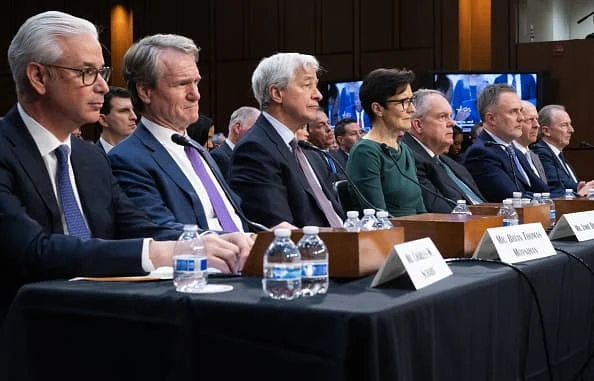
Market reactions were swift and decisive, reflecting the deep-seated anxieties of institutional investors. As trading commenced on the Monday following the announcement, the "Big Four" American banks saw their valuations erode significantly. Citigroup, JPMorgan Chase, Wells Fargo, and Bank of America all experienced premarket declines ranging from 1% to 4%. However, the most acute pain was felt by institutions with concentrated exposure to the credit card sector. Capital One, a lender whose portfolio is heavily weighted toward unsecured consumer debt, saw its shares plummet by 7%. Payment processors and networks, including Visa, Mastercard, and American Express, also faced downward pressure as investors began to price in a future where transaction volumes and interest income could be severely constrained.
To understand the magnitude of a 10% cap, one must consider the current state of the American credit market. According to data from the Federal Reserve, the average interest rate on credit card accounts assessed interest was approximately 22.76% in mid-2024, with many retail and subprime cards exceeding 30%. In an environment where the federal funds rate remains elevated, a 10% ceiling would place the maximum allowable interest rate dangerously close to the cost of capital for many smaller lenders. When accounting for operational overhead, marketing costs, and the inevitable risk of default, industry insiders argue that a 10% cap would render the vast majority of credit card portfolios unprofitable overnight.
The immediate concern voiced by bank executives is not merely a reduction in dividends, but a wholesale contraction of credit availability. Lending is, at its core, a pricing of risk. Borrowers with lower credit scores—often referred to as subprime—carry a higher statistical probability of default. To offset this risk, banks charge higher interest rates. If the ability to price for that risk is removed by federal mandate, the economic incentive to lend to these populations vanishes. Analysts warn that rather than benefiting from lower rates, millions of Americans with "less-than-perfect" credit profiles would simply see their lines of credit closed or their applications denied.
This potential "credit crunch" could have a cascading effect on the broader economy. Consumer spending accounts for roughly two-thirds of U.S. Gross Domestic Product (GDP). In an era where many households utilize credit cards as a bridge for monthly expenses amidst persistent inflation, a sudden withdrawal of revolving credit could trigger a sharp decline in aggregate demand. One senior banking official, speaking on the condition of anonymity, suggested that such a move would not just impact the banking sector but could "very quickly tank the economy" by stifling the fluid movement of capital that fuels retail consumption.
The banking industry’s trade groups have already begun a coordinated defensive. In a rare display of unified opposition, several major associations issued statements highlighting the "devastating" risks to small business owners and families. These groups argue that the proposal ignores the fundamental mechanics of unsecured lending. Unlike a mortgage or an auto loan, a credit card is not backed by an underlying asset that the bank can repossess. Consequently, the interest rate must cover the total loss of the principal in the event of a default. By capping the rate at 10%, the government would effectively be asking private institutions to subsidize high-risk lending—a scenario that most boards of directors would find untenable.
Beyond the immediate economic impact, the proposal faces a daunting array of legal and bureaucratic hurdles. Legal experts point out that the President does not possess the unilateral authority to set interest rate caps via executive order. Historically, usury laws—which limit the interest rates lenders can charge—have been the province of state governments. However, the 1978 Supreme Court decision in Marquette National Bank of Minneapolis v. First of Omaha Service Corp. essentially allowed national banks to "export" the interest rates of their home state to customers across the country. Overturning this established precedent or implementing a federal ceiling would almost certainly require an act of Congress.
Given the current polarization in Washington, passing such legislation by the proposed Jan. 20 start date is viewed by many as a legislative impossibility. Even if the administration sought to utilize the Consumer Financial Protection Bureau (CFPB) as an enforcement mechanism, the path remains fraught. The CFPB has recently faced its own series of legal challenges regarding its funding and authority, and the banking industry has a proven track record of successfully litigating against what it deems "regulatory overreach" in the court system.
Some policy analysts, such as Tobin Marcus of Wolfe Research, suggest that the aggressive Jan. 20 deadline may be less about immediate policy implementation and more about utilizing the "bully pulpit." By setting a hard date and a radical number, the administration may be attempting to pressure banks into "voluntary" rate reductions or more modest concessions to avoid the threat of more Drastic intervention. This "negotiation by headline" is a tactic designed to shift the Overton window of what is considered an acceptable interest rate in the eyes of the public.
Furthermore, the secondary effects of a 10% cap would likely reach into the beloved "rewards economy." The high-interest margins on credit cards currently fund the vast ecosystem of travel points, cash-back incentives, and airport lounge access that millions of Americans have come to expect. If the revenue from interest is slashed, banks will almost certainly look to recoup costs by eliminating these perks and reintroducing annual fees. For the "transactors"—those who pay their balance in full every month and never pay interest—this policy could actually result in a net loss of value as their benefits disappear.
Global comparisons provide a cautionary tale. Countries with strict national usury caps, such as France and certain jurisdictions in Japan, typically have much smaller and more conservative credit markets. In these systems, credit cards are often used more like debit cards, and the "democratization of credit" seen in the United States—where even those with modest incomes can access revolving lines—is largely non-existent. While these systems may prevent debt traps, they also limit the upward mobility and liquidity of the middle and lower classes.
As the debate intensifies, the core tension remains between a desire to provide relief to debt-burdened Americans and the rigid realities of market-based finance. Total U.S. household debt recently surpassed $17 trillion, with credit card balances accounting for over $1.1 trillion of that sum. Delinquency rates have also begun to tick upward, signaling that many consumers are reaching their breaking point. While a 10% cap offers a seductive solution to the "cost of living" crisis, the consensus among economists is that the structural integrity of the American financial system relies on the ability of lenders to price risk accurately. Without a nuanced approach that accounts for the cost of capital and default probabilities, a blunt instrument like a 10% cap could inadvertently usher in a period of financial instability and restricted economic opportunity. The coming months will likely see an intense period of lobbying, litigation, and market volatility as Wall Street and Washington square off over the future of the American wallet.