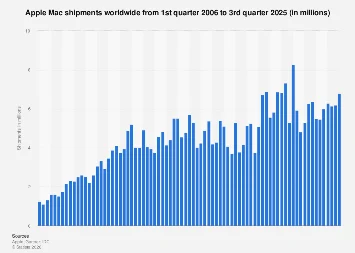
Worldwide shipments of Apple’s Mac computers reached a significant milestone in the third quarter of 2025, demonstrating a notable uptick from the preceding quarter and underscoring the enduring appeal of its personal computing division. While precise figures remain proprietary, industry analysis indicates a substantial increase in units shipped, reflecting a dynamic market that continues to favor Apple’s premium hardware offerings. This growth trajectory not only bolsters Apple’s overall financial performance but also highlights the sustained relevance of the Mac in an increasingly diverse and competitive technology landscape.
The Macintosh, first introduced to the world in 1984, fundamentally reshaped the personal computer industry. Its debut marked a pivotal moment, positioning the personal computer not merely as a business tool but as an accessible and intuitive device for the broader consumer market. This foundational innovation paved the way for decades of evolution, transforming the original desktop paradigm into a sophisticated ecosystem of computing solutions. Today, Apple’s Mac portfolio encompasses a spectrum of devices designed to meet varied user needs, from the powerful and versatile iMac desktop to the highly portable and performance-driven MacBook line, including the popular MacBook Air and MacBook Pro. Complementing these core machines are compact yet capable options like the Mac Mini, catering to users seeking a streamlined desktop experience. This comprehensive product strategy, coupled with a robust ecosystem of accessories and complementary software, has solidified the Mac’s position as a preferred choice for professionals, creatives, and students alike.
While the iPhone remains Apple’s undisputed flagship product and a dominant force in the global smartphone arena, contributing significantly to the company’s market share as one of the top vendors worldwide, the Mac division has consistently carved out its own space for stable and incremental growth. This enduring performance suggests a loyal customer base and a strong value proposition, even as the broader PC market navigates evolving trends and economic fluctuations. Beyond its core hardware segments, Apple has also strategically expanded its presence in the burgeoning hearables market. The AirPods Pro and AirPods Max, positioned as premium audio devices, have garnered significant traction, further diversifying Apple’s revenue streams and reinforcing its ecosystemic approach to consumer electronics. This dual focus on established strengths and emerging categories allows Apple to maintain a multifaceted approach to market leadership.
The increasing shipment volumes for Macs in Q3 2025 are occurring against a backdrop of a global PC market that has experienced considerable volatility in recent years. Following a pandemic-induced surge in demand for personal computing devices as remote work and online learning became widespread, the market saw a subsequent normalization. However, Apple’s ability to not only maintain but grow its Mac shipments suggests a differentiation strategy that resonates with a discerning customer segment. This segment often prioritizes a seamless user experience, robust performance for creative and professional tasks, and the integrated ecosystem that Apple is renowned for. Furthermore, the company’s continuous innovation in its silicon, notably the transition to Apple Silicon, has yielded significant improvements in performance, power efficiency, and thermal management, making the latest Mac models particularly attractive to a wide range of users, from graphic designers and video editors to software developers and business professionals.
Market research firms tracking the PC industry have consistently highlighted Apple’s resilience. For instance, reports from IDC and Gartner, leading technology research and advisory companies, have often placed Apple as one of the top five PC vendors globally, frequently exhibiting a higher year-over-year growth rate than some of its larger competitors, particularly in the premium segment. This consistent performance in a segment often characterized by intense competition from companies like HP, Dell, Lenovo, and Microsoft underscores the unique brand loyalty and perceived value associated with the Mac. The economic impact of these shipments extends beyond Apple’s direct revenue. It influences a vast supply chain, from component manufacturers to logistics providers, and supports a global ecosystem of software developers and third-party accessory makers who rely on the Mac platform.
The sustained demand for Mac computers can also be attributed to Apple’s strategic approach to enterprise sales. While historically perceived as more of a consumer brand, Apple has made significant inroads into the corporate world, with many businesses recognizing the productivity, security, and total cost of ownership benefits offered by Macs. The ease of deployment and management through Apple Business Manager, coupled with the perceived higher resale value of Mac devices, makes them an increasingly viable option for organizations looking to equip their workforces. This dual presence in both consumer and enterprise markets provides a robust foundation for continued sales growth, mitigating some of the cyclicality that can affect the broader PC market. The ongoing development of macOS, with its focus on user-friendliness, security, and integration with other Apple services, further enhances the appeal of the Mac for both individual users and organizational IT departments.
Looking ahead, the outlook for Mac shipments remains positive, buoyed by Apple’s ongoing commitment to product development and its strong brand equity. The introduction of new models, refreshed with the latest Apple Silicon chips and design enhancements, typically triggers waves of upgrades and new purchases. Moreover, the expanding use of Macs in specialized fields, such as education, creative industries, and scientific research, continues to fuel demand. While macroeconomic factors and global supply chain dynamics will undoubtedly continue to play a role, Apple’s ability to command premium pricing and maintain strong customer loyalty suggests that the Mac will continue to be a significant contributor to the company’s financial success and a key player in the global personal computing market for the foreseeable future. The consistent growth observed in Q3 2025 serves as a testament to the enduring power of Apple’s product vision and its ability to connect with consumers and businesses seeking advanced, reliable, and user-friendly computing solutions.