

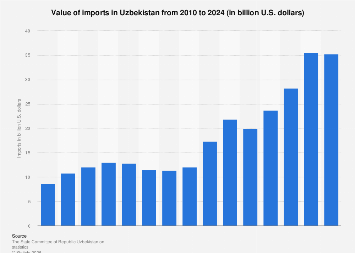
Uzbekistan’s import bill for 2024 is poised to reflect a complex interplay of domestic economic policy, global supply chain realignments, and the nation’s ongoing integration into the international marketplace. While precise, up-to-the-minute figures for the entire year remain under compilation by various economic bodies, preliminary data and market analyses suggest a continued upward trend in the value of goods entering the Central Asian nation. This growth is driven by several key factors, including burgeoning domestic demand, significant infrastructure development projects, and a strategic push to diversify the economy away from its historical reliance on raw material exports.
The Uzbek government has been actively pursuing economic reforms aimed at liberalizing trade, attracting foreign investment, and modernizing its industrial base. These initiatives are directly impacting the composition and volume of imports. For instance, substantial investments are being channeled into sectors such as manufacturing, agriculture, and technology. Consequently, the demand for sophisticated machinery, advanced equipment, specialized components, and modern agricultural inputs is escalating. This surge in demand for capital goods and intermediate products is a primary driver of the projected increase in Uzbekistan’s total import value for the current year.
Examining the import basket reveals a significant contribution from machinery and transport equipment. As Uzbekistan seeks to upgrade its industrial capacity, particularly in textiles, automotive, and mining, the procurement of advanced production lines and specialized vehicles is becoming increasingly crucial. The country’s ongoing efforts to develop its automotive sector, for example, necessitate the import of engines, electronic components, and assembly line technologies. Similarly, the modernization of its mining operations, a cornerstone of the Uzbek economy, requires the acquisition of high-capacity excavators, drilling equipment, and sophisticated processing machinery. These capital-intensive imports represent a substantial portion of the overall import expenditure.
Beyond capital goods, consumer goods also play a significant role, reflecting Uzbekistan’s growing middle class and evolving consumption patterns. As disposable incomes rise, so does the demand for imported electronics, household appliances, vehicles, and even premium food and beverage products. While domestic production in some consumer sectors is expanding, a considerable segment of the market continues to be served by international suppliers, contributing to the overall import value. The e-commerce boom within Uzbekistan further facilitates access to a wider range of global products, indirectly boosting import figures.
Furthermore, the energy sector’s import needs, while perhaps less prominent than in some other resource-rich nations, remain a factor. Uzbekistan, despite its own energy resources, may import specific types of energy-related equipment or specialized fuels depending on market dynamics and domestic production capabilities. Pharmaceutical and medical equipment imports are also on the rise, driven by an increasing focus on public health infrastructure and the availability of advanced medical treatments.
The global economic environment significantly influences Uzbekistan’s import dynamics. Fluctuations in international commodity prices, exchange rates, and geopolitical stability can all have ripple effects. For instance, a strengthening U.S. dollar, the common currency for many international trade transactions, can make imports more expensive for Uzbekistan. Conversely, favorable exchange rates or international aid could potentially boost import capacity. The ongoing challenges in global logistics, including shipping costs and potential supply chain disruptions, also add layers of complexity and can influence the timing and cost of imported goods.
To contextualize Uzbekistan’s import trends, a comparative analysis with regional peers offers valuable insights. Neighboring countries like Kazakhstan and Turkmenistan also exhibit substantial import values, driven by their own resource-based economies and development agendas. However, Uzbekistan’s reform-oriented approach and its strategic location as a transit hub are carving out a distinct import profile. The nation’s commitment to the World Trade Organization (WTO) accession process, though lengthy, signals a long-term ambition for greater trade liberalization, which will likely reshape its import landscape further in the coming years.
The economic impact of these import trends is multifaceted. On one hand, increased imports of capital goods and technology are vital for enhancing productivity, fostering innovation, and achieving long-term economic growth and diversification. They enable Uzbekistan to move up the value chain, transition from raw material exporter to a producer of finished goods, and create higher-skilled employment opportunities. The influx of advanced machinery can lead to more efficient production processes, ultimately boosting export competitiveness.
On the other hand, a growing import bill can exert pressure on the country’s balance of payments. A sustained and widening trade deficit, where imports exceed exports, can lead to a depletion of foreign exchange reserves if not adequately managed. This necessitates a strong export performance to counterbalance import expenditures. Uzbekistan’s export strategy, therefore, is intrinsically linked to its import management. The government’s efforts to promote non-commodity exports, such as textiles, agricultural products, and processed goods, are crucial for ensuring the sustainability of its import-driven development model.
Moreover, the composition of imports is critical. A heavy reliance on imports of essential goods or finished consumer products, rather than intermediate inputs or capital equipment, could indicate vulnerabilities in domestic production capacity and may not contribute as effectively to long-term economic resilience. The Uzbek authorities are keenly aware of this, and policy interventions are often geared towards stimulating domestic value addition and reducing dependence on imported finished goods where feasible.
Looking ahead, the trajectory of Uzbekistan’s imports in 2024 and beyond will be heavily influenced by the continued success of its economic reforms, its ability to attract foreign direct investment (FDI) for both export-oriented and import-substitution industries, and its capacity to navigate the complexities of the global economic landscape. The strategic investments in infrastructure, human capital, and industrial modernization are expected to sustain a healthy demand for imported goods, particularly those that enhance productive capacity. However, a balanced approach that prioritizes domestic industrial development and a robust export strategy will be paramount to ensure that the growing import bill contributes to sustainable and inclusive economic prosperity for Uzbekistan. The country’s economic planners face the continuous challenge of optimizing trade flows to support national development goals while mitigating potential economic vulnerabilities.