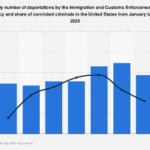
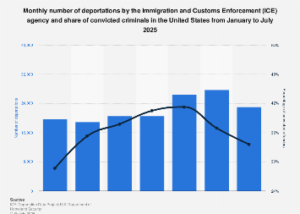

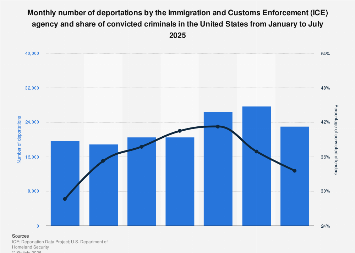
Immigration and Customs Enforcement (ICE) data for July 2025 indicates a significant volume of deportations, with a total of [masked value] individuals removed from the United States. This figure represents a notable outflow, following a preceding month where [masked value] individuals were deported. Analysis of the data also reveals that approximately [masked value] percent of those apprehended by ICE in July 2025 had prior criminal convictions. This statistic offers a glimpse into the demographic composition of individuals subject to deportation proceedings, highlighting the agency’s focus.
The broader context of U.S. immigration enforcement reveals a dynamic landscape. While the number of arrests made by ICE has seen an upward trajectory during the current administration, a discernible trend indicates a declining proportion of convicted criminals among those taken into custody. This observation suggests a potential recalibration of enforcement priorities or shifts in the characteristics of individuals encountered by the agency. Understanding these nuances is crucial for policymakers, stakeholders, and the public alike, as they inform debates on border security, national security, and humanitarian concerns.
Examining the monthly figures from January to July 2025 provides a more granular view of ICE’s operational tempo. The data, obtained through Freedom of Information Act (FOIA) requests by the Deportation Data Project, meticulously tracks all arrests and subsequent deportations conducted by ICE within the U.S., distinct from the border enforcement activities of Customs and Border Protection (CBP). This distinction is vital, as ICE primarily operates domestically, focusing on individuals who have violated immigration laws after entering the country.
The reported figures are part of a comprehensive dataset that aims to provide transparency and facilitate research into U.S. immigration enforcement practices. The source material, anonymized to protect individual privacy, offers valuable insights for economic analyses, demographic studies, and policy evaluations. For instance, understanding the economic impact of deportations can involve assessing the loss of labor, remittances, and consumer spending, as well as the costs associated with enforcement and detention. Globally, the U.S. approach to immigration enforcement is often benchmarked against practices in other developed nations, each facing unique challenges related to migration flows, asylum claims, and integration policies.
The proportion of convicted criminals among those arrested by ICE is a metric that carries significant weight in public discourse and policy discussions. Proponents of stricter enforcement often point to this figure as justification for increased resources and more robust removal procedures, emphasizing the need to deport individuals deemed a threat to public safety. Conversely, immigration advocacy groups frequently highlight instances where individuals with minor or no criminal records are targeted, raising concerns about due process, family separation, and the economic contributions of undocumented populations.
The reported increase in ICE arrests during the current administration, coupled with a decrease in the percentage of convicted criminals apprehended, warrants further investigation. Potential explanations could include a broader net being cast in enforcement operations, increased focus on individuals with civil immigration violations rather than criminal ones, or changes in reporting mechanisms. It is also possible that shifts in migration patterns or the demographics of individuals entering the country could influence the composition of those encountered by ICE.
Globally, the United States is a major destination for immigrants, and its immigration policies have far-reaching implications. The economic contributions of immigrants, both documented and undocumented, are a subject of ongoing debate among economists. Studies have shown that immigrants often fill labor shortages, contribute to innovation, and pay taxes, thereby bolstering economic growth. However, concerns about wage depression in certain sectors and the strain on public services are also frequently raised.
The monthly deportation data serves as a critical indicator of the U.S. government’s approach to immigration enforcement. Analyzing these figures over time, in conjunction with broader economic and social trends, can provide a more comprehensive understanding of the impact of these policies. The economic implications of large-scale deportations are multifaceted. On one hand, the removal of individuals from the workforce can lead to labor shortages in specific industries, potentially driving up wages for remaining workers or necessitating increased reliance on automation. On the other hand, the costs associated with detention, transportation, and deportation proceedings represent a significant expenditure for the federal government.
Furthermore, the social fabric of communities can be significantly impacted by deportation. The separation of families, the loss of essential workers, and the fear of enforcement can create instability and uncertainty. For businesses that rely on immigrant labor, particularly in sectors like agriculture, hospitality, and construction, fluctuations in enforcement can disrupt operations and supply chains. The economic impact can extend to reduced consumer spending and a decline in tax revenues if a substantial number of individuals are removed.
The trend of declining criminal convictions among ICE arrests, while the overall number of arrests rises, presents a complex policy challenge. It raises questions about the criteria for enforcement priorities and the allocation of resources. Are enforcement efforts becoming more expansive, encompassing a wider range of immigration violations? Or are the characteristics of individuals attempting to enter or remain in the country changing?
Understanding the economic consequences of immigration enforcement also involves considering the potential for economic displacement or reallocation. When individuals are deported, their labor, consumption, and tax contributions are removed from the U.S. economy. Conversely, the resources dedicated to enforcement could potentially be redirected to other areas, such as infrastructure development or education, which might yield different economic outcomes.
The international context is equally important. Many countries are grappling with similar issues related to migration, border control, and the integration of newcomers. The United States’ policies and practices often serve as a point of reference, influencing debates and strategies in other nations. The economic and social pressures driving migration are often complex, involving factors such as political instability, economic disparity, and environmental challenges in origin countries.
As the United States navigates these complex issues, consistent and transparent data on immigration enforcement, such as the monthly ICE deportation figures, becomes indispensable. This information allows for evidence-based policymaking, informed public debate, and a more nuanced understanding of the multifaceted challenges and opportunities presented by immigration. The figures from July 2025, and the trends observed throughout the first seven months of the year, offer a crucial snapshot of an ongoing and dynamic process with significant implications for both the U.S. economy and its social landscape. The continued monitoring and analysis of such data will be essential for assessing the effectiveness and impact of immigration policies in the years to come.